


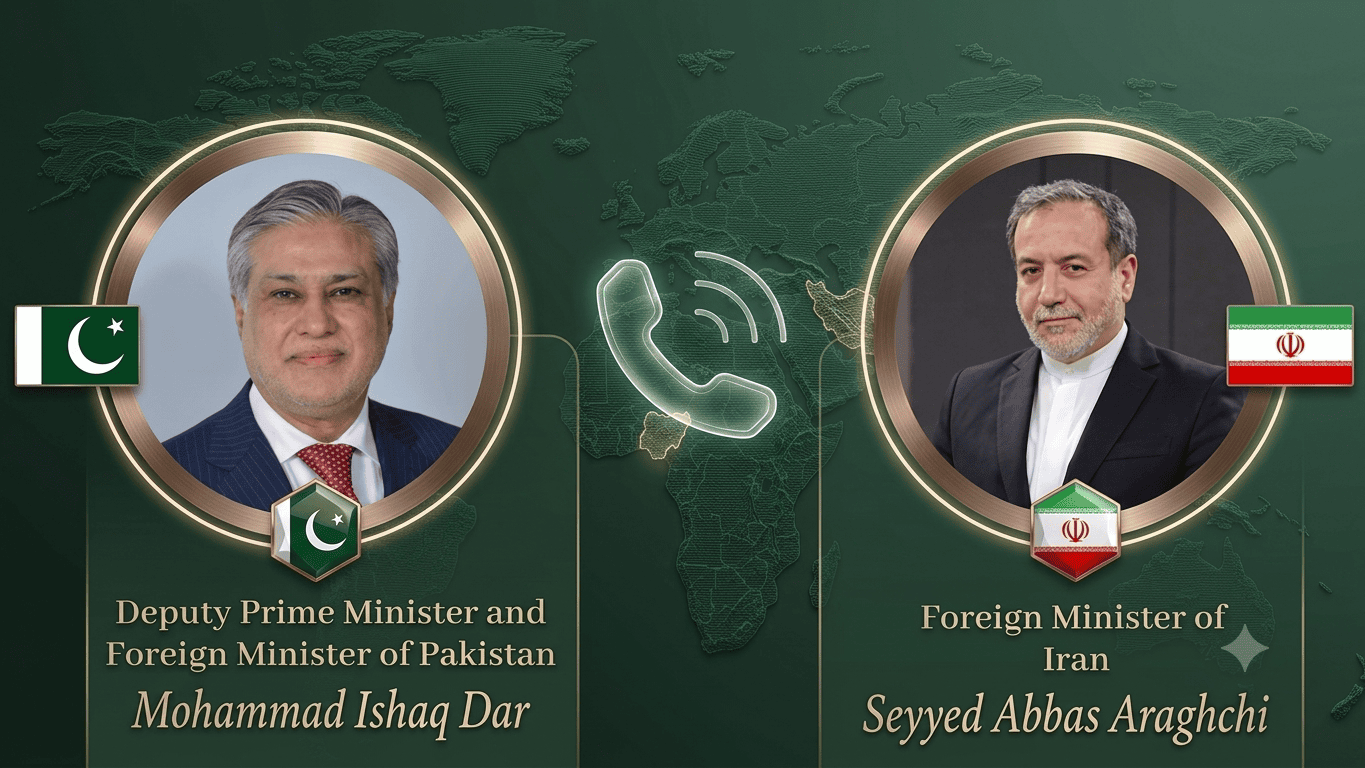
ISLAMABAD (Web Desk) – Pakistan and Iran reaffirmed their commitment to close diplomatic coordination on Monday as Deputy Prime Minister and Foreign Minister Senator Ishaq Dar held a telephone conversation with Iranian Foreign Minister Seyyed Abbas Araghchi to discuss regional developments, the situation in Occupied East Jerusalem and bilateral cooperation.
According to Pakistan’s Foreign Office, the two foreign ministers exchanged views on recent developments across the Middle East and reviewed issues of mutual interest affecting regional peace, security and stability. The conversation reflected continued diplomatic engagement between Islamabad and Tehran at a time of heightened tensions across the region.
Officials said a significant portion of the discussion focused on the worsening humanitarian and security situation in Occupied East Jerusalem. Both leaders exchanged assessments of recent developments and reiterated the importance of maintaining international attention on the issue.
Pakistan and Iran also reviewed broader regional developments and discussed the importance of continued dialogue and diplomatic engagement to prevent further instability. The two sides emphasized the need for peaceful solutions to regional disputes through diplomacy and cooperation.
The Foreign Office said both ministers reaffirmed the longstanding relationship between Pakistan and Iran, highlighting the importance of maintaining regular consultations on regional and international matters.
RelatedPosts
During the conversation, Ishaq Dar invited Iranian Foreign Minister Seyyed Abbas Araghchi to undertake an official visit to Pakistan at his earliest convenience. The invitation was extended as part of ongoing efforts to strengthen bilateral ties and deepen political engagement between the neighbouring countries.
Officials said the proposed visit would provide an opportunity for both sides to expand discussions on political, economic, security and regional cooperation while reviewing progress on matters already under consideration.
Pakistan and Iran share a long border and maintain regular diplomatic engagement on issues including border management, regional security, trade, energy cooperation and people-to-people contacts.
In recent years, both countries have continued efforts to enhance bilateral relations through high-level exchanges and institutional dialogue. Officials from both governments have repeatedly stressed the importance of close coordination in addressing common regional challenges.
The latest conversation also comes as Middle Eastern developments continue to attract international attention. Pakistan has consistently called for peaceful resolution of regional disputes through dialogue and has supported diplomatic initiatives aimed at reducing tensions.
Islamabad has repeatedly emphasized its commitment to regional peace and stability while advocating respect for international law and the protection of civilian populations during conflicts.
Iran, meanwhile, continues to engage regional partners on issues relating to security, diplomacy and developments across the Middle East. Tehran and Islamabad have maintained regular communication through diplomatic channels on matters affecting both countries.
Analysts say continued consultations between Pakistan and Iran are important given their shared strategic interests and geographic proximity. Regular exchanges help both countries coordinate their positions on regional developments while strengthening bilateral understanding.
Diplomatic observers also believe that sustained high-level contacts contribute to expanding cooperation in trade, connectivity and border security, areas that both governments have identified as priorities.
The invitation extended by Ishaq Dar for Araghchi to visit Pakistan is expected to reinforce ongoing diplomatic engagement and provide an opportunity for comprehensive discussions on bilateral relations.
Foreign Office officials said Pakistan remains committed to maintaining constructive relations with neighbouring countries and supporting diplomatic initiatives that promote regional peace and stability.
The telephone conversation concluded with both foreign ministers expressing their commitment to continued dialogue and close coordination on issues of mutual concern. They agreed to remain in contact as regional developments continue to evolve and reaffirmed their intention to strengthen cooperation through regular diplomatic engagement.
Pakistan and Iran have maintained consistent communication on regional affairs, and officials from both countries view continued dialogue as an important tool for addressing shared challenges while promoting stability, cooperation and mutually beneficial relations across the region.


