


WASHINGTON/RIYADH (Agencies) – Tensions across the Middle East intensified on Wednesday after U.S. President Donald Trump vowed to launch tougher military strikes against Iran following attacks on Saudi Arabia that have further destabilised the region and heightened concerns over global energy security.
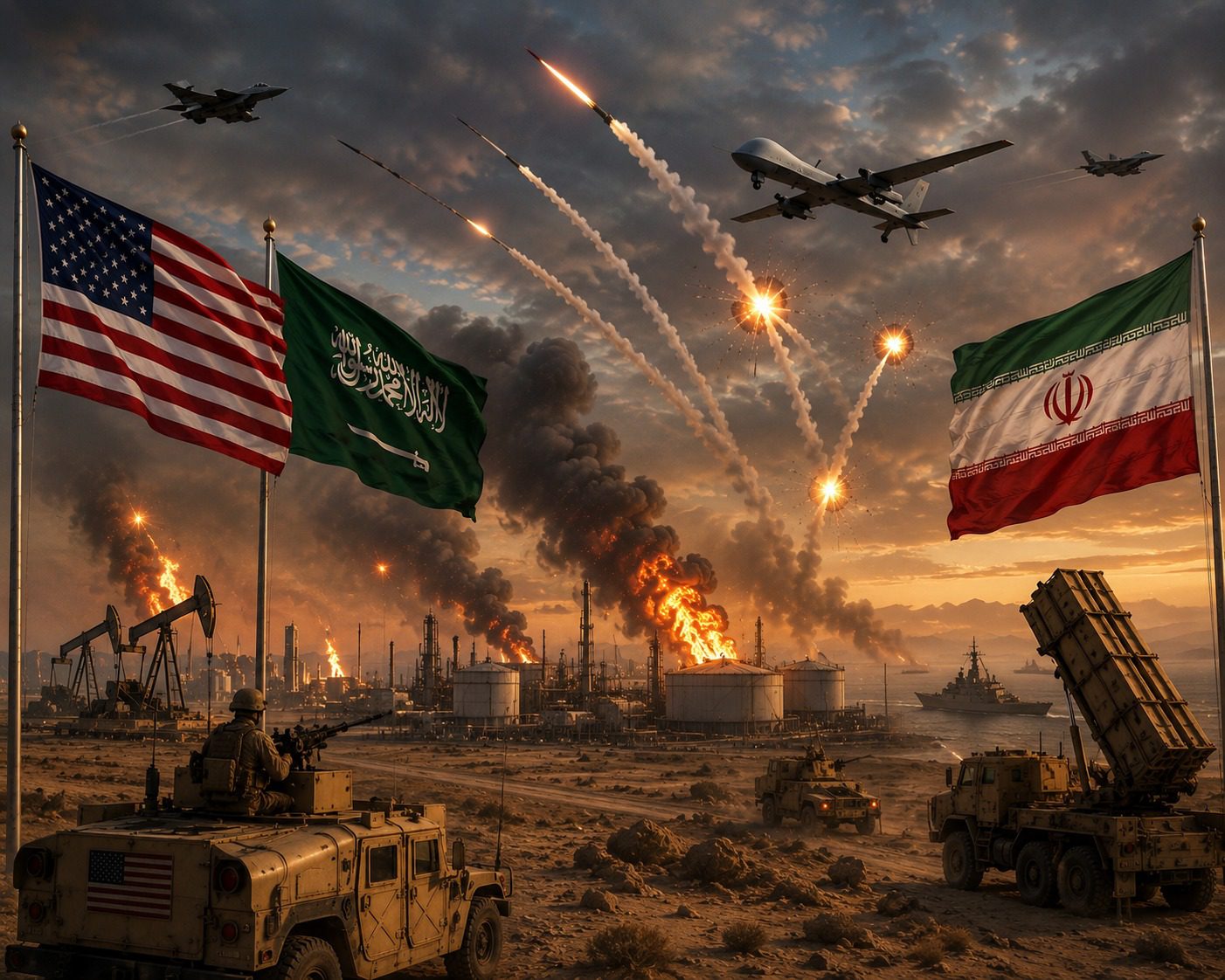
The latest escalation comes after Iranian-linked attacks targeted Saudi territory and energy infrastructure, prompting a joint military response by the United States and Saudi Arabia against Iran-backed militia positions in Iraq. The exchange of strikes has fuelled fears that the conflict could expand into a broader regional war involving multiple countries.
Speaking in an interview with Fox News, President Trump issued one of his strongest warnings yet to Tehran, declaring that the United States would respond forcefully to any further aggression.
“We’ll be hitting Iran hard. They’re going to get a beating,” Trump said, signalling that Washington was prepared to intensify military operations if attacks on U.S. forces or regional allies continued.
According to U.S. officials, Iran’s Islamic Revolutionary Guard Corps (IRGC) launched ballistic missiles targeting American military facilities in Jordan, although the missiles were intercepted before causing significant damage. The strike came after U.S. and Saudi forces carried out coordinated airstrikes against Iran-backed militias accused of launching drone attacks on Saudi oil infrastructure.
Saudi authorities also reported intercepting drones aimed at petroleum facilities, while satellite imagery indicated damage to some energy infrastructure following recent attacks. The incidents have raised fresh concerns over the security of one of the world’s largest oil-producing regions.
Iran has defended its actions, saying it was responding to what it described as continued American military aggression in the region. The IRGC warned that resistance would continue as long as U.S. military operations against Iranian interests persisted.
Despite the sharp rhetoric, Trump indicated that diplomatic channels with Iran had not been completely closed, although he insisted that military pressure would continue until attacks against American personnel and allies ceased. ([Financial Times][3])
The renewed violence has rattled international markets, with oil prices climbing sharply amid fears that the conflict could threaten shipping through the Strait of Hormuz, a strategic waterway that handles a significant share of the world’s oil exports. Brent crude surged as traders reacted to the increased risk of supply disruptions.
Regional governments have urged restraint while strengthening security around key military and energy installations. Iraq criticised the joint U.S.-Saudi strikes on militia targets within its territory, calling them a violation of its sovereignty, while diplomatic mediation efforts have struggled to gain momentum.
Security analysts warn that the latest confrontation represents one of the most dangerous phases of the ongoing crisis, with the risk of miscalculation increasing as military operations expand across multiple fronts. Further attacks on energy infrastructure or shipping lanes could have significant consequences for the global economy and international oil markets.
The developments have also renewed concerns among U.S. allies in the Gulf, many of whom fear that continued escalation could draw additional regional states into the conflict despite calls for diplomacy.
With military operations continuing and both Washington and Tehran maintaining hardline positions, international observers say the coming days will be critical in determining whether the crisis can be contained or develops into a wider regional confrontation.
Middle East, Donald Trump, Iran, Saudi Arabia, United States, IRGC, missile attack, oil prices, Strait of Hormuz, regional conflict

