


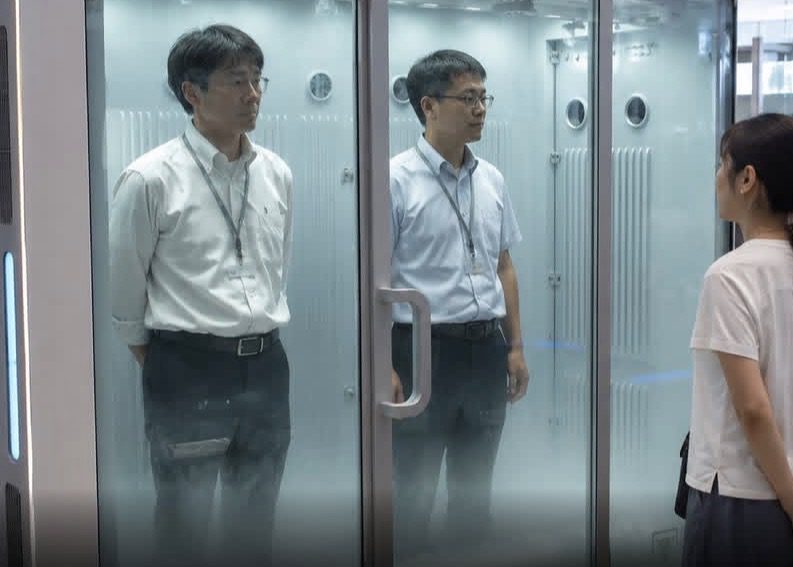
TOKYO (Web Desk) – Japan has introduced an innovative full-body cooling chamber designed to provide rapid relief from extreme heat, offering a new technological solution as countries around the world face increasingly frequent and intense heatwaves driven by rising global temperatures.
The newly developed cooling system has been created through a collaboration between a Japanese technology company and an industrial equipment manufacturer. The device is designed to quickly reduce body temperature by exposing users to powerful streams of chilled air, helping lower the risk of heat-related illnesses in high-temperature environments.
As heatwaves continue to become more severe across Asia, Europe and other parts of the world, demand for effective cooling technologies has increased. Health experts have repeatedly warned that prolonged exposure to extreme heat can lead to dehydration, heat exhaustion and heatstroke, particularly among outdoor workers, elderly people and individuals with underlying medical conditions.
The cooling chamber is intended to provide rapid body cooling in situations where conventional air conditioning may not lower body temperature quickly enough. According to the developers, users can experience noticeable relief after spending approximately 10 minutes inside the chamber.
The unit measures about seven feet in height and nearly four feet in width, giving it an appearance similar to a large vending machine or commercial refrigerator. Despite its compact footprint, the chamber is designed to accommodate a standing adult comfortably while directing cooled air to key areas of the body.
Inside the chamber, the temperature is maintained at approximately 15 degrees Celsius. Special air outlets deliver air cooled to around 5 degrees Celsius directly towards the user’s head, neck, shoulders and back. These areas are considered highly effective for reducing overall body temperature because of the concentration of major blood vessels near the skin.
Developers say the cooling technology differs from conventional cooling systems because it targets the entire body simultaneously instead of simply lowering the surrounding room temperature. This approach is intended to accelerate the body’s natural cooling process and reduce symptoms associated with heat stress more efficiently.
To ensure user safety, the chamber includes an automatic timer that switches off the cooling process after 20 minutes. Engineers say the feature is designed to prevent excessive cooling and reduce the possibility of discomfort or health complications associated with prolonged exposure to very cold air.
The manufacturers describe the unit as the first commercial system specifically engineered to cool the entire human body at the same time. They believe the technology could become valuable in workplaces where employees are regularly exposed to extreme heat, including construction sites, factories, warehouses and industrial facilities.
Public health specialists have increasingly emphasised the importance of preventive measures against heat-related illnesses as climate patterns continue to change. Rising temperatures have resulted in record-breaking heatwaves in several countries, placing additional pressure on healthcare systems and increasing the need for innovative cooling solutions.
The developers also highlight the system’s relatively low operating costs. According to company estimates, the chamber consumes electricity costing approximately 16 Japanese yen per hour, making it economical for regular operation despite its advanced cooling capabilities.
However, the purchase price remains a significant investment. Each unit is priced at around 1.5 million Japanese yen, equivalent to more than 10,000 US dollars, which could limit widespread adoption during the early stages of commercial availability.
Industry analysts believe the technology may initially be adopted by businesses, hospitals, emergency response organisations and public facilities before becoming more widely available in other settings. As production expands and manufacturing costs decline, similar systems could eventually become more affordable for broader commercial use.
Experts say innovations such as full-body cooling chambers reflect the growing demand for technologies that help people adapt to a warming climate. With extreme heat increasingly recognised as a major public health challenge, rapid cooling systems may become an important addition to workplace safety measures and emergency heat response strategies in the years ahead.


