


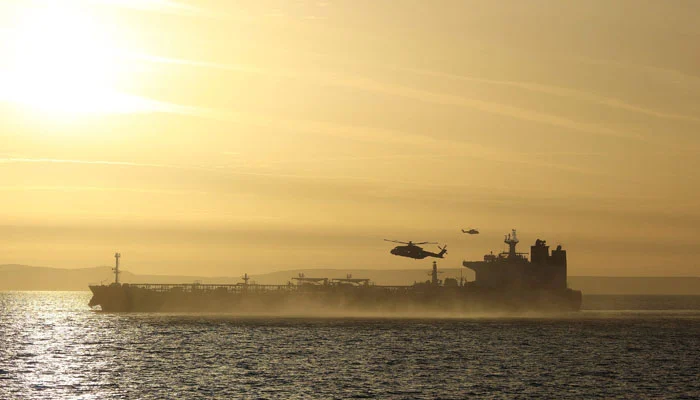
LONDON (Web Desk) – British forces intercepted a sanctioned oil tanker linked to Russia’s so-called “shadow fleet” in the English Channel on Sunday during a six-hour operation aimed at enforcing sanctions imposed over Moscow’s war in Ukraine.
According to the UK Ministry of Defence, Royal Marine commandos and specially trained officers from the National Crime Agency boarded the vessel, identified as Smyrtos, under the cover of darkness by fast-roping from a helicopter.
The operation involved extensive military support, including Chinook, Merlin Mk4 and Wildcat helicopters, a maritime patrol aircraft, the frigate HMS Sutherland and the minehunter HMS Ledbury.
The ministry described it as the first UK-led operation of its kind, accusing Russia of using shadow fleet vessels to evade international sanctions and generate revenue to sustain its military campaign in Ukraine.
Following the interception, the tanker was moved to an anchorage off England’s south coast, where it will remain under close monitoring by British authorities.
Ukraine welcomed the move, with Foreign Minister Andriy Sybiga saying Russia’s shadow fleet had become a “tool of war” and that disrupting its operations would weaken Moscow’s ability to finance missile and drone attacks against Ukrainian cities.
UK Defence Minister Dan Jarvis said the action dealt a blow to President Vladimir Putin’s war efforts and was carried out in close coordination with French authorities.
Britain has sanctioned hundreds of vessels suspected of belonging to Russia’s shadow fleet since the invasion of Ukraine in 2022. These often ageing tankers, operating under opaque ownership structures, have been used to bypass Western restrictions on Russian oil exports.
The British government has also expressed concerns that some of these vessels may have been involved in damaging undersea infrastructure, including internet cables and power lines in the Baltic Sea. London is now considering new legislation aimed at protecting critical subsea networks from sabotage by hostile states.
The latest operation comes as European countries increase efforts to curb Russia’s ability to evade sanctions, while NATO allies face mounting pressure to strengthen defence spending amid growing security concerns across the region.


