



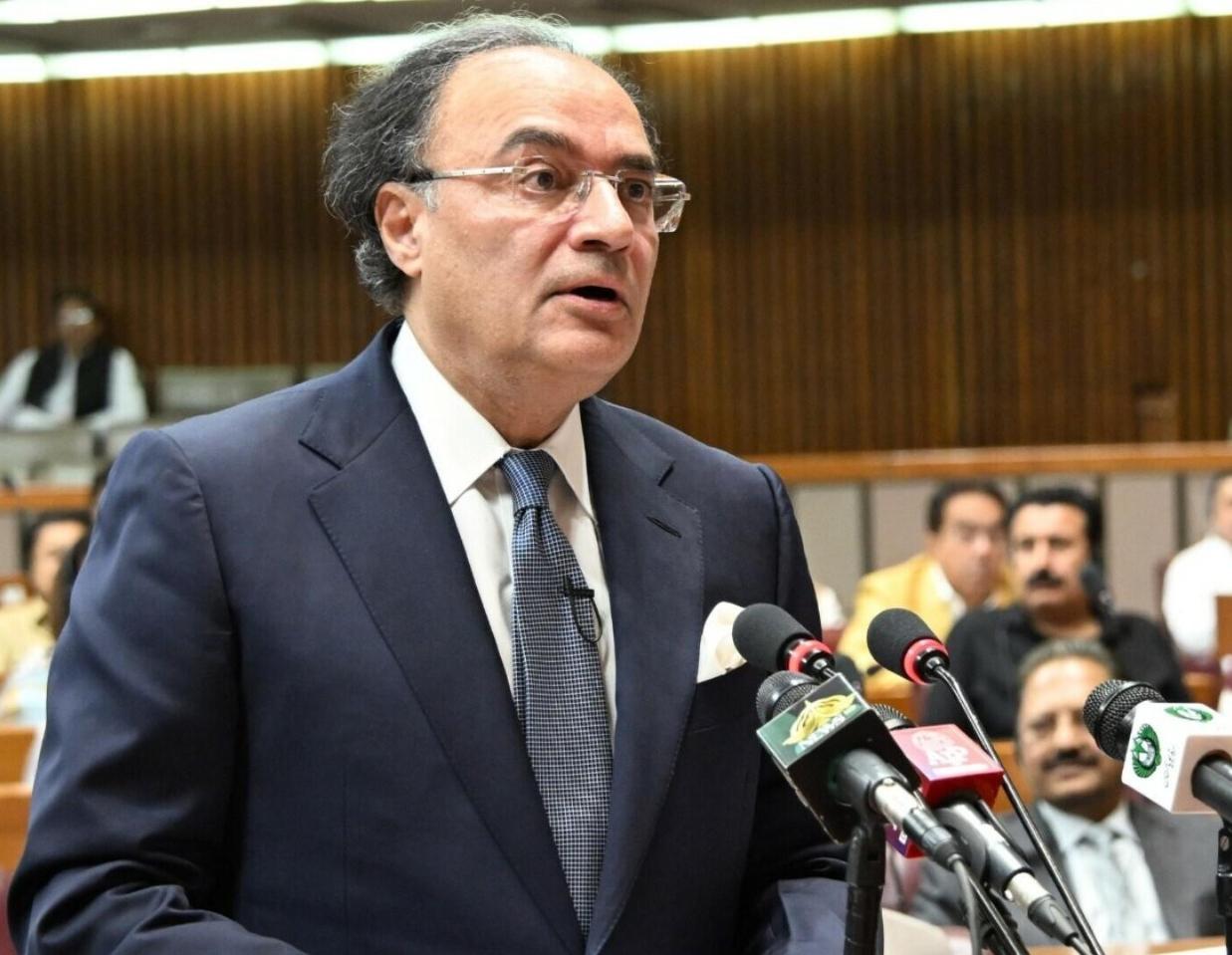
- Finance minister unveils Budget 2026-27 with Rs18,771b outlay
- Defence budget fixed at Rs3,000 billion
- Revenue target set at Rs15,267 billion
- GDP growth target remains at 4pc
- Salaries and pension increase approved at 7pc
- Inflation projected to average 8.2pc
By Our Correspondent
ISLAMABAD: Pakistan faces a massive financial challenge as the newly presented federal budget reveals that the country will spend a staggering 8,054 billion rupees—nearly half of its total expenditures—just to pay off national debts. Alongside this massive financial strain, the government has announced strict new anti-smuggling tax penalties, extended the sales tax net, and placed a heavier tax burden on luxury goods. However, in a major balancing act, the 2026-27 federal budget counters these pressures by cutting income tax rates for the salaried class, completely eliminating the 9% tax surcharge, and extending vital tax exemptions for the country’s booming IT sector to protect common citizens and young professionals.
The Negative Side: Massive Debt Burden, New Duties, and Stricter Enforcement
Despite the government’s efforts to project economic stability, the underlying facts of the budget point to a rigid financial squeeze on both state resources and local businesses:
1. The Debt Trap
Out of a total estimated federal expenditure of 18,771 billion rupees, a historic 8,054 billion rupees will be consumed solely by interest and debt repayments. This means nearly 43% of the national budget is restricted to servicing old loans, severely capping the funds available for public development, healthcare, and education.
2. Expanding Sales Taxes and Tightening Regulation
The government is expanding the “Third Schedule” of the Sales Tax Act to include more product categories. This change aims to fix standard retail values and prevent under-invoicing, but it effectively increases the tax footprint on everyday fast-moving consumer goods (FMCGs). Additionally, if individuals or association of persons (AOPs) buy goods from unregistered suppliers, a withholding tax will be deducted at the time of payment to force informal traders into the tax net.
3. Increased Fines and Anti-Adulteration Taxes
To offset inflation adjustments, standard legal penalties that remained frozen for seven years are being aggressively raised. Heavy fines will also be slammed on businesses violating digital invoice integration rules. Furthermore, a Federal Excise Duty (FED) of 80 rupees per liter is being placed on petroleum-based solvents like white spirit and naphtha. While aimed at stopping dishonest traders from mixing these chemicals into vehicle fuel, it increases costs for legitimate industrial users.
4. Heavy Taxes on Luxury Vehicles
Wealthy buyers will find it much more expensive to purchase high-end transport. The budget introduces a new FED on imported cars and large Sport Utility Vehicles (SUVs) ranging from 2000cc to over 3000cc. This luxury tax will also apply directly to high-end Electric Vehicles (EVs) that cost more than 20 million rupees.
The Positive Side: Income Tax Cuts, Welfare Expansions, and Digital Incentives
To cushion the impact of these austere measures, the government has used its created fiscal space to launch a comprehensive relief package for the middle class, youth, and small businesses:
1. Substantial Income Tax Reductions
In a highly anticipated move, the government has reduced income tax rates across four distinct slabs for salaried individuals earning between 2.2 million and 7.0 million rupees annually:
For individuals earning between 2.2 million and 3.2 million rupees, the tax rate drops from 23% to 20%.
For those earning between 3.2 million and 4.1 million rupees, the rate falls from 30% to 25%.
For brackets between 4.1 million and 5.6 million rupees, the tax is cut from 35% to 29%.
For individuals making between 5.6 million and 7.0 million rupees, the rate is lowered from 35% to 32%.
Crucially, the long-standing 9% income tax surcharge on salaried workers has been completely abolished.
2. Major Support for IT, Construction, and Small Traders
To accelerate the digital economy, the 0.25% concessional tax rate for IT exporters and freelancers has been extended for another three years until June 2029. IT exports are already booming, projected to touch 4.5 billion dollars this year following successful 5G spectrum rollouts in five cities.
For small shopkeepers, a hassle-free Fixed Tax System allows businesses with annual sales under 20 million rupees to simply pay 1% of their sales as tax. These shops will display a green sign with a QR code, legally preventing FBR officials from entering the shop for random inspections. Additionally, property transfer taxes for active tax filers have been slashed in half to revive the construction sector, and the business “Super Tax” on companies making below 500 million rupees has been completely deleted.
3. Public Health Exemptions and Poverty Alleviation
In a landmark decision for public welfare, all taxes on female sanitary pads and contraceptives have been entirely removed to support women’s health and national family planning goals. Customs duties on over a hundred raw materials used to manufacture cancer medicines locally have also been wiped out. Meanwhile, the Benazir Income Support Programme (BISP) budget has been boosted by 17% to 838 billion rupees, expanding financial aid to 12 million deserving families.
4. Green Financing and Subsidized Loans
The budget actively funds citizen-centric programs, including the PAVE scheme to provide subsidized financing for electric bikes and rickshaws, and a fan replacement program to swap out old appliances for energy-saving models. Finally, 71 billion rupees have been allocated to the “Own House Scheme” to offer affordable low-income mortgages at just a 5% interest rate.


