



By Our Correspondent
ISLAMABAD: Pakistan’s economy grew by 3.7% in the fiscal year 2025–26, marking its fastest expansion in four years, according to the Pakistan Economic Survey released on Thursday. However, the growth remained below the government’s revised target of 4.2pc.
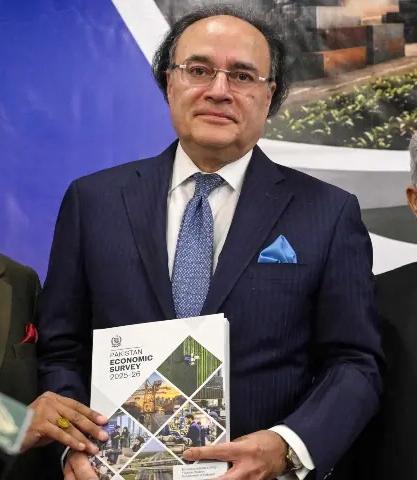
Finance Minister Muhammad Aurangzeb, while presenting the survey in Islamabad, described the performance as a reflection of “resilience and discipline” despite multiple domestic and global challenges, including tariff uncertainty, severe flooding in 2025, and regional geopolitical tensions.
He said Pakistan entered the fiscal year facing economic uncertainty but gradually moved toward stability and recovery. He added that macroeconomic management, exchange rate stability, improvements in fiscal accounts, and reforms under the IMF Extended Fund Facility contributed to the positive trajectory.
The survey showed that GDP growth of 3.7% in FY2026 was higher than 3.2% in FY2025 and 2.6% in FY2024, while the economy had contracted by 0.2% in FY2023. Officials said the current growth represents the strongest recovery trend in recent years, even though the target was not fully achieved.
The agriculture sector grew by 2.89%, supported by livestock expansion and moderate crop recovery despite flood-related losses. Large-scale manufacturing (LSM) recorded robust growth of 6.1%, the highest in four years, driven by increased production in cement, fertiliser, petroleum, automobiles, and mobile phones. The services sector, which accounts for nearly 58% of GDP, expanded by 4.09%, with strong performance in information and communication services.
Aurangzeb highlighted that inflationary pressures eased compared to the previous crisis period, with CPI inflation averaging 6.2% during July–April FY2026. He noted that inflation had significantly declined from earlier highs of around 28%, supported by tighter monetary policy and improved external stability.
On the fiscal side, the survey reported a sharp improvement, with the fiscal deficit narrowing to 0.7% of GDP from 2.6% a year earlier. The primary surplus also strengthened, while tax revenues rose by 10.1% and interest payments declined by 23%, creating additional fiscal space.
External accounts showed mixed signals. The current account posted a marginal surplus of $72 million during July–March FY2026, compared to $1.7 billion in the same period last year. Remittances remained a key support factor, rising 8.2% to $30.3 billion.
Exports showed divergence across sectors. Food exports declined sharply due to lower rice and sugar shipments, while textile exports and IT services improved. Sports goods exports posted strong growth, while IT exports crossed $3.8 billion, with expectations of reaching $4.5 billion.
The finance minister said Pakistan’s foreign exchange reserves strengthened to around $17 billion, with expectations of further improvement by the end of June. He added that this level provides nearly three months of import cover, considered a key international benchmark for external stability.
Capital markets also performed strongly, with the KSE-100 index rising 18.4% during July–March FY2026, supported by declining inflation, lower policy rates, IMF programme progress, and improved investor confidence. Market capitalisation increased significantly, reflecting broader financial stability.
On the corporate front, around 39,000 new companies were registered during the fiscal year, bringing the total number of registered firms close to 300,000. Officials also noted increased foreign and domestic investment interest in telecom, energy, IT, and industrial sectors.
Public debt rose moderately, with total debt recorded at Rs83.3 trillion by March 2026. External debt stood at $92.2 billion, with multilateral and bilateral financing forming the bulk of obligations. Authorities said debt growth remained contained due to fiscal discipline and a strong primary surplus.
Overall, the government said the FY2026 performance reflects a transition from stabilisation toward gradual growth, though officials acknowledged that sustaining momentum will require continued reforms, policy consistency, and external sector resilience.
Pakistan’s economy grew 3.7% in FY2026, the highest in four years, driven by manufacturing, services, and fiscal improvements, but it fell short of the 4.2% target.


