


By Asim Shehzad
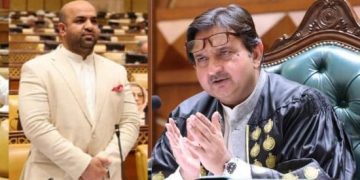
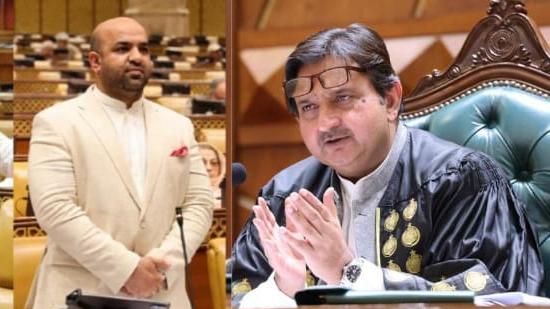
LAHORE: Heated debate marked the Punjab Assembly session on Tuesday as lawmakers raised concerns over the deteriorating condition of educational institutions, shortage of universities in several districts and other public issues, while Speaker Punjab Assembly Malik Muhammad Ahmad Khan emphasized the importance of education as the foundation of national development and social progress.
The Punjab Assembly session began after a delay of one and a half hours under the chairmanship of Deputy Speaker Malik Zaheer Iqbal Chanar. During the proceedings, opposition member Sardar Muhammad Ali highlighted the absence of a university in his constituency and sought government action to improve higher education facilities.
Responding to questions related to the Higher Education Department, Punjab Education Minister Rana Sikandar Hayat said the government was taking practical steps to expand educational opportunities across the province. He informed the House that two universities were being established in Sardar Muhammad Ali’s district and that the Nawaz Sharif School of Excellence project was also being expanded.
The minister said enrollment in government schools was increasing as parents shifted their children from private institutions to public schools. He further assured lawmakers that educational infrastructure issues would be addressed through ongoing development initiatives.
Government member Rahila Khadim Hussain raised concerns about the dilapidated condition of the Government Graduate College for Women, Baghbanpura. In response, Rana Sikandar Hayat assured the House that the institution’s issues would be resolved within seven months. He noted that the absence of a dedicated budget for the maintenance and repair of schools and colleges had contributed to growing infrastructure challenges and proposed the formation of a joint committee to address the matter.
The issue of the lack of a university in Rajanpur also came under discussion. The education minister stated that eight districts of Punjab still lacked universities. However, he announced that two sub-campuses were being established in Rajanpur and plans had been finalized for 37 additional sub-campuses in underserved areas of the province.
At the conclusion of the session, Speaker Punjab Assembly Malik Muhammad Ahmad Khan expressed strong displeasure over the absence of ministers and parliamentary secretaries during discussions on public issues. He remarked that lawmakers were raising important concerns affecting citizens, yet no minister or parliamentary secretary was present to listen to them.
“I am not a post office,” the Speaker said while directing the Assembly Secretariat to issue letters of concern to the absent ministers.
The House also unanimously passed a resolution to rename a locality in Kasur district from “Kot Qatul Garhi” to “Hazrat Babaji Syed Sher Ali Shah Bukhari” and approved a resolution acknowledging cleanliness arrangements during Eid-ul-Adha. The session was later adjourned until 2 p.m. on Wednesday.
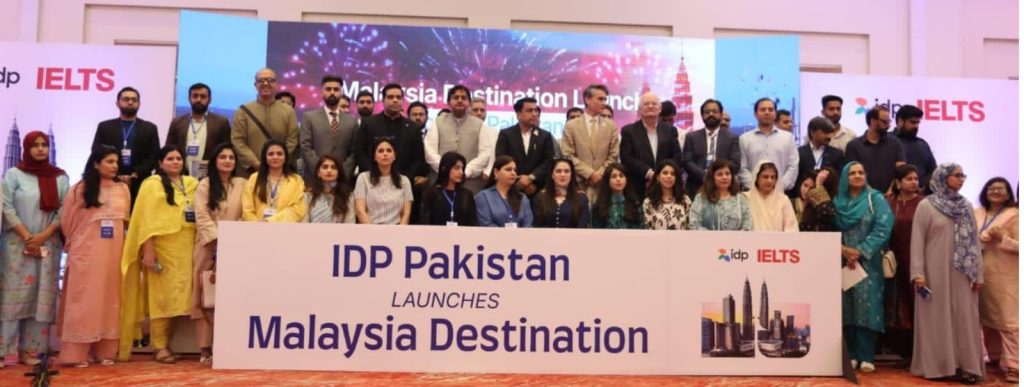
Separately, Speaker Punjab Assembly Malik Muhammad Ahmad Khan reiterated the transformative role of education while addressing the Malaysia Destination Launch Event as chief guest.
Describing education as the greatest equalizer and the cornerstone of national progress, he said Pakistan’s future depended on investing in quality education, research, innovation and technology. He stressed that empowering young Pakistanis with internationally recognized education and future-oriented skills was a strategic national necessity.
The Speaker congratulated IDP Education on introducing Malaysia as a new study destination for Pakistani students and praised its efforts in facilitating access to world-class higher education opportunities. He observed that international education promotes leadership, critical thinking, innovation and global competitiveness.
Malik Muhammad Ahmad Khan emphasized the need to modernize Pakistan’s primary and middle schools, ensuring equal access to quality education and advanced learning facilities. Expressing concern over educational disparities, he noted that millions of students continue to study with inadequate resources while a privileged segment enjoys far better opportunities.
Highlighting that more than 25 million children remain out of school in Pakistan, he called for a coordinated national effort involving government institutions, parliament, the private sector and civil society to address the crisis.
Referring to Malaysia’s rise as a regional education hub, the Speaker praised its internationally recognized universities, affordable education system, English-medium instruction and growing strengths in artificial intelligence, digital innovation and research.
In his concluding remarks, Malik Muhammad Ahmad Khan urged Pakistani students studying abroad to return home and contribute their knowledge, skills and international experience toward strengthening national institutions and accelerating Pakistan’s development.
“The future of Pakistan depends on our collective commitment to educational excellence, equal opportunity and the empowerment of every child through quality learning,” he said.


