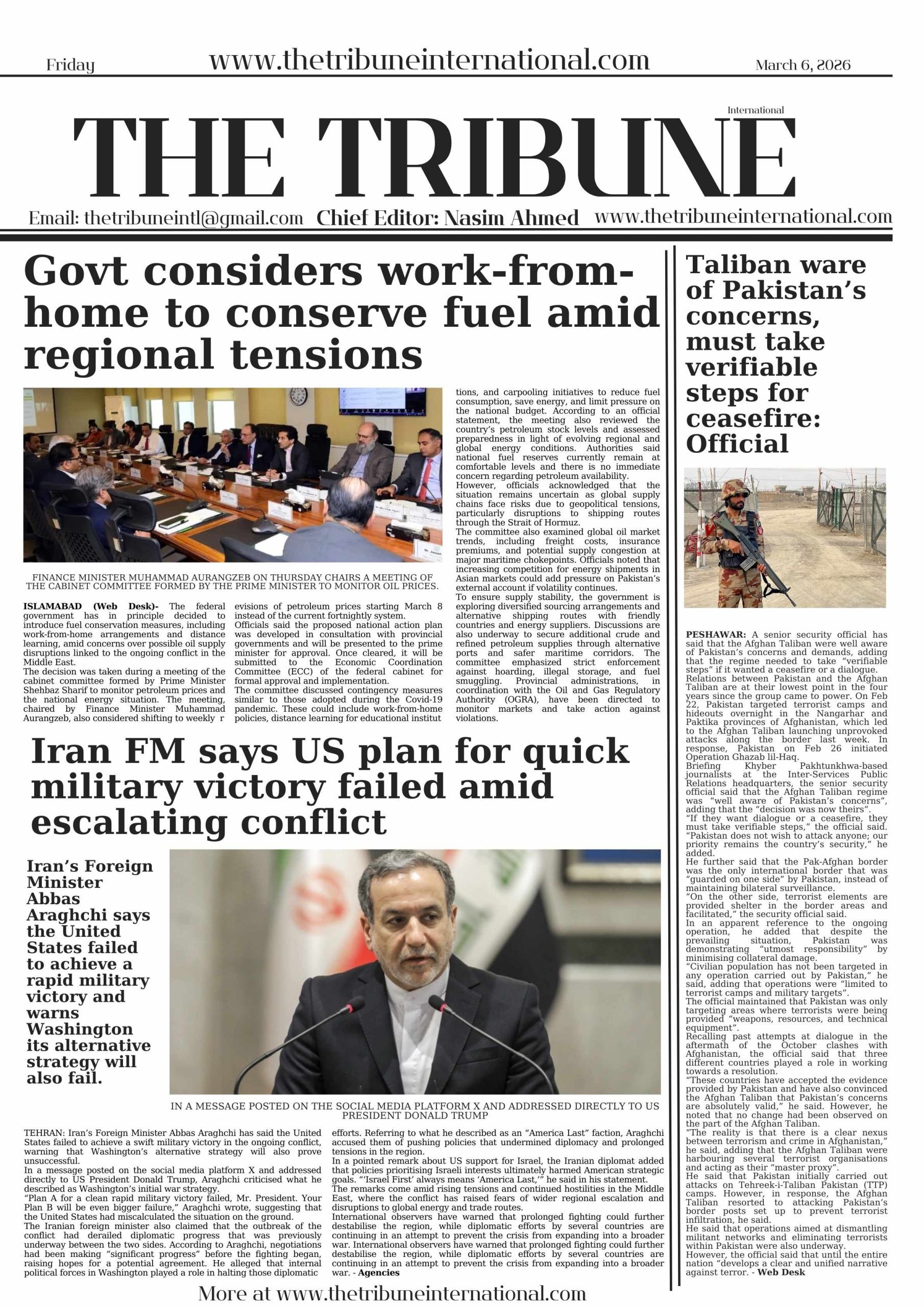



ISLAMABAD (Web Desk)- The federal government has in principle decided to introduce fuel conservation measures, including work-from-home arrangements and distance learning, amid concerns over possible oil supply disruptions linked to the ongoing conflict in the Middle East.
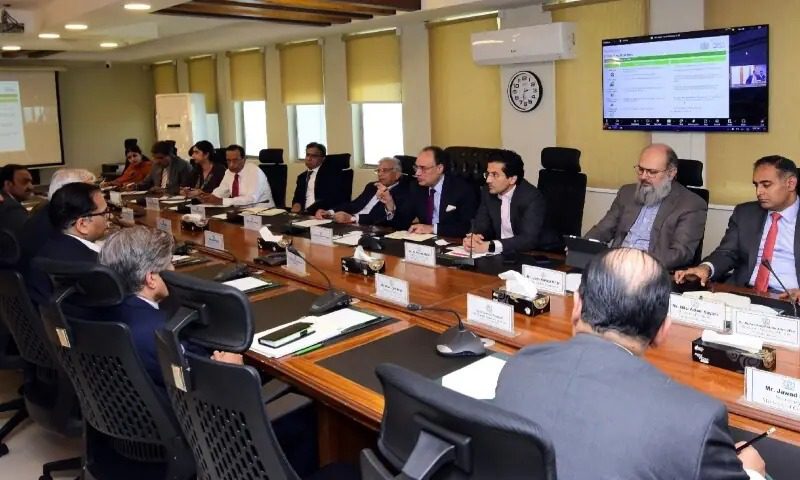
The decision was taken during a meeting of the cabinet committee formed by Prime Minister Shehbaz Sharif to monitor petroleum prices and the national energy situation. The meeting, chaired by Finance Minister Muhammad Aurangzeb, also considered shifting to weekly revisions of petroleum prices starting March 8 instead of the current fortnightly system.
Cabinet Committee Aligns Provinces on Energy Supply Position, Enforcement and Comprehensive Implementation Plan
A meeting of the Committee to Monitor Petrol Prices in the Wake of the Emerging Situation in the Region, constituted by the Prime Minister, was held today under the… pic.twitter.com/c71qx4ffn8
— Ministry of Finance, Government of Pakistan (@Financegovpk) March 5, 2026
Officials said the proposed national action plan was developed in consultation with provincial governments and will be presented to the prime minister for approval. Once cleared, it will be submitted to the Economic Coordination Committee (ECC) of the federal cabinet for formal approval and implementation.
The committee discussed contingency measures similar to those adopted during the Covid-19 pandemic. These could include work-from-home policies, distance learning for educational institutions, and carpooling initiatives to reduce fuel consumption, save energy, and limit pressure on the national budget.
According to an official statement, the meeting also reviewed the country’s petroleum stock levels and assessed preparedness in light of evolving regional and global energy conditions. Authorities said national fuel reserves currently remain at comfortable levels and there is no immediate concern regarding petroleum availability.
However, officials acknowledged that the situation remains uncertain as global supply chains face risks due to geopolitical tensions, particularly disruptions to shipping routes through the Strait of Hormuz.
The committee also examined global oil market trends, including freight costs, insurance premiums, and potential supply congestion at major maritime chokepoints. Officials noted that increasing competition for energy shipments in Asian markets could add pressure on Pakistan’s external account if volatility continues.
To ensure supply stability, the government is exploring diversified sourcing arrangements and alternative shipping routes with friendly countries and energy suppliers. Discussions are also underway to secure additional crude and refined petroleum supplies through alternative ports and safer maritime corridors.
The committee emphasized strict enforcement against hoarding, illegal storage, and fuel smuggling. Provincial administrations, in coordination with the Oil and Gas Regulatory Authority (OGRA), have been directed to monitor markets and take action against violations.
Finance Minister Muhammad Aurangzeb said the government’s top priority was ensuring uninterrupted petroleum supply across the country. He added that authorities are closely monitoring developments through daily meetings and structured planning to maintain stability in the domestic energy market.
The development comes as tensions between the United States, Israel, and Iran continue to disrupt global energy supply chains, particularly affecting shipping routes through the Strait of Hormuz. Pakistan has also sought support from Saudi Arabia for alternative oil supply routes via the Red Sea to maintain its fuel supply chain.