


By Commerce Reporter
LAHORE — The Lahore Chamber of Commerce & Industry (LCCI) has raised alarm over Pakistan’s economic outlook, citing modest growth projections, a sharp rise in the trade deficit and intensifying global competition following the India–European Union trade agreement.
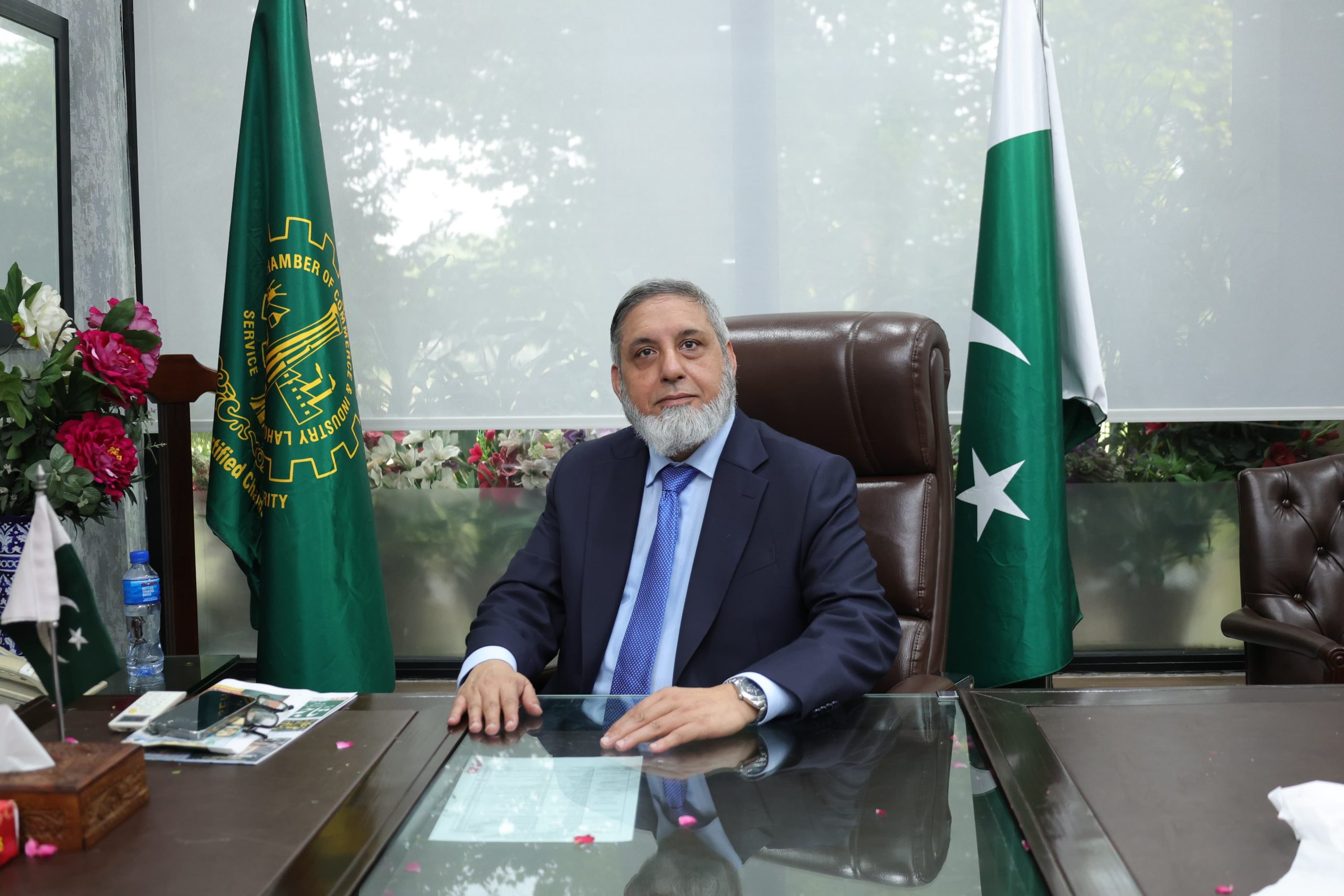
Senior Vice President LCCI Tanveer Ahmed Sheikh expressed concern over the International Monetary Fund’s projected 3.2 percent GDP growth for the current fiscal year, warning that such a pace is insufficient to generate jobs or expand industry. He said high energy costs, regulatory uncertainty and inconsistent tax and policy frameworks continue to discourage investment and weaken business confidence.
Sheikh also highlighted a 44 percent surge in Pakistan’s trade deficit, attributing it to declining exports to key regional markets such as China, Afghanistan and Bangladesh, coupled with sustained reliance on imports, including energy and raw materials. He cautioned that regional instability, rising freight costs and subdued global demand are further undermining export competitiveness.
Commenting on the recently announced India–EU trade agreement, the LCCI SVP described it as a wake-up call for Pakistan. He warned that preferential market access between India and Europe could widen the competitiveness gap, making Pakistan less attractive for international investors and exporters unless urgent reforms are implemented.
Sheikh urged the government to prioritize export-led growth, reduce the cost of doing business, ensure policy stability, expand the tax net through documentation and technology, and strengthen trade diplomacy to protect Pakistan’s share in regional and global markets.
“Without decisive action, Pakistan risks remaining trapped in a low-growth cycle, with rising external pressures and eroding investor confidence,” he said.
The LCCI SVP also stressed the need for closer coordination between the federal and provincial governments to improve revenue collection and ensure that public spending is directed toward productivity-enhancing sectors such as infrastructure, technology, and skills development. He said improving ease of doing business through faster approvals, simplified compliance procedures, and transparent regulations would help restore confidence among both local and foreign investors. Sheikh added that Pakistan must move beyond short-term stabilization measures and adopt a long-term, consistent economic strategy focused on competitiveness, innovation, and regional integration to secure sustainable growth and protect its industrial and export base in an increasingly competitive global environment.