Imagine a father returning home after a long, exhausting day of work, carrying nothing but disappointment because his earnings are no longer enough to feed his children. Imagine a mother quietly going without a meal so that her children can eat. Imagine a young graduate holding a degree but having no job, an elderly pensioner choosing between buying medicines and paying the electricity bill, and millions of families going to bed every night uncertain about what they will eat tomorrow. These are not fictional stories or isolated incidents. This is the daily reality of millions of ordinary Pakistanis.
Behind the grand speeches, official economic claims and political celebrations lies a painful human tragedy. A country of enormous resources, extraordinary talent and immense potential has reached a point where millions of its citizens are struggling simply to survive. This is not the Pakistan our people dreamed of at independence. This is not the prosperity they were promised. And this is certainly not the picture of an Asian Tiger.
According to the World Bank’s October 2026 Poverty and Equity Brief, Pakistan’s national poverty rate increased from approximately 21.9% in 2018–19 to 28.9% in 2024–25. In simple terms, approximately 70 million Pakistanis are now living below the national poverty line. These are not just figures in an economic report; they represent millions of broken dreams, struggling households and uncertain futures.
For decades, our rulers have spoken about making Pakistan an Asian Tiger. Governments have changed, political alliances have shifted and slogans have been replaced by new slogans. Yet the ordinary citizen continues to struggle for food, education, healthcare, employment and even basic household necessities. What kind of economic success is this when millions cannot afford two decent meals a day? What kind of development is this when a father’s earnings cannot meet his family’s monthly expenses?
An economy cannot be judged merely by foreign exchange reserves, stock-market performance, IMF agreements, debt repayments or GDP growth figures. The real test of economic progress is whether ordinary people are living better lives. If economic stability does not translate into affordable food, employment, education and healthcare, then who is actually benefiting from that stability?
Electricity bills consume a substantial portion of household income. Food, fuel, medicines, school fees and house rent compete for the same limited earnings. Salaried employees struggle against inflation, pensioners face financial insecurity, farmers confront rising production costs, and young graduates increasingly look abroad for opportunities. This is not merely an economic crisis; it is a crisis of human dignity.
The most disturbing question is what our political leadership and bureaucracy have actually delivered to this country. For decades, politicians have occupied the corridors of power, while senior bureaucrats have controlled the machinery of administration, public expenditure and policy implementation. Governments have come and gone, ministers and secretaries have changed, but the fundamental problems remain.
Who is accountable for the repeated failure of public policies, deteriorating public education, inadequate healthcare, unemployment, mounting public debt and poor service delivery? Who will answer for billions spent without achieving the promised results? Politicians cannot escape responsibility by blaming bureaucrats, and bureaucrats cannot escape accountability by blaming political interference. Both must answer for their decisions, omissions and failures.
Pakistan does not suffer from a shortage of committees, commissions, policies, rules, regulations or highly paid decision-makers. It suffers from a persistent failure to translate authority, public money and administrative power into tangible improvements in people’s lives. After nearly eight decades of independence, if 70 million Pakistanis are living in poverty, the question is unavoidable: What exactly has this system delivered to the ordinary Pakistani, and who will accept responsibility for the Pakistan we have created?
Our Parliament should be the place where these realities receive the greatest attention. Yet where is the sustained national debate on poverty, unemployment, inflation, malnutrition and the future of our young generation? Pakistan has approximately 25 million children aged 5–16 out of school. Millions more attend schools where the quality of education remains inadequate. Poverty is depriving children of education, families of healthcare and young people of opportunities. A country that cannot educate its children cannot seriously claim to be preparing for a prosperous future.
The provincial picture is equally disturbing. The reported 2024–25 estimates place poverty at approximately 23.3% in Punjab, 32.6% in Sindh, 35.3% in Khyber Pakhtunkhwa and 47% in Balochistan. Rural poverty is substantially higher than urban poverty. These figures should compel every provincial government to reconsider its priorities. Development is not simply constructing roads, inaugurating buildings or announcing schemes. It means functioning schools, accessible hospitals, productive agriculture, employment and better living conditions.
Every political party must answer some basic questions. How many sustainable jobs has it created? How many children has it brought into schools? What measurable improvement has it delivered to household purchasing power? How many families has it lifted out of poverty? These questions must be asked of every government, irrespective of its political identity. Economic difficulties cannot always be blamed on previous administrations, international circumstances or inherited problems. Explanations cannot become permanent excuses.
Pakistan is not short of natural resources, agricultural potential, hardworking citizens or talented young people. What it desperately needs is a development model that places people before political publicity, public welfare before privileged interests and national planning before short-term political survival. We need investment in education, technical training, agriculture, livestock, industry and export-oriented production. We need fair taxation, transparent public expenditure, accountable institutions and continuity of economic policies.
We must also question the unequal distribution of national sacrifice. Ordinary citizens are repeatedly asked to tolerate inflation, pay higher taxes, accept expensive utilities and endure economic hardship in the name of national stability. But is the same degree of sacrifice demanded from those who enjoy privilege, influence and access to public resources? A country cannot build public confidence when the heaviest burden repeatedly falls on those least able to bear it.
Pakistan does not need another slogan about becoming an Asian Tiger. It needs a transformation that allows an ordinary Pakistani to live with dignity. Before talking about becoming an Asian Tiger, let us ensure that a father can feed his children, a mother can obtain medical treatment, a student can attend school, a graduate can find decent employment and an elderly pensioner can afford medicines without depending on charity.
The 70 million poverty figure must become a national accountability benchmark, not another newspaper headline that disappears after a few days. Parliament must debate it, provincial assemblies must examine it, and governments must publish measurable annual progress on poverty reduction, employment, education and healthcare. The people deserve evidence, transparency and results, not another collection of promises.
To those governing Pakistan, from the federal capital to the provincial capitals, the message is straightforward: do not tell people that Pakistan is progressing while millions are struggling to survive. Do not ask them to celebrate economic stability when they cannot afford the necessities of life. Do not speak of an Asian Tiger while ignoring the ordinary Pakistani who is fighting every day to keep his family above the poverty line.
A nation is not great because of the power of its rulers, the wealth of a privileged minority or the size of its economic claims. A nation is great when its poorest citizens can live with dignity, its children have equal opportunities and its people can look towards tomorrow without fear.
This is Pakistan. This is the ordinary Pakistani. These are 70 million lives behind a poverty statistic.
And this is the question our rulers, politicians and senior bureaucrats must answer:
If this is the condition of the ordinary Pakistani after nearly eight decades of independence, then whose Pakistan are we building, and for whom are we claiming to become an Asian Tiger?
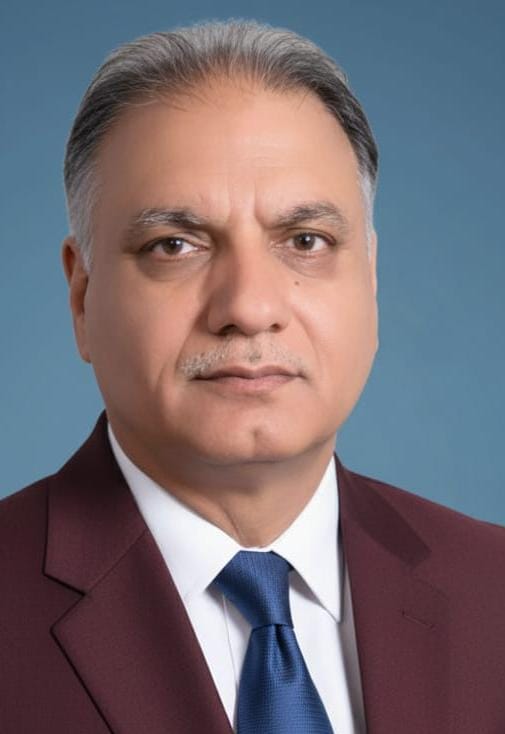
The Advisor Academics University of Veterinary and Animal Sciences, Swat and former Financial Advisor Finance Division, Government of Pakistan