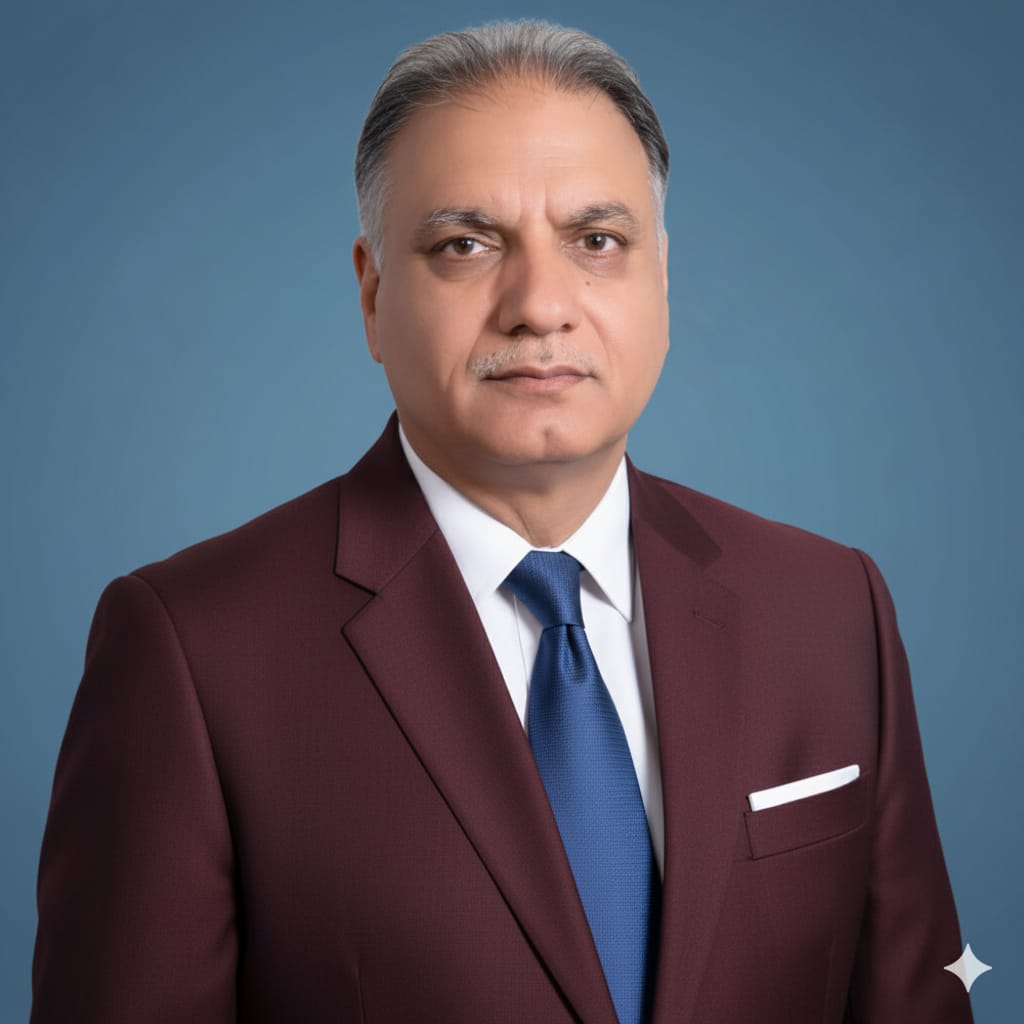



By Dr Alamdar Hussain Malik
The Dairy Conference held on 4 February 2026 at the Ministry of Planning, Development and Special Initiatives, chaired by Federal Minister Ahsan Iqbal, was presented as a major policy engagement to steer Pakistan’s dairy sector toward growth and exports. In substance, however, the event exposed a deeper and recurring weakness in agricultural governance: policy discussions held without the participation of those who actually constitute the sector.
Read also: Call for independent veterinary drug authority to protect livestock, public health
The most serious flaw of the conference was the absence of representatives from recognized dairy associations, including dairy farmers’ organizations, milk processors, and value-chain stakeholders.
A sector that contributes close to 60 percent of agricultural GDP and supports millions of rural livelihoods cannot be meaningfully planned in closed rooms. Consultation without stakeholders is not strategy—it is administrative formality.
Equally revealing was what the official press release failed to address. Pakistan continues to incur heavy economic and productivity losses due to Foot and Mouth Disease (FMD), a transboundary viral disease that directly undermines milk yield, animal health, and export credibility. Yet there was no announcement, roadmap, or commitment regarding the establishment of a local FMD vaccine production facility. Pakistan remains dependent on imported vaccines that are often strain-mismatched, irregular in supply, and costly. For a country hosting one of the world’s largest dairy herds, this omission reflects systemic neglect rather than oversight.
The silence extended to other critical constraints. There was no serious reference to drug and antibiotic residue management, despite widespread misuse of veterinary drugs, lack of prescription control, and weak enforcement of withdrawal periods. Nor was there any mention of animal identification and traceability systems, without which no serious dairy export market is accessible. Global dairy trade is governed by strict biosecurity, residue-free certification, and end-to-end traceability—standards Pakistan currently does not meet.
Against this backdrop, the recurring ambition of achieving USD 100 billion in dairy exports by 2035 lacks economic logic. At present, only about 4 percent of Pakistan’s milk production is commercially utilised through formal processing channels. The remaining 96 percent flows through informal, undocumented networks. In practical terms, Pakistan does not yet have a dairy industry; it has a dairy activity. Export markets require standardized production, cold-chain integrity, residue compliance, traceability, and regulatory oversight—none of which can be built on an overwhelmingly informal system.
Even more fundamentally, Pakistan’s dairy sector has suffered from decades of neglect in genetic improvement policies. Since independence, there has been no coherent national strategy to improve local breeds, introduce high-yield germplasm, or implement structured breeding programs. Yet policymakers now talk about achieving USD 100 billion in dairy exports by 2035. This is not just ambitious—it is biologically and economically implausible. Without healthy, productive herds, disease control, feed quality, and formal commercialization, no amount of marketing or international negotiation can deliver such export targets. Ambitions for global markets must be grounded in genetic capacity, productivity, and sustainable livestock management—none of which have been systematically addressed in Pakistan.
Export targets are not policy instruments; they are outcomes. They emerge only after difficult reforms in disease control, market regulation, institutional capacity, and private-sector integration. Declaring ambitious numbers without addressing these prerequisites risks international rejection, reputational damage, and long-term exclusion from premium markets.
Perhaps the most telling feature of the conference was the photo session itself. The faces prominently featured were largely the same individuals who have occupied livestock and dairy policy spaces since the early 2000s. Continuity would have been an asset had it delivered results. Instead, after more than two decades of meetings and committees, Pakistan still lacks a national FMD control programme, a local vaccine production plant, a credible residue-monitoring regime, functional traceability, and systematic breed improvement. Commercial milk utilisation remains stuck at 4 percent, while dairy exports remain negligible.
Policy longevity without measurable outcomes is not experience—it is institutional inertia.
When advisory circles remain closed, innovation is excluded, younger professionals are sidelined, and farmer voices are muted. Conferences then become rituals rather than instruments of reform—events where optics replace outcomes and photographs substitute for policy.
Pakistan’s dairy sector does not need more conferences. It needs decisions instead of declarations, disease control instead of denial, and stakeholder inclusion instead of staged consultations. Beyond optics, the government must prioritize the establishment of local FMD vaccine production, enforce drug residue monitoring, implement a national traceability system, and invest in genetic improvement of livestock. Every year, Foot and Mouth Disease alone causes losses exceeding Rs 200 billion to livestock farmers, yet the sector is still reduced to photo sessions, press releases, and empty rhetoric—while the real economic and social costs are ignored. Farmers, processors, and researchers must be formally included in policymaking to ensure that reforms are grounded in reality. Without such measures, ambitious export targets, lofty productivity claims, and repeated conferences will remain numbers without foundations, offering neither security to livestock, sustainability to the sector, nor economic gain to the nation.
Pakistan’s dairy potential is vast—but unlocking it demands courage, accountability, and a break from decades of institutional inertia. The time for photo ops is over; the time for real, measurable reform is now.