


By Sports Reporter
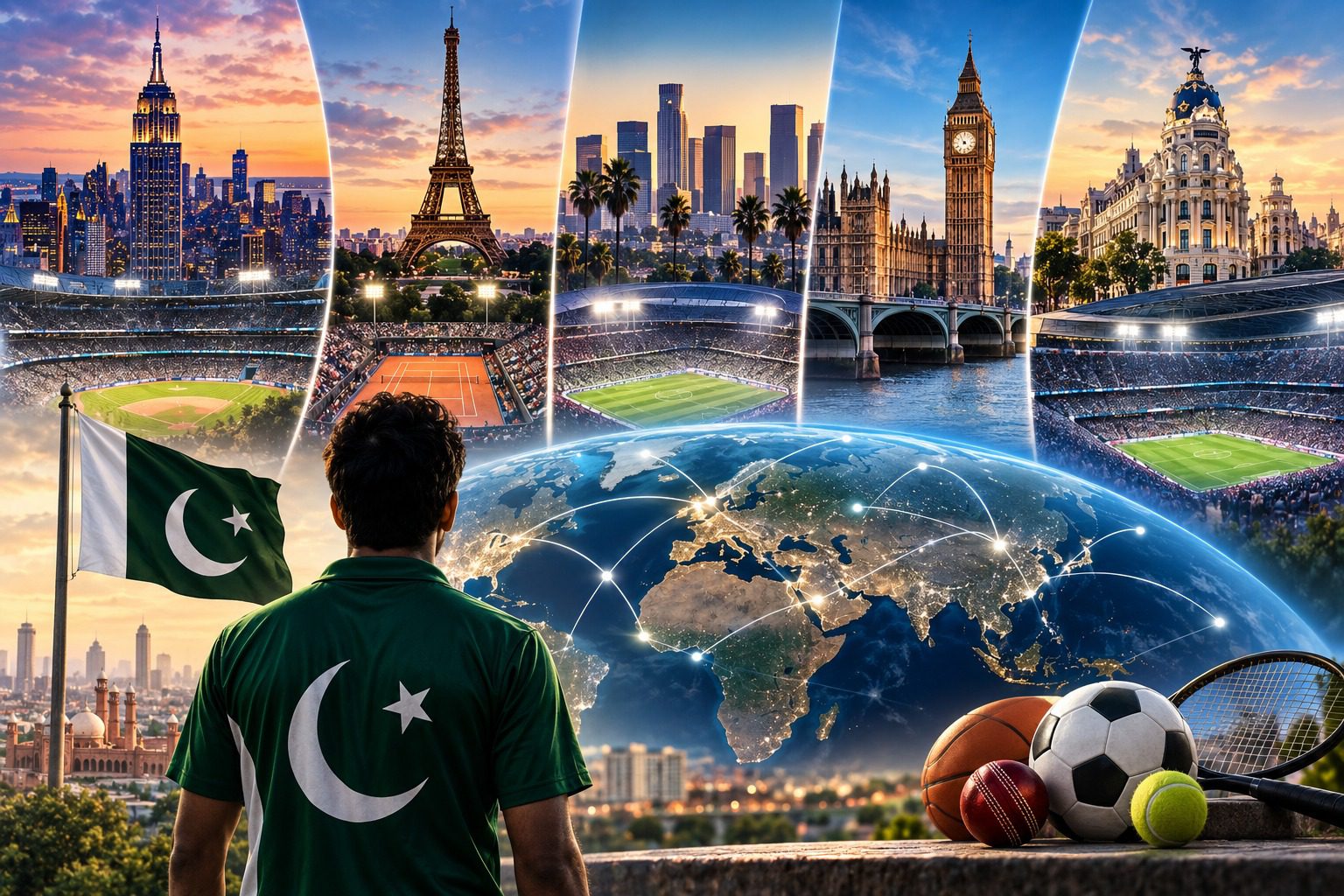
LAHORE: Pakistan has failed to secure a place in the 2026 ranking of the world’s 100 leading sports cities, despite the country’s huge cricket following, established sporting history and major urban centres including Lahore and Karachi regularly hosting domestic and international competitions.
The absence stands out as cities from neighbouring India and several Middle Eastern countries found places in the global ranking, while New York emerged as the world’s No. 1 sports city.
According to the 2026 Sports Cities Ranking released by Swiss-based Burson, New York climbed from third place to the top position, replacing Paris, which slipped to second after remaining No. 1 for three consecutive years. Los Angeles finished third.
The ranking evaluates 100 cities regarded as having significant connections with the global sports industry. It draws on the views of experts, sports media and international sports leaders, while also taking into account social media presence and media coverage.
For Pakistan, however, the most significant feature of the ranking is the absence of any of its cities from the global top 100.
Lahore, widely regarded as one of Pakistan’s major sporting centres and home to several important cricket facilities, did not make the list. Karachi, the country’s largest city and another major centre for cricket and other sports, was also absent.
The result comes despite Pakistan regularly staging major cricket competitions and attracting large audiences for the sport.
In contrast, Mumbai was ranked 51st and New Delhi 65th, giving neighbouring India two cities in the global list.
Several Middle Eastern cities also secured positions. Dubai was ranked 29th, Riyadh 68th and Jeddah 98th.
Elsewhere in Asia, Tokyo stood at 16th, while Sapporo was ranked 99th. Sydney occupied 24th position, while Cape Town was placed 85th.
At the top of the table, London finished fourth and Madrid fifth. Barcelona secured sixth position, Milan seventh and Lausanne eighth. Manchester was ranked 10th, followed by Washington at 11th and Miami at 12th.
New York’s rise in the ranking was linked to its prominence in major sporting events and its global sporting profile, including attention surrounding the NBA and FIFA World Cup.
Pakistan’s absence raises questions
Pakistan’s failure to place a city among the top 100 does not necessarily reflect the popularity of sport in the country. Cricket commands an enormous following, while Pakistan also has a distinguished history in hockey, squash and several other sports.
The ranking instead highlights the challenge of translating domestic sporting passion into the international visibility required for a city to establish itself as a major global sports destination.
Pakistan has restored significant international cricket activity in recent years, with Lahore, Karachi and Rawalpindi serving as important venues. The Pakistan Super League has also helped generate sporting activity and international exposure for Pakistani cities.
However, competing with the world’s leading sports destinations involves more than hosting matches. International event portfolios, modern sporting infrastructure, accessibility, global media exposure and a city’s overall sporting ecosystem can all contribute to its international profile.
Lahore and Karachi have potential
Lahore arguably has some of Pakistan’s strongest credentials to develop a larger international sporting identity. The city has major cricket facilities and a long association with hockey and other sports.
Karachi similarly possesses a large population, a substantial sporting audience and major cricket infrastructure.
Pakistan’s challenge is to convert these strengths into sustained international recognition by attracting a wider range of major sporting events and developing infrastructure capable of supporting them.
The presence of Dubai, Riyadh and Jeddah in the ranking also illustrates the growing sporting profile of cities in the wider region.
A wake-up call for Pakistan’s sports sector
The ranking could provide policymakers and sports administrators with an opportunity to examine why Pakistani cities remain absent from international assessments of leading sporting destinations.
Improving stadiums and training facilities, attracting international tournaments beyond cricket, strengthening sports tourism and increasing international promotion could help Lahore, Karachi and other cities build stronger global sporting identities.
Pakistan already possesses one of the essential ingredients — a large and passionate sporting audience. The bigger challenge is turning that enthusiasm into infrastructure, international events and sustained global visibility.
Outlook
With countries increasingly using major sporting events to promote cities, attract visitors and strengthen their international profiles, competition among global sports destinations is likely to intensify.
For Pakistan, inclusion of Lahore, Karachi or another city in future editions would require a broader strategy that combines international event hosting, infrastructure development, sports tourism and global promotion.
Until then, the 2026 ranking presents a striking contrast: Pakistan remains a country with an enormous passion for sport, yet none of its cities has made the list of the world’s top 100 sporting destinations.
