


By Dr Alamdar Hussain Malik
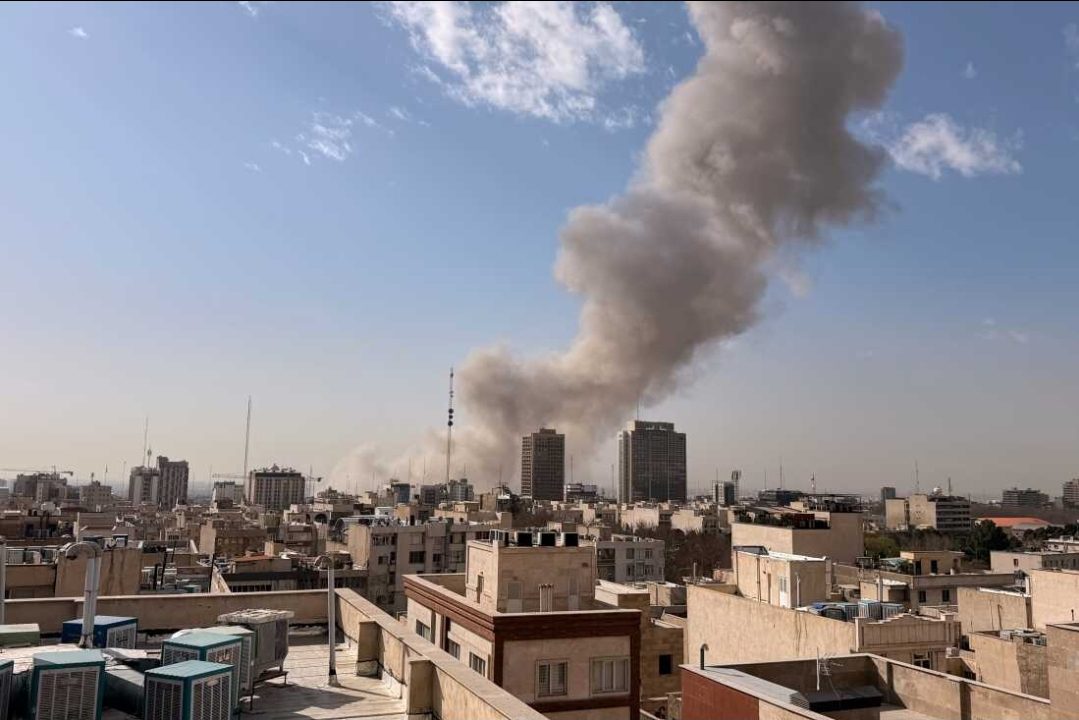
The recent wave of “surgical strikes” and cross-border operations along the approximately 2,670 km frontier between Pakistan and Afghanistan has once again exposed a fragile fault line in regional security. What may appear as tactical military responses risk evolving into a prolonged strategic confrontation. The border is not merely a line on a map; it is a complex geopolitical corridor shaped by history, migration, ideology, trade, and security interdependence. If not handled with strategic maturity, today’s security responses may become tomorrow’s economic and diplomatic crises.
Read also: Tit for tat in politics: Lethal for Pakistan’s economy
Historically, Pakistan’s northern border with Afghanistan was considered one of the safest frontiers. For decades, it remained a zone of relative stability and mutual accommodation. Yet, in recent years, this security has suddenly eroded, giving rise to persistent militant activity, cross-border tensions, and recurring clashes. This sudden shift demands critical review, to identify structural weaknesses, governance gaps, and external influences that have transformed what was once a secure frontier.
The transformation into a high-voltage conflict zone did not happen overnight. Non-state actors — militant groups, insurgent networks, and organized criminal elements — have exploited ungoverned spaces, porous passes, and weak local administration to establish sanctuaries. Cross-border mobility, tribal allegiances, and limited state presence allowed these actors to entrench themselves, launch attacks, and create conditions where conventional border security measures became less effective.
External influences have further complicated the situation. Regional powers, sometimes indirectly, have invested in proxy actors or provided tacit support to groups aligned with their strategic interests. These interventions, combined with ideological propagation, smuggling networks, and resource flows, enabled non-state actors to operate with relative impunity. What was once a safe and mutually respected border became a theater where militancy, lawlessness, and geo-strategic competition converged.
It is also important to reflect on why this situation has arisen. Chronic instability stems from porous boundaries, ungoverned spaces, militant sanctuaries, historical grievances, and weak institutional linkages. These structural factors are far more consequential than immediate political attachments. Any review must rise above political affiliations, focusing on long-term security, governance, and regional stability rather than short-term partisan gains
.
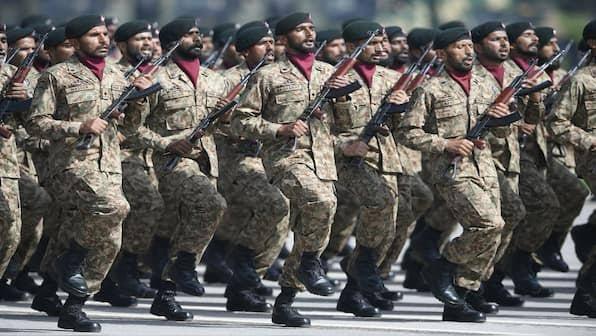
Recent escalations have focused on militant sanctuaries and cross-border attacks, particularly those attributed to Tehrik-i-Taliban Pakistan operating from Afghan soil. Pakistan has undertaken targeted operations to neutralize immediate threats. It is wholeheartedly acknowledged that the ever-shining and extremely professional Pakistan Army responded decisively to this aggression, sending a loud and clear message that it has zero tolerance against any violation of its motherland. While such actions provide short-term deterrence, repeated unilateral strikes risk transforming tactical engagements into prolonged strategic confrontation. Every military response invites counter-narratives, and every escalation deepens mistrust between neighboring states.
Security, though paramount, cannot be sustained through firepower alone. Persistent border hostilities create operational strain on armed forces, increase civilian displacement, and provide propaganda opportunities for extremist factions seeking recruitment momentum. A militarized border without synchronized political engagement gradually erodes any space for cooperation. In such an environment, intelligence-sharing collapses, diplomatic communication weakens, and suspicion replaces dialogue.
Beyond security, the economic consequences are equally alarming. Border crossings such as Torkham and Chaman function as lifelines for bilateral trade and regional connectivity. Recent data shows Pakistan’s exports to Afghanistan dropped sharply to about $228 million, while imports from Afghanistan stand at just above $6 million, down from earlier trade volumes exceeding $2 billion annually. Repeated closures disrupt exports of cement, pharmaceuticals, textiles, and agricultural products. Transporters, daily wage laborers, customs agents, and small traders suffer immediate income loss. Supply chains fracture, transit trade stalls, and informal smuggling networks expand to fill the vacuum.
For Pakistan, already navigating fiscal constraints and structural economic challenges, recurring trade interruptions add further pressure. For landlocked Afghanistan, restricted access to trade routes intensifies economic isolation and deepens humanitarian vulnerabilities.
Investor confidence is another silent casualty. Persistent hostilities discourage foreign direct investment, raise insurance and transportation costs, and undermine broader regional connectivity initiatives. Economic uncertainty feeds unemployment, and unemployment in fragile regions fuels instability. Thus, a cycle emerges in which insecurity damages the economy, and economic distress fuels further insecurity.
Historical context adds another layer of complexity. During the 1980s, Pakistan hosted nearly four million Afghan refugees, providing shelter and opportunity at a time of immense upheaval. For decades, Pakistan served as a second home to displaced Afghans. This legacy of hospitality forms part of the moral and political fabric of bilateral relations. Yet sustained border tensions risk eroding public goodwill, fueling anti-refugee sentiment, and deepening ethnic polarization in sensitive frontier provinces. Social cohesion, once fractured, is difficult to rebuild.
Strategic maturity demands that both states move beyond reactive postures. Durable stability requires structured engagement mechanisms, continuous diplomatic dialogue, and verifiable commitments to prevent the use of each other’s territory for hostile activities. Border management must integrate security enforcement with economic facilitation.
Protected trade corridors, digitalized customs systems, and monitored joint markets could transform points of friction into platforms of cooperation. Counter-terror frameworks must be institutional rather than episodic, built on measurable benchmarks rather than rhetorical assurances.
Broader regional developments influence this fragile equilibrium. The recent visit of Narendra Modi, Prime Minister of India, to Israel, and the subsequent announcement of special assistance packages for Afghanistan, adds another layer to Pakistan’s strategic considerations. While these initiatives are framed as hum anitarian and developmental, their timing amid ongoing military actions on the western frontier naturally gives them geopolitical weight. External influence in Afghanistan can shift internal alignments and indirectly impact Pakistan’s border security environment, making vigilance, strategic assessment, and diplomatic engagement essential.
Crucially, historical and contemporary experience shows that military engagement alone never brings lasting peace. While tactical operations may provide short-term relief, they do not resolve underlying political, social, and economic grievances. Therefore, political and diplomatic channels must be activated without delay, including the possible enrolment of a neutral or friendly third country to mediate and help implement confidence-building measures. Such interventions can create platforms for dialogue, prevent miscalculations, and ensure that tactical security operations do not escalate into prolonged conflict.
Above all, the government should call an All-Parties Conference, keeping aside which parties currently hold shares in the National Parliament. A consensus-driven approach, informed by expertise rather than partisanship, is essential to formulate a sustainable strategy. National consensus ensures that border security, diplomatic engagement, and economic stability are treated as priorities that transcend party politics, reducing the risk of short-term political interests undermining long-term national security.
Military instruments are tools of policy, not substitutes for it. If cross-border strikes continue without parallel diplomatic architecture, defense expenditures will inevitably rise while development spending contracts. Education, health, and infrastructure suffer when national budgets tilt disproportionately toward security operations. Over time, economic deprivation becomes fertile ground for radicalization, undoing whatever tactical gains were achieved on the battlefield.
The Pakistan–Afghanistan border crisis is therefore not solely a matter of territorial defense. It is a test of statesmanship. It demands a balance between sovereignty and restraint, strength and wisdom, deterrence and diplomacy. Escalation may project resolve in the short term, but equilibrium ensures survival in the long term.
The choice confronting both nations is clear. They may allow retaliatory cycles to dictate the future, or they may pursue structured engagement that transforms confrontation into calibrated cooperation. History will not remember the number of strikes launched; it will remember whether leadership chose enduring stability over temporary dominance.