



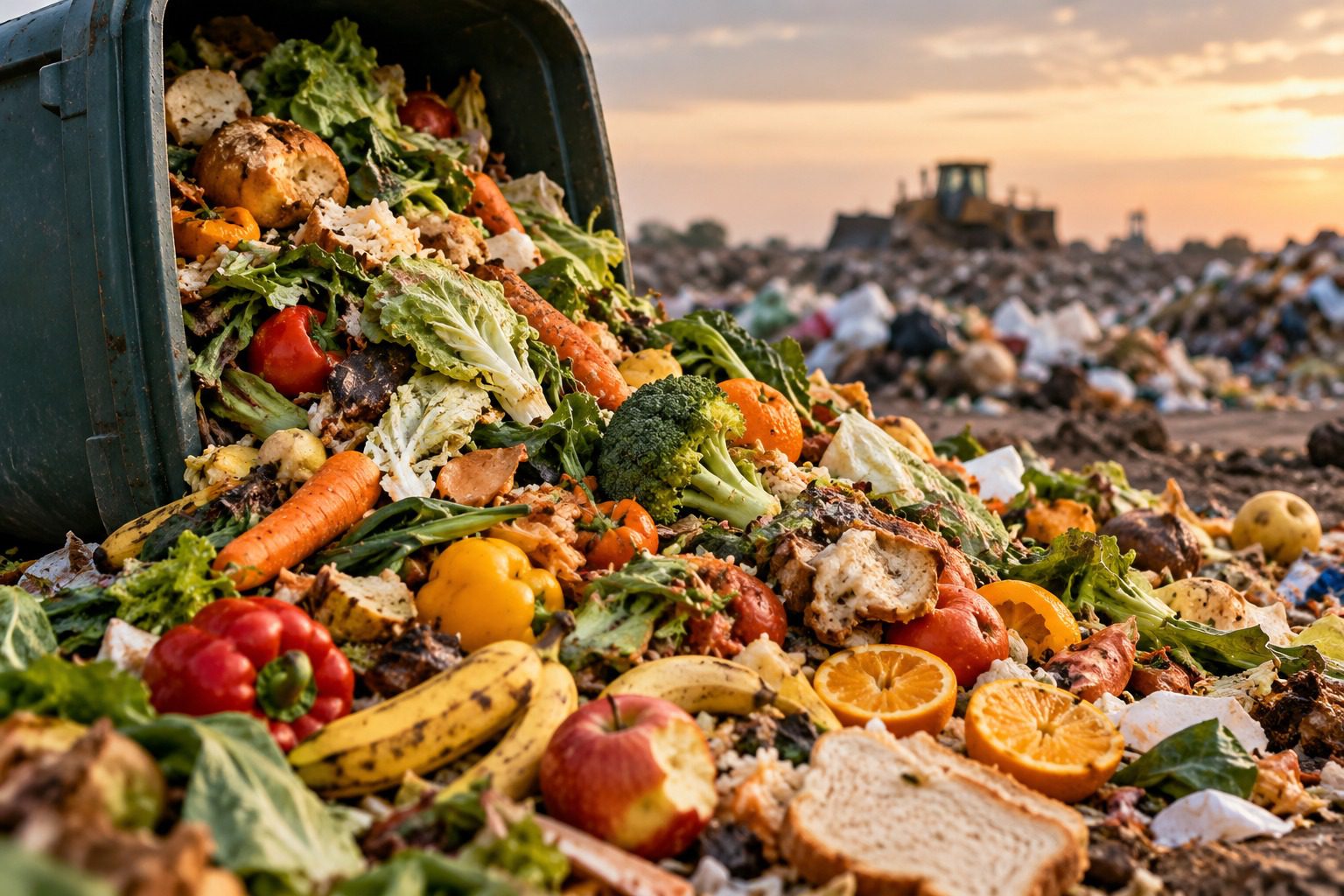
KARACHI (Web Desk): The world wasted an estimated 1.05 billion tonnes of food in 2022, with households responsible for 60% of the total, highlighting the scale of a global problem that carries serious economic and environmental consequences, according to the United Nations Environment Programme (UNEP).
UNEP’s Food Waste Index Report 2024 estimated that food waste from households, food services and retail outlets amounted to approximately 132 kilogrammes per person annually. The total represented nearly one-fifth of the food available to consumers across these sectors.
The findings highlight a major contradiction in global food systems: substantial quantities of food are discarded even as millions of people struggle to access adequate nutrition.
Households generate most food waste
According to the report, households discarded approximately 631 million tonnes of food in 2022, accounting for 60% of the global total.
Restaurants, hotels and other food service businesses contributed around 290 million tonnes, or 28%, while retail outlets accounted for another 131 million tonnes, representing 12%.
The figures suggest that efforts to tackle food waste must extend beyond supermarkets and commercial kitchens to everyday household practices.
Buying more food than necessary, poor meal planning, improper storage and throwing away edible leftovers can all contribute to unnecessary waste. Better planning and storage could help families reduce waste while lowering grocery expenses.
Food waste adds to climate pressures
The consequences extend beyond the cost of discarded food. UNEP estimates that food loss and waste account for between 8% and 10% of annual global greenhouse gas emissions. Food that ends up in landfills can produce methane, while the production of uneaten food consumes land, water, energy and agricultural inputs.
Reducing waste could therefore help conserve natural resources and reduce emissions associated with food production and disposal.
The United Nations’ Sustainable Development Goal 12.3 calls for halving per capita global food waste at retail and consumer levels by 2030, alongside reducing food losses throughout production and supply chains.
Better planning can limit waste
UNEP recommends stronger measurement and coordinated action by governments, businesses and households to reduce food waste.
Consumers can help by preparing shopping lists, purchasing appropriate quantities, storing food correctly and using older items before opening new supplies. Freezing suitable foods before they spoil and making use of leftovers can also prevent avoidable waste.
Restaurants and retailers can improve stock management, monitor products approaching their expiry dates and explore safe ways to redistribute surplus food.
UNEP has also cautioned that many countries lack reliable, consistent data on food waste, particularly in retail and food service sectors. Improved measurement is essential to identify the biggest sources of waste and assess whether policies are working.
The report makes clear that reducing food waste is not simply a matter of changing consumer behaviour. It also requires better supply-chain management, reliable data and cooperation between the public and private sectors.