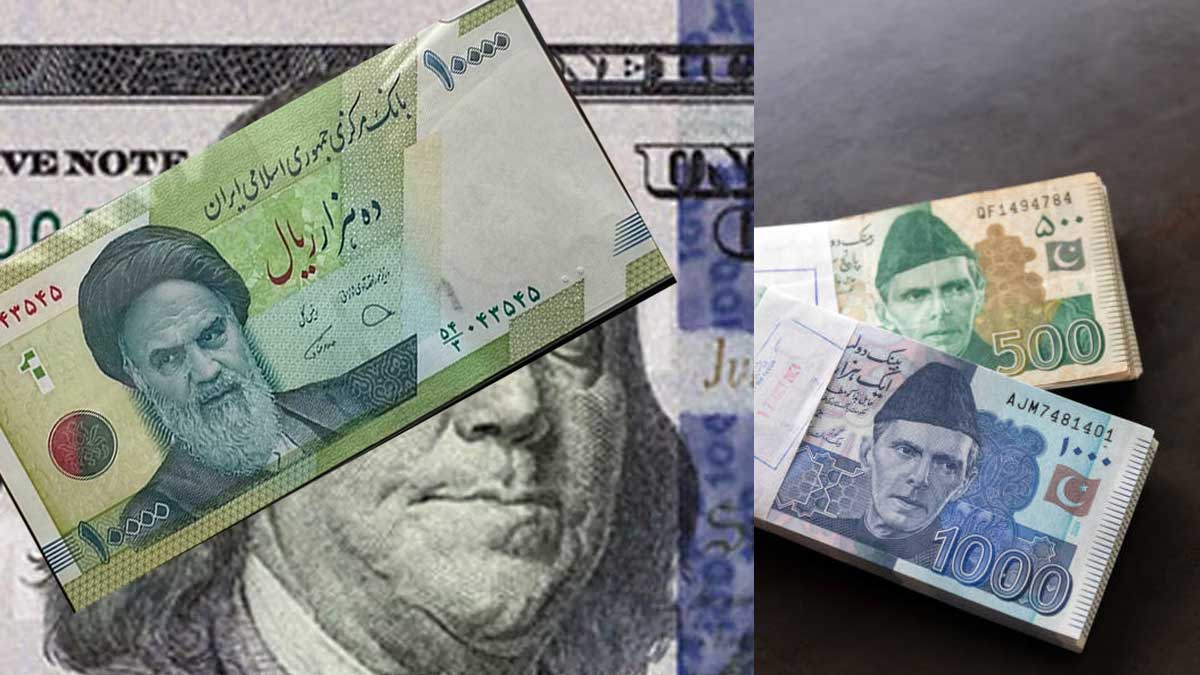
ISLAMABAD/TEHRAN (Web Desk) – The Iranian currency remained under intense pressure in the open market on Saturday, with continued depreciation highlighting the country’s ongoing economic challenges and creating fresh implications for trade, remittances and cross-border business with neighboring Pakistan.
Market participants said the rial continued to trade at historically weak levels against the US dollar, reflecting the combined impact of international sanctions, high inflation, limited access to foreign exchange reserves and persistent economic uncertainty. Currency dealers noted that while Iran maintains official exchange rates for some transactions, the free market rate remains the primary benchmark used by businesses and individuals conducting everyday financial activities.
According to recent market estimates, one US dollar is trading at approximately 1.75 million Iranian rials in the country’s open market. The sharp gap between official and unofficial exchange rates continues to underscore the pressure facing Iran’s financial system and the declining purchasing power of its national currency.
The weakness of the rial has also attracted attention in Pakistan, where traders and currency dealers closely monitor exchange movements due to growing commercial ties between the two neighboring countries. In major Pakistani cities, including Karachi and Lahore, demand for Iranian rials has fluctuated as some investors and traders speculate that the currency could recover if regional conditions improve in the future.
Currency dealers said exchange rates offered in Pakistan vary depending on market demand and available supply. As a result, individuals planning to purchase or sell Iranian currency are advised to compare rates before completing transactions.
Economic analysts believe the rial’s prolonged depreciation reflects structural challenges that extend beyond short-term market fluctuations. Years of international sanctions have reduced Iran’s oil revenues and limited its access to international banking systems, making it increasingly difficult to stabilize the currency.
At the same time, rising inflation has weakened household purchasing power and increased demand for foreign currencies, particularly the US dollar, which many Iranians view as a safer store of value during periods of economic uncertainty.
The continued decline of the rial has significant implications for bilateral trade between Pakistan and Iran. A weaker Iranian currency can reduce the cost of Iranian exports in foreign markets, potentially making products such as agricultural goods, construction materials and manufactured items more competitive for Pakistani buyers.
However, the same currency volatility creates pricing uncertainty for importers and exporters. Businesses engaged in cross-border trade often face challenges in negotiating contracts, calculating costs and managing exchange-rate risks when the value of the rial changes sharply over short periods.
Financial experts say remittances between the two countries are also affected by exchange-rate volatility. Families receiving financial support from relatives working across the border may experience significant differences in the value of transfers depending on daily market movements. As a result, money transfer providers and currency exchange businesses continue to advise customers to monitor exchange rates carefully before completing transactions.
Border markets, particularly in areas where commercial activity between Pakistan and Iran is frequent, are also adjusting to the changing value of the rial. Traders say they increasingly review prices on a daily basis to reduce losses caused by sudden exchange-rate movements.
Analysts believe future developments in the rial will largely depend on broader geopolitical and economic conditions. Any easing of international sanctions or improvement in diplomatic relations could provide some support to the currency by increasing foreign investment and improving access to global financial markets.
Conversely, continued economic pressure and geopolitical uncertainty could keep the rial under strain in the coming months.
Market observers recommend that businesses and individuals involved in cross-border trade rely on licensed exchange companies and regularly monitor prevailing market rates before making financial decisions. They also stress that while speculation over a possible recovery in the rial continues in some markets, currency investments remain highly volatile and carry substantial financial risk.
As regional economic conditions continue to evolve, the performance of the Iranian rial is expected to remain an important indicator for traders, investors and policymakers monitoring economic relations between Pakistan and Iran.