


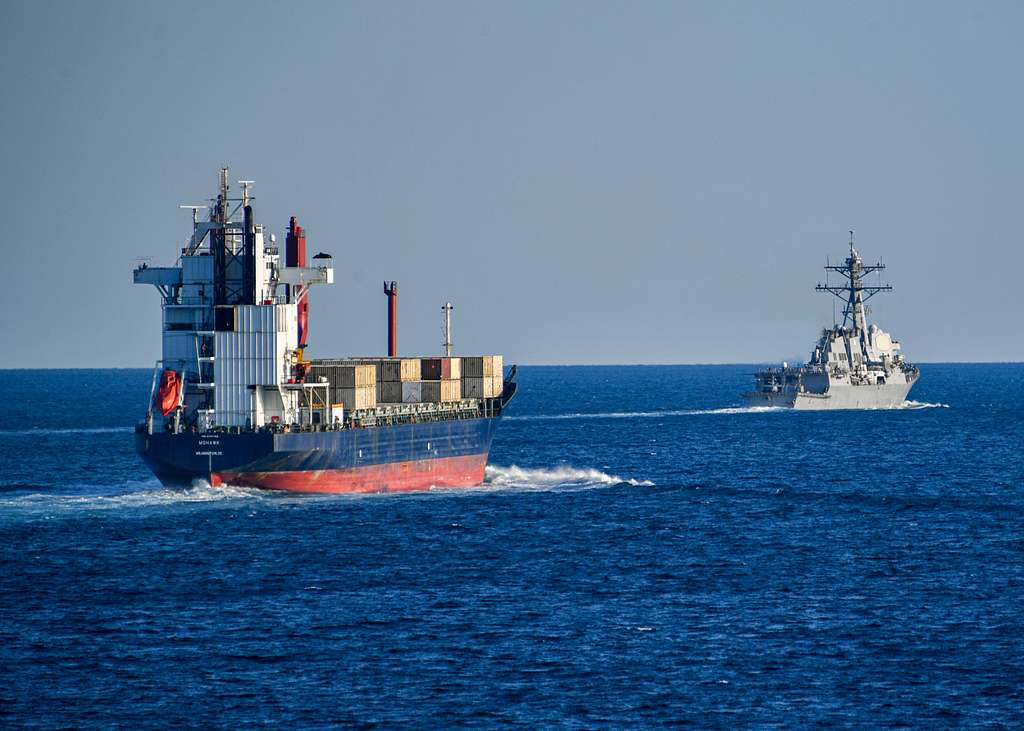
LONDON (Web Desk) – Maritime traffic through the Strait of Hormuz slowed dramatically on Thursday as renewed military confrontation between the United States and Iran heightened security concerns across one of the world’s most important energy corridors.
Shipping data showed that only two tankers passed through the strategic waterway during the early hours of the day, reflecting growing caution among ship operators following fresh exchanges of military strikes between Washington and Tehran.
Industry analysts said the sharp decline in vessel movements highlighted the seriousness of the security situation, with several shipping companies delaying voyages or reassessing planned routes until conditions become clearer.
The Strait of Hormuz serves as the main transit point for nearly one-fifth of the world’s oil supplies, making any disruption a significant concern for international energy markets and global trade.
One of the vessels that crossed the strait was the crude oil supertanker Berg 1, which had loaded cargo from Iran’s Kharg Island. Another vessel, the Marshall Islands-flagged chemical tanker Well Sail, also completed its transit after departing from the United Arab Emirates.
Shipping experts reported that an increasing number of vessels have begun switching off their Automatic Identification System (AIS) tracking transmitters while operating in the Gulf, making it more difficult to monitor commercial maritime traffic.
Analysts said the reduction in visible shipping activity reflects concerns among vessel operators over potential attacks rather than any formal closure of the waterway.
Energy consultancy experts noted that the slowdown demonstrates the growing perception of risk among shipowners and insurers following the latest escalation between the United States and Iran.
The renewed tensions followed fresh US military strikes against Iranian targets, which Washington described as measures to protect freedom of navigation after attacks on commercial shipping earlier this week.
Iran rejected the American accusations and responded by launching attacks against US military facilities in several Gulf countries, further increasing fears of wider regional instability.
Iran’s Revolutionary Guards Navy accused the United States of interfering with maritime traffic and warned that further American military action would receive a stronger response.
Before the latest escalation, shipping through the Strait of Hormuz had gradually recovered following an earlier reduction caused by months of conflict.
Industry data showed that daily vessel movements had recently increased to around 40 ships, although this remained well below the normal pre-conflict average of between 125 and 140 vessels per day.
Insurance companies are also reviewing security conditions before approving voyages through the Gulf.
Marine war-risk underwriters have reportedly advised some shipping companies to delay sailings until the security environment improves, while others are reassessing insurance coverage and premium rates for vessels entering the region.
The latest crisis follows an attack earlier this week on three commercial tankers navigating the Strait of Hormuz.
Among them was the LNG carrier Al Rekayyat, which sustained damage after a projectile struck its engine room, causing a fire while sailing near Oman.
Although the fire was brought under control and no explosion occurred, the vessel remains stranded as salvage teams prepare recovery operations.
Authorities confirmed there were no reported fatalities or environmental damage resulting from the incident, while the cargo of liquefied natural gas remained secure.
Shipping specialists warn that attacks involving high-value oil and gas carriers significantly increase financial risks for insurers and transport companies operating in the Gulf.
Energy analysts say prolonged disruption in the Strait of Hormuz could affect global oil supplies, increase transportation costs and place additional pressure on international energy markets if tensions continue.
Governments across the region are closely monitoring developments while urging restraint to prevent further escalation.
Diplomatic efforts to restore stability have continued, but uncertainty surrounding military operations has left commercial shipping companies exercising extreme caution.
With the Strait of Hormuz remaining one of the world’s most critical maritime routes, industry observers say restoring confidence among shipping operators will be essential to maintaining uninterrupted global energy supplies and stabilizing international markets.