


By Muhammad Mohsin Iqbal
History is not merely a chronological list of events; it is also a repository of unanswered questions, lingering doubts, and suppressed truths that, instead of fading with time, grow deeper and more complex. World history is replete with incidents that, despite the passage of decades, have failed to yield any final or universally accepted conclusions.
Read also: Power struggle in Afghanistan and India’s expanding role
Investigations were conducted, commissions were constituted, books were written, films were made—yet the truth proved time and again to be a mirage: clear from a distance, but vanishing upon closer approach. Pakistan’s political history, in particular, is marked by such enigmas, where the deaths and accidents of individuals occupying the highest offices of the state continue to remain shrouded in uncertainty.
In Pakistan’s national narrative, three tragedies stand out with singular prominence—events that not only shook the very foundations of the state but also created a lasting atmosphere of suspicion in the public mind. These tragedies are associated with the country’s first Prime Minister, Liaquat Ali Khan; the first woman Prime Minister of the Muslim world, Mohtarma Benazir Bhutto; and President General Muhammad Zia-ul-Haq. Ideologically distinct and politically diverse, these three figures became united by a shared calamity: deaths whose true causes have never been fully and conclusively revealed.
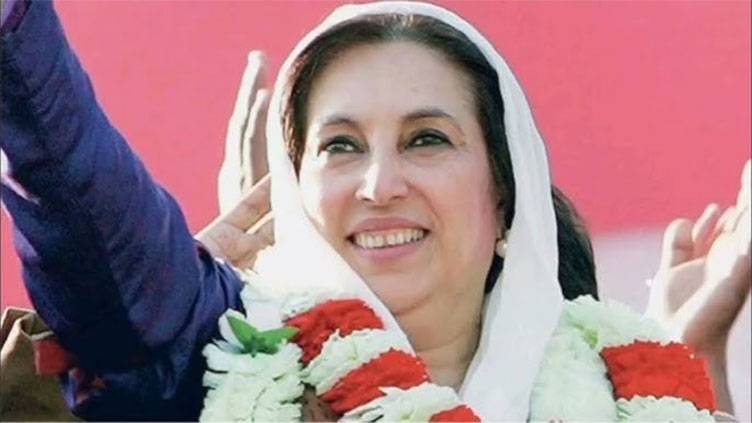
The 27th of December 2007 stands as a dark day in Pakistan’s political history. On that day, Mohtarma Benazir Bhutto, after addressing an election rally at Liaquat Bagh in Rawalpindi, had just entered her vehicle when the air was shattered by gunfire and an explosion. Within hours, the news spread across the world that Pakistan’s former Prime Minister had been assassinated. She was not only the Chairperson of the Pakistan Peoples Party but also a central political actor at a time when the country was engulfed in acute political uncertainty, extremism, and terrorism.
Following Benazir Bhutto’s assassination, the Government of Pakistan initiated multiple investigations. A United Nations Commission of Inquiry was established in 2009, and its report was made public in April 2010. The report stated unequivocally that Benazir Bhutto had not been provided adequate security, that the crime scene was washed down instead of being preserved for evidence, and that grave negligence had marred the investigation. Yet the report also acknowledged that it was unable to identify those who planned and facilitated the murder. Thus, even after an inquiry by a global institution, the fundamental question remained unanswered: who was behind this assassination, and why?
This was not the first time that Rawalpindi had borne witness to a monumental tragedy in Pakistan’s history. On 16 October 1951, Pakistan’s first Prime Minister, Nawabzada Liaquat Ali Khan, was addressing a public gathering at Company Bagh when a sudden gunshot rang out, and he was martyred on the spot. The assassin, Saeed Akbar, was immediately shot dead by the police, permanently closing the most basic door to investigation. Although an inquiry commission was later formed, its report was never published in full.
Various theories were advanced regarding Liaquat Ali Khan’s assassination. At times, it was linked to the Cold War rivalry between the United States and the Soviet Union; at others, to Afghanistan and tribal politics; and occasionally, fingers were pointed at internal power centres. Yet the state never arrived at a conclusion that the nation could accept as the definitive truth. In the aftermath of this assassination, Pakistan entered a phase of political instability whose effects were felt for decades to come.
The third major mystery unfolded on 17 August 1988, when a Pakistan Air Force C-130 aircraft, having taken off from Bahawalpur, crashed to the ground within minutes. The disaster claimed the lives of President General Muhammad Zia-ul-Haq, Chairman Joint Chiefs of Staff Committee General Akhtar Abdul Rehman, several senior Pakistani military officers, and the United States Ambassador to Pakistan, Arnold Raphel. The loss of so many key figures in a single incident sent shockwaves of astonishment and concern across the world.
In the aftermath, technical investigations were conducted, and both American and Pakistani experts examined various possibilities, including mechanical failure, toxic gas, an explosion, and deliberate sabotage. However, no conclusive evidence emerged from the black box. The loss of crucial evidence, contradictory accounts, and the eventual closure of files over time transformed this incident as well into a permanent mystery.
These three personalities represented different yet critically important phases of Pakistan’s political and state evolution. Liaquat Ali Khan was laying the foundations of democratic continuity; Benazir Bhutto was striving to strengthen democracy after years of authoritarian rule; and General Zia-ul-Haq stood at the threshold of the end of a prolonged military era. Their sudden and mysterious deaths thrust the state onto new crossroads each time, yet at none of these junctures was there a courageous and transparent pursuit of accountability and truth.
The failure to reach the core of these events is not merely a matter of the past; it continues to shape the national psyche even today. When a state proves incapable of answering questions surrounding its most profound tragedies, public trust erodes, rumours flourish, and the belief takes root that power invariably prevails over truth.
Nations do not move forward merely by erecting memorials; they advance by confronting the truth. Until Pakistan breaks the chains of expediency, fear, and silence, and honestly opens these dark chapters of its past, these questions will remain alive. These unanswered questions are not simply part of history; they are incomplete chapters of an ongoing national narrative, still awaiting their conclusion.
Disclaimer:
The views and opinions expressed in this article are those of the author and do not necessarily reflect the official policy or position of the publication or its editorial staff. The publication is not responsible for the accuracy of any statements, claims, or information presented by the writer.