


By Asim Shahzad
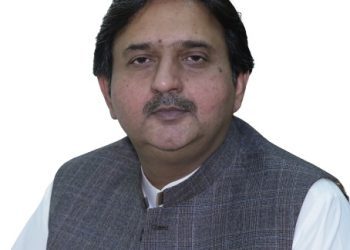
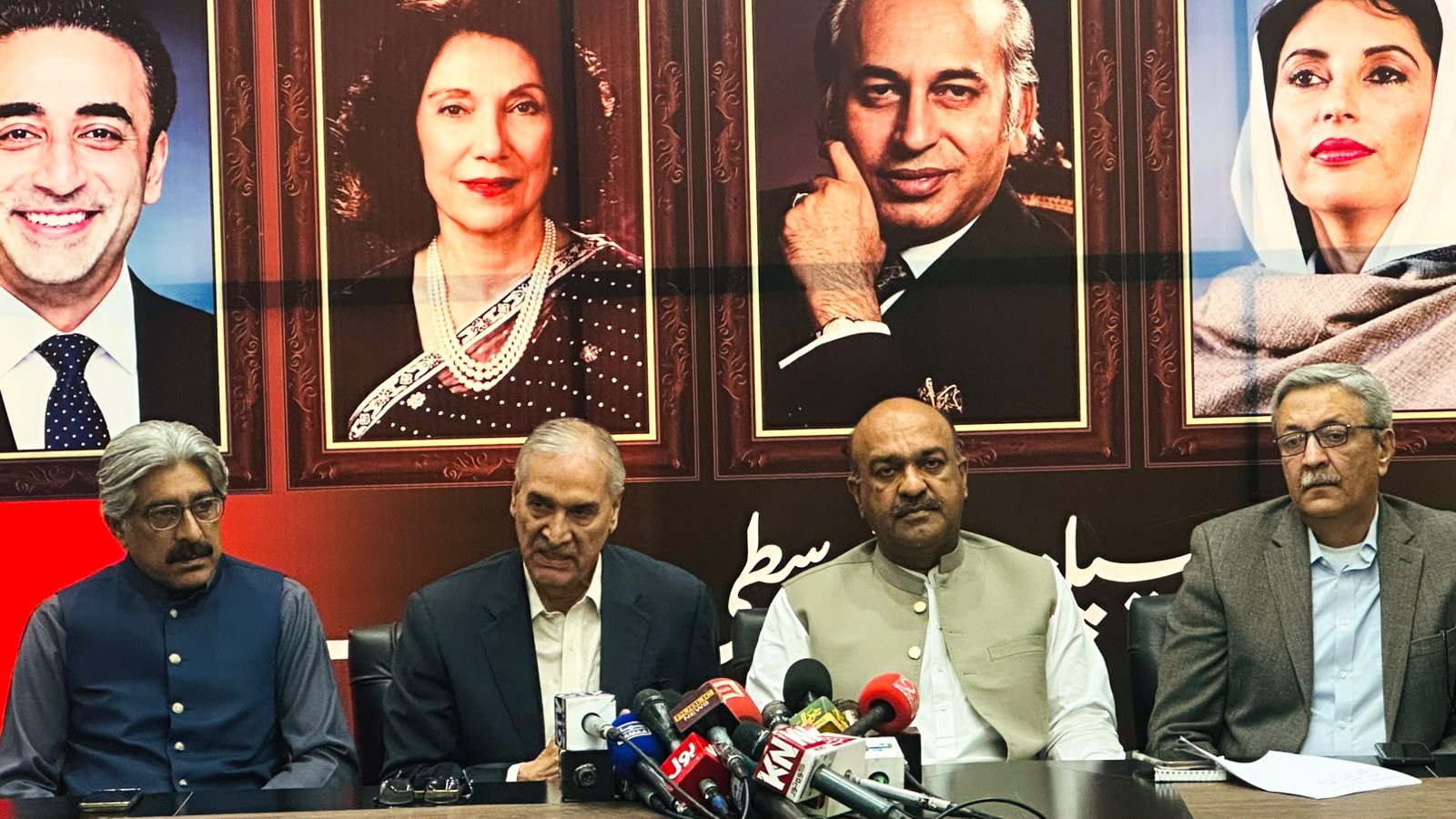
LAHORE: Pakistan Peoples Party (PPP) Central Information Secretary Nadeem Afzal Chan said the party has taken an unequivocal stance in defense of the Constitution, the federal system, provincial autonomy, and democratic institutions. He warned that any attempt to tamper with constitutional provisions or curtail provincial powers could have catastrophic consequences.
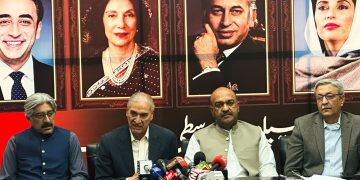
He was speaking at a press conference at the Peoples Secretariat in Model Town alongside Chaudhry Manzoor Ahmed, In-charge of the Peoples Labour Bureau, and Shahzad Saeed Cheema, Information Secretary for Central Punjab. Ahmed Jawad Rana, Mian Ayub, Ahmed Ghumman, Chaudhry Riaz, Zeeshan Shami, Rao Khalid, and others were also present.
Chan said Chairman Bilawal Bhutto Zardari had presented a clear and responsible national position by calling for a “political and parliamentary reset” and an end to political victimization. The statement, he said, reflected the vision of a prudent leader and addressed public hardship, the economy, the judiciary, regional dynamics, and provincial rights. He claimed no other party had articulated a clear stance on the issue.
Chan said ministers’ own talk of corruption and a possible collapse of the system suggested such thinking prevailed within the Cabinet. About 40 percent of Pakistanis live below the poverty line, he noted, and no indicator shows improvement. Inflation and unemployment have made life miserable, and apart from the bureaucracy, no segment of society appears to be benefiting from reforms. Everyone has the right to discuss national affairs, he said, but the discussion should take place in Parliament.
Responding to journalists, Chan asked whether the public had confidence in the Election Commission, noting that several parties had expressed distrust in the electoral process. He said the PPP is criticized whenever it speaks for the whole country, even though national issues are everyone’s concern.
On provinces, he said Punjab is not just Lahore or Gulberg. Southern Punjab and other marginalized regions have been led to believe that new provinces would improve their circumstances, and at the least, transferring some authority from Lahore to Dera Ghazi Khan would be a positive step. A strong federation requires strong national leadership, he added, noting that the PPP’s federalist outlook in Sindh has weakened slogans like “Sindhudesh.”
Constitutional concerns
Chaudhry Manzoor Ahmed said a referendum may reflect public opinion but cannot substitute for a constitutional mandate or serve as a means of amending the Constitution. He warned that reintroducing powers akin to the defunct Article 58(2)(b) through the “back door” could push the country toward chaos.
He challenged anyone to name any article other than Article 239 that lets a provincial assembly veto a constitutional amendment. The 1973 Constitution, he said, is a consensus document whose procedures cannot be bypassed. If a provincial assembly rejects a resolution by a two-thirds majority, he argued, it should not be possible to reintroduce it in the National Assembly. He suggested reviewing the 1973 drafting debates on Article 239.
Ahmed noted that dictatorial regimes had dismantled and reconstituted the One Unit system and imposed arbitrary decisions on the provinces, to the nation’s detriment. If decisions continue to be imposed by sheer power, he cautioned, keeping the country united will become impossible.
He said the 18th Amendment was passed by consensus to secure provincial rights and strengthen the federation, and that the situations in Khyber Pakhtunkhwa and Balochistan demand even greater sensitivity. The core issues, he said, are the NFC Award and the 18th Amendment, but the NFC’s challenges are better resolved through a robust Provincial Finance Commission and empowered local governments. Such a system would bring authority to people’s doorsteps and allow public representatives like Sadiq and Mamdani to emerge locally.