


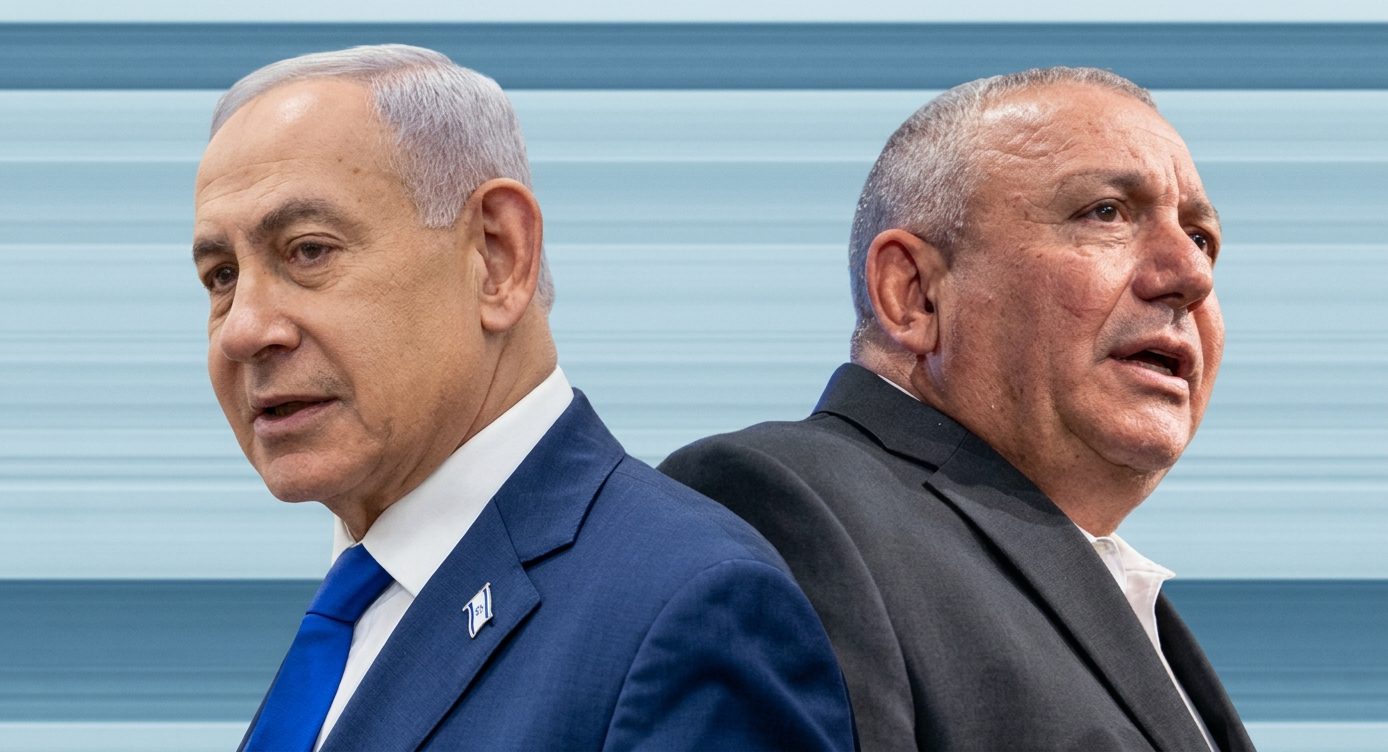
JERUSALEM (Web Desk) – Israeli opposition leaders on Monday intensified pressure on outgoing Prime Minister Benjamin Netanyahu following allegations that officials in his office attempted to implicate members of an Arab political party in a fabricated security case ahead of last month’s parliamentary election.
Read More : Netanyahu says Flydubai pilot stabbed colleague and apparently tried to crash plane
The accusations have triggered a political controversy in Israel, with opposition figures describing the alleged operation as an attempt to undermine the democratic process and influence the outcome of the October 27 vote.
Former opposition leader Yair Lapid accused Netanyahu’s political camp of attempting to interfere with the election, describing the alleged activities as an attempted coup.
Lapid said emerging details suggested that the controversy went beyond an effort to disrupt voting and raised serious questions about the use of state institutions for political purposes.
The allegations centre on claims that Netanyahu’s chief of staff, Ido Norden, contacted police shortly before the election and provided information concerning members of the Arab-Israeli Raam party.
According to reports circulating in Israel, Norden allegedly directed police towards an intelligence source who was a former employee of the prime minister’s office.
Information supplied by the individual reportedly resulted in the arrest of three Raam members.
However, the three men were subsequently released after police determined that the information provided against them was unfounded.
The allegations have raised questions about whether law enforcement agencies were used to pursue political objectives during a sensitive electoral period.
Netanyahu’s Likud party has rejected the latest accusations, issuing a statement denying the allegations against the prime minister’s office.
The controversy has also expanded following separate claims involving Israel’s domestic intelligence service, Shin Bet.
According to reports, Shin Bet chief David Zini sought authorisation to conduct surveillance on leaders of the Joint List, another Arab political alliance.
The request was reportedly rejected by the attorney general because of insufficient evidence.
Joint List leader Yousef Jabareen strongly criticised the alleged developments, describing them as an attempted political takeover.
He called for everyone found responsible to face accountability, including Netanyahu if evidence established his involvement.
Jabareen argued that using government institutions to influence electoral outcomes would represent a serious threat to democratic governance.
Opposition demands independent investigation
Raam’s number two, former police chief Yoav Segalovitz, also called for an immediate and independent criminal investigation into the allegations.
Segalovitz said investigators should examine every level of involvement and establish whether individuals within government institutions had participated in activities intended to influence the election.
He accused Netanyahu of publicly alleging electoral fraud while his own political camp was facing accusations of attempting to manipulate the democratic process.
The opposition has also questioned whether Netanyahu can continue leading the caretaker government while the allegations remain unresolved.
Former Israeli army chief Gadi Eisenkot, one of Netanyahu’s principal political rivals, said the prime minister should no longer remain in office.
Eisenkot’s position reflects growing pressure on Netanyahu as political negotiations continue following the inconclusive election.
Political deadlock deepens
The October 27 election failed to produce a clear parliamentary majority, leaving both Netanyahu’s political bloc and the opposition short of the 61 seats required to form a government in the 120-member Knesset.
The outcome has created uncertainty over Israel’s political future, with negotiations between rival political groups expected to play a decisive role in determining the next government.
The two Arab political alliances, Raam and the Joint List, have indicated support for Eisenkot, potentially making their parliamentary backing important in efforts to assemble a governing majority.
Their support could become particularly significant if opposition parties succeed in coordinating their positions and securing additional backing from smaller political factions.
The controversy surrounding the alleged police complaints and intelligence activities could further complicate those negotiations.
Democratic institutions under scrutiny
The latest allegations have renewed debate over the independence of Israeli law enforcement and intelligence institutions.
Opposition politicians have argued that security agencies must remain independent of partisan political interests, particularly during election campaigns.
The allegations have also raised broader concerns about the protection of minority political representation and the participation of Arab citizens in Israel’s democratic system.
For Netanyahu, the controversy presents another political challenge as he faces difficulties securing a parliamentary majority and defending his administration against accusations from rival parties.
However, the allegations have not yet been established through an independent judicial investigation, and the prime minister’s political camp has denied wrongdoing.
The coming days could prove important as opposition leaders press for formal investigations and political parties continue negotiations over the formation of a new government.
The central question remains whether the reported activities involved individual misconduct or a broader attempt to influence the electoral process from within government institutions.