


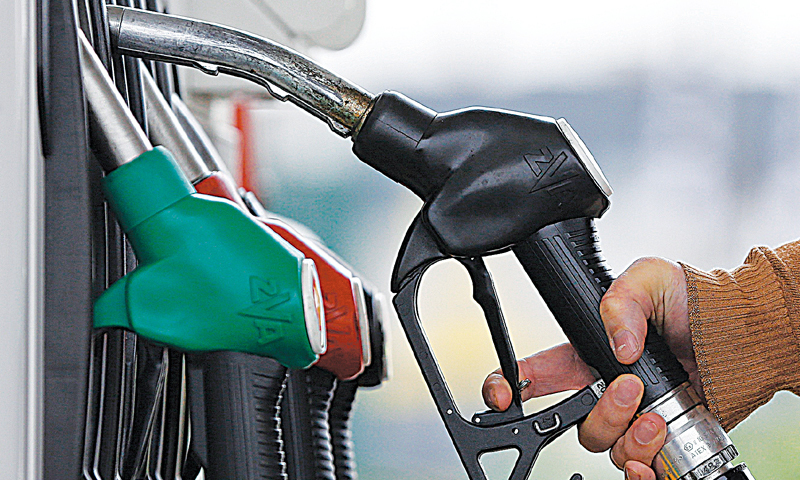
ISLAMABAD (Web Desk) – The federal government has announced a fresh adjustment in petroleum prices, reducing petrol by Rs5.45 per litre while increasing high-speed diesel (HSD) by Rs3.68, offering mixed relief to consumers and businesses across Pakistan.
According to an official notification issued by the Petroleum Division on Tuesday, November 3, the new petrol price has been fixed at Rs369.06 per litre, down from the previous rate of Rs374.51.
Meanwhile, high-speed diesel has become more expensive, with its price increasing from Rs391.52 to Rs395.20 per litre.
The revised prices will take effect from midnight on November 4 and remain applicable until the next government review.
The latest adjustment is expected to provide some financial relief to petrol consumers, particularly motorcycle owners, private motorists and small transport operators. However, the increase in diesel prices could place additional pressure on commercial transportation, agriculture and businesses dependent on heavy vehicles.
Petrol price reduction offers relief to motorists
The reduction of Rs5.45 per litre is expected to benefit millions of people who rely on petrol-powered vehicles for their daily transportation requirements.
Motorcycles, cars, rickshaws and other small vehicles commonly use petrol, making its price an important factor in household transportation expenses.
For consumers purchasing fuel regularly, the latest reduction could provide some savings over the coming days.
For example, a motorist purchasing 20 litres of petrol will save Rs109 compared with the previous rate, while consumers buying 30 litres will save Rs163.50.
The reduction may also provide temporary relief to delivery services, small businesses and individuals who depend on motorcycles and private vehicles for their professional activities.
However, the overall impact on household budgets will depend on individual fuel consumption and other transportation-related expenses.
Diesel increase raises concerns for transport sector
While petrol users will benefit from lower prices, diesel consumers will face higher fuel expenses following the Rs3.68 per litre increase.
High-speed diesel is widely used by buses, trucks, tractors, commercial vehicles and heavy machinery, making it particularly important for transportation and agricultural activities.
The increase could add to the operational expenses of transport companies responsible for moving passengers and goods between cities and rural areas.
Truck operators and logistics businesses may also face additional costs when transporting food items, industrial materials and other essential commodities.
For example, a commercial vehicle purchasing 100 litres of diesel will have to pay an additional Rs368 compared with the previous price.
Agricultural operators could also face higher expenditure because diesel is used to operate tractors, tube wells and other farming equipment.
Any increase in transportation and production expenses could eventually influence the prices of goods and services, although the extent of such an impact will depend on market conditions and business decisions.
Government highlights economic relief measures
The latest petroleum price adjustment comes as the federal government continues to announce measures aimed at reducing financial pressure on households and protecting vulnerable sections of society.
Earlier on Tuesday, Information Minister Attaullah Tarar said Prime Minister Shehbaz Sharif had directed relevant authorities to take steps to provide relief to ordinary citizens.
Speaking at a press conference, Tarar said the government was also preparing a gas supply plan to address household requirements during the approaching winter season.
He said the government’s decisions reflected the prime minister’s concern about the financial difficulties faced by the public.
The information minister further stated that Rs15 billion in refinery profits had been passed on to consumers as part of the government’s efforts to provide financial relief.
He also claimed that profiteering by certain groups in the liquefied petroleum gas (LPG) sector had been brought to an end.
Petroleum minister points to international oil market
Petroleum Minister Ali Pervaiz Malik said Pakistan had been dealing with economic challenges resulting from the conflict that began on February 28.
He noted that international petroleum prices had declined and expressed hope that further positive developments in the global oil market would help provide relief to domestic consumers.
Pakistan’s petroleum prices are influenced by international oil rates, exchange-rate movements, government levies and other components of the domestic pricing mechanism.
Consequently, changes in international markets can affect the prices paid by consumers, although the impact depends on the applicable pricing calculations and government decisions.
The latest revision reflects a mixed outcome, with petrol prices moving downward while diesel rates continue to increase.
Consumers await further price adjustments
The reduction in petrol prices is expected to provide immediate but limited relief to private motorists and households, while the diesel increase may create additional pressure on transporters, farmers and commercial businesses.
Consumers will continue to monitor international oil market developments and future government announcements for possible changes in petroleum rates.
For now, petrol will be available at Rs369.06 per litre and high-speed diesel at Rs395.20 per litre from November 4.
The government’s next pricing decision will determine whether further relief can be extended to consumers or additional adjustments become necessary in response to international market conditions.