


By Commerce Reporter
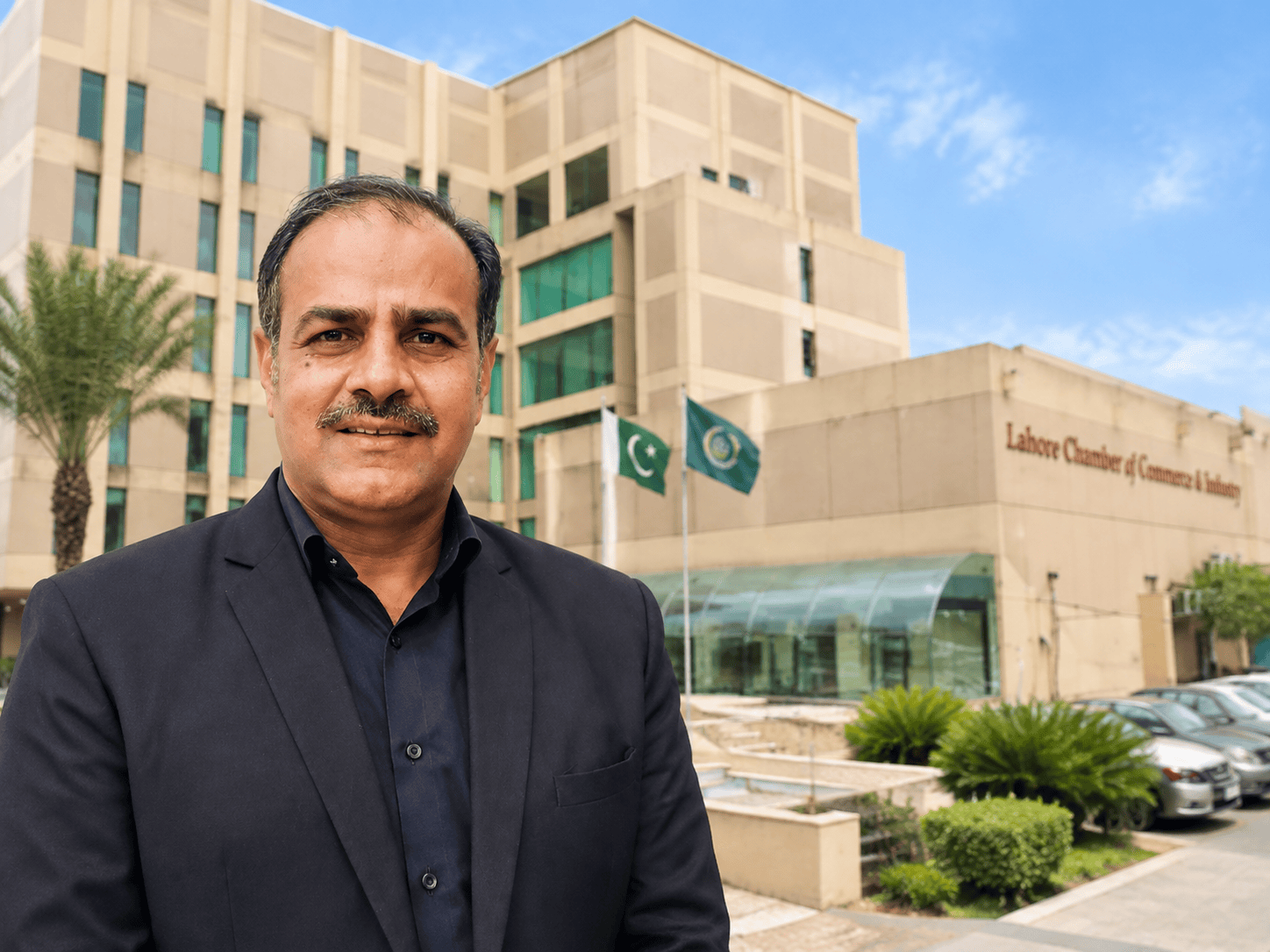
LAHORE: Muhammad Yasin, CEO of Khalid & Brothers, has called for stronger and more effective representation of Lahore’s traders and industrialists, saying the Lahore Chamber of Commerce and Industry (LCCI) should focus on practical business facilitation, sustained engagement with government departments and resolution of issues affecting trade and industry.
Speaking about priorities for the business community, Yasin said a chamber’s responsibility should extend beyond identifying problems. It should pursue those issues with the relevant authorities, participate constructively in policy discussions and work towards practical solutions.
He said Lahore’s business community was facing challenges ranging from taxation and regulatory compliance to energy costs, infrastructure deficiencies and difficulties in dealing with different government departments.
LCCI should be an effective voice of business community
Muhammad Yasin said traders and industrialists needed an institution capable of presenting their legitimate concerns before policymakers and relevant authorities in an organised and constructive manner.
“The business community contributes to economic activity, employment, investment and exports. Its genuine concerns related to taxation, regulations, energy costs and infrastructure require consistent representation and follow-up,” Yasin said.
He said LCCI could play an important role as a bridge between the private sector and government by facilitating dialogue and ensuring that policymakers were aware of the practical implications of decisions affecting businesses.
According to Yasin, consultation between government institutions and representatives of trade and industry could also help identify difficulties before they developed into larger problems.
Simplifying taxation and reducing compliance burden
Discussing taxation, Yasin said businesses required a system that was transparent, predictable and easier to understand.
He said multiple procedural and compliance requirements consumed considerable time and resources, with smaller businesses particularly vulnerable to administrative burdens.
“Businesses should be encouraged to comply with the law, but the compliance process itself should be straightforward and efficient,” he said.
Yasin said SMEs played an important role in employment and economic activity and therefore needed greater facilitation.
“Small and medium enterprises should be able to concentrate their resources on production, expansion and employment rather than becoming unnecessarily occupied with complicated procedures,” he added.
He said the chamber should collect feedback from its members regarding taxation and compliance issues and take documented proposals to the relevant authorities.
Better coordination with government departments
Yasin said stronger institutional coordination was necessary to address problems faced by traders and industrialists in their dealings with regulatory and administrative bodies.
He said LCCI should maintain regular communication with departments responsible for taxation, environment, development, municipal affairs and other matters directly affecting businesses.
According to him, engagement should not begin only when a dispute arises. Regular consultation could provide businesses and government officials with an opportunity to understand each other’s concerns.
“Whenever a genuine business issue is brought before the chamber, there should be proper representation and consistent follow-up with the concerned department,” he said.
Yasin stressed that such engagement should remain constructive and within the applicable legal and regulatory framework.
Industrial zones need focused attention
Highlighting conditions in industrial areas, Yasin said manufacturers required reliable infrastructure and efficient public services to operate competitively.
He said problems related to roads, utilities, drainage, traffic management and other infrastructure could increase operating costs and affect productivity.
Industrial areas, he said, should receive sustained attention because manufacturing activity generated employment and supported numerous associated businesses.
Yasin said LCCI could strengthen coordination between industrial-area representatives and relevant government agencies to ensure that local problems were identified and pursued systematically.
He also favoured regular consultation with industrial stakeholders so that emerging problems could be brought to the attention of authorities at an early stage.
Business policies require meaningful consultation
Muhammad Yasin said policies affecting trade and industry should be formulated with meaningful input from stakeholders who would ultimately have to implement or comply with them.
He said consultation did not mean that every demand of the business community had to be accepted. Rather, policymakers should have access to practical information about how proposed measures could affect investment, production, employment and business costs.
“Entrepreneurs and industrialists are stakeholders in economic development. Their practical experience should be considered when policies directly affecting business activity are being formulated,” he said.
Yasin added that greater predictability in economic and regulatory policies could help businesses make investment and expansion decisions with greater confidence.
Exporters need a competitive business environment
Yasin said Pakistan’s exporters operated in highly competitive international markets and needed an enabling domestic environment.
He said electricity and other input costs, taxation procedures, regulatory requirements and logistical challenges could influence the ability of Pakistani businesses to compete internationally.
Improving ease of doing business and reducing avoidable administrative costs, he said, could contribute to strengthening export-oriented industries.
Yasin also emphasised the importance of helping SMEs explore export opportunities, arguing that export growth should not remain limited to established large companies.
The chamber, he said, could assist businesses through information sharing, networking and coordination with relevant institutions.
Parking and infrastructure problems affect traders
Turning to Lahore’s commercial markets, Yasin said parking shortages, traffic congestion and inadequate infrastructure had become significant concerns for many traders.
He said these issues affected not only shopkeepers and businesses but also customers visiting commercial areas.
Yasin called for consultation among traders, local authorities and other stakeholders to develop workable solutions appropriate to individual markets.
He said Lahore’s commercial areas had expanded substantially over the years and infrastructure planning needed to keep pace with changing requirements.
“Improving the business environment also means addressing the everyday problems that traders and their customers experience in markets,” he said.
SMEs should receive greater facilitation
Muhammad Yasin placed particular emphasis on small and medium enterprises, saying their concerns needed to receive adequate attention within institutional business representation.
He said smaller enterprises often had fewer resources to deal with regulatory complications, taxation procedures and rising operating costs.
The chamber, he said, should provide an accessible platform where smaller traders and entrepreneurs could raise their concerns alongside larger industrial organisations.
Yasin said supporting SMEs could help encourage entrepreneurship, employment and broader economic participation.
LCCI should focus on measurable outcomes
Yasin said the effectiveness of business representation should ultimately be reflected in practical outcomes rather than statements alone.
He said businesses expected their chamber to listen to their problems, communicate those concerns to the appropriate authorities and maintain follow-up.
According to him, stronger communication between LCCI and its members could also help the chamber identify priorities based on the actual experiences of traders and industrialists.
“The business community needs representation that remains accessible, understands the issues on the ground and follows them through at the appropriate forums,” Muhammad Yasin said.
He added that constructive engagement among the chamber, government institutions, traders and industrialists could contribute to a more predictable and facilitative environment for doing business in Lahore.