


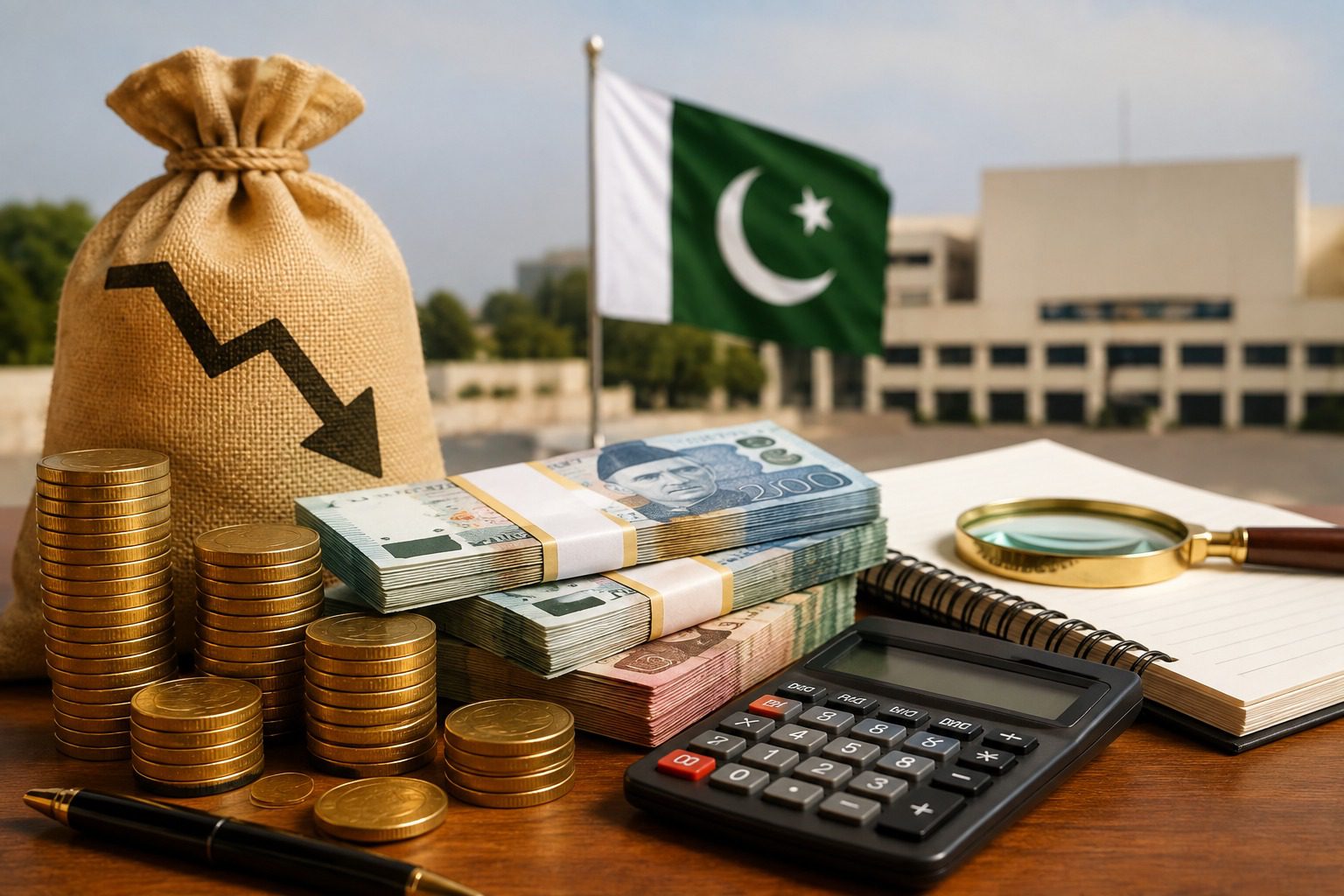
ISLAMABAD (Web Desk) -Pakistan paid a staggering Rs32.2 trillion in interest on its public debt between 2021 and fiscal year 2026, highlighting the enormous cost of debt servicing on the country’s already strained public finances, according to figures presented by the Ministry of Finance in the Senate on Thursday.
The ministry informed the upper house that Pakistan’s total debt stood at Rs81.374 trillion as of December 2025, underlining the scale of the debt burden confronting the economy.
The figures were presented during a Senate session presided over by Manzoor Kakar.
According to the Ministry of Finance, the government’s domestic debt amounted to Rs55.363 trillion, while foreign debt stood at Rs23.166 trillion.
The government also owed Rs2.845 trillion to the International Monetary Fund (IMF), according to the details submitted to the Senate.
Rs32.239tr spent on interest payments
One of the most striking figures disclosed by the ministry was the amount spent merely on servicing debt.
From 2021 to fiscal year 2026, the government paid a cumulative Rs32.239 trillion in interest, demonstrating how debt servicing has become one of the biggest pressures on Pakistan’s fiscal resources.
The figure means that the government spent an average of more than Rs6 trillion a year on interest over the five-year period, although actual annual payments would have varied considerably.
High interest payments can squeeze the fiscal space available for development spending and public services because a substantial portion of government revenue must first be used to meet existing debt obligations.
Over Rs102tr in debt repaid
The Ministry of Finance also disclosed that the government repaid Rs102.780 trillion in debt between 2021 and 2026.
The repayment figure being substantially larger than the outstanding stock of debt reflects the continuous cycle of borrowing, repayment, refinancing and rollover that characterises government debt management.
Pakistan regularly raises domestic financing through government securities while also meeting external debt obligations and obtaining fresh financing to cover fiscal and external requirements.
The figures therefore highlight not only the size of Pakistan’s debt stock but also the enormous volume of financial resources moving through the debt-servicing system.
Domestic debt dominates
Domestic borrowing represents the largest component of the government’s debt, with the Finance Ministry putting it at Rs55.363 trillion as of December 2025.
A large domestic debt burden can become particularly costly during periods of high interest rates because the government must refinance maturing obligations at prevailing rates.
Foreign debt, meanwhile, exposes public finances to exchange-rate risks. Depreciation of the Pakistani rupee can increase the rupee value of external liabilities even without additional foreign borrowing.
Why it matters
Pakistan’s debt burden remains one of the most significant challenges facing economic policymakers.
Every rupee spent on servicing existing debt reduces the resources potentially available for infrastructure, education, healthcare, social protection and other government priorities unless revenues rise or expenditure elsewhere is reduced.
The latest figures also illustrate why improving tax collection, controlling persistent fiscal deficits and reducing dependence on expensive borrowing remain critical to achieving longer-term debt sustainability.
With total debt exceeding Rs81 trillion by the end of December 2025 and trillions of rupees continuing to be absorbed by interest payments, managing the cost of borrowing will remain central to Pakistan’s economic outlook.
Meta description: Pakistan paid Rs32.239 trillion in interest on public debt from 2021 to FY2026, while total debt reached Rs81.374 trillion by December 2025.