


(Web Desk) – The United States and Iran are moving towards an updated agreement aimed at reopening and maintaining traffic through the strategically vital Strait of Hormuz, with Pakistan playing a key role in relaying messages between Washington and Tehran, officials familiar with the discussions said.
The proposed arrangement would update a preliminary framework reached in June and focus heavily on the movement of commercial vessels through the narrow waterway, which carries a significant share of the world’s energy supplies.
A Pakistani official told The National that intermediaries are currently drafting an updated memorandum of understanding after indirect contacts between the two sides entered an advanced stage.
“Messages are being passed. Indirect talks are in an advanced stage,” the official said, adding that the immediate priority was “opening the Strait of Hormuz and keeping it open.”
Pakistan has emerged as an important intermediary in the diplomatic process, exchanging messages between Washington and Tehran. Oman and Qatar are also involved in efforts to facilitate communication, while Iranian Foreign Minister Abbas Araghchi has held discussions with officials in Oman, Saudi Arabia, Iraq and Pakistan.
Proposed 60-day arrangement
According to reports on the proposal, the United States and Iran are considering an initial 60-day arrangement that could subsequently be extended if both sides comply with its terms.
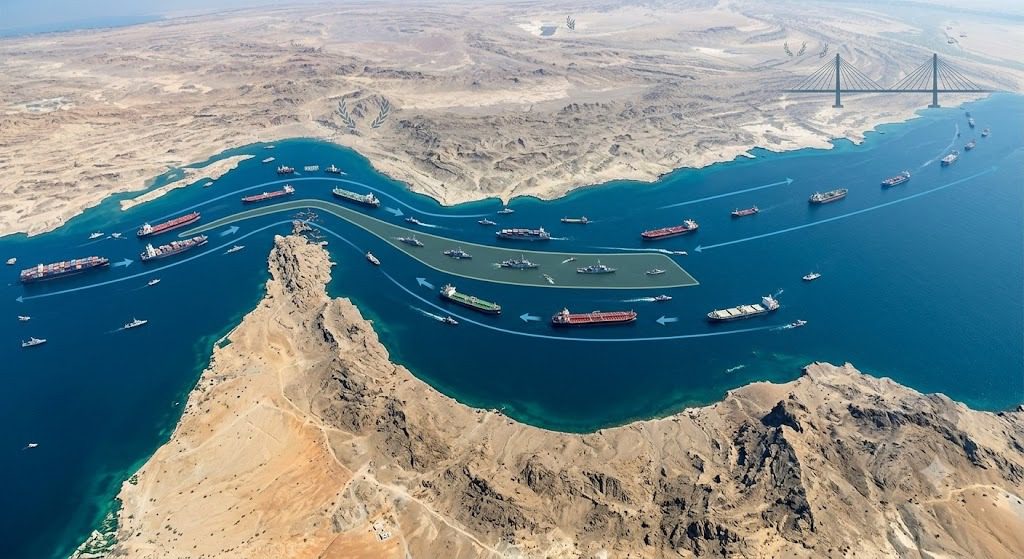
Under the plan being discussed, vessels entering the Strait of Hormuz would use a northern route through Iranian waters, while outbound ships would travel through a southern lane in Omani waters in coordination with Iran.
The temporary arrangement would reportedly allow commercial vessels to pass without tolls or fees.
One of the most sensitive elements involves naval mines. The parties would seek to clear mines from the median section of the strait within 30 days, according to details reported by Axios.
Iranian media have separately referred to the possibility of a “middle corridor” through the waterway, potentially providing another mechanism for maintaining international shipping during the transitional period.
The Pakistani official said the proposed agreement remained subject to difficult negotiations over its details.
“The Iran-Oman talks and middle corridor are the focus of the new deal, but there are lots of arguments about details. GCC countries would prefer everything to be explicit in any agreement,” the official said.
US seeks guarantees for all sea lanes
Washington is reportedly seeking firm assurances that all sea lanes remain open for international trade and commercial passage.
“The US wants assurances about ‘all sea lanes’ being kept open for trade and passage,” the Pakistani source said.
The demand reflects concerns that an agreement covering only selected shipping routes could leave global energy supplies vulnerable to renewed disruption.
US President Donald Trump said Tuesday that Washington and Tehran were engaged in “very good discussions” and indicated that a decision could come within 48 hours.
US Secretary of State Marco Rubio also acknowledged progress but cautioned that a final agreement had not yet been reached. Treasury Secretary Scott Bessent said a deal could be reached within days and could help reopen the strait and move the conflict towards a more normalised phase.
Dispute over shipping fees
Despite diplomatic progress, the question of possible Iranian charges on shipping remains unresolved.
Iran has repeatedly indicated that the Strait of Hormuz will not simply return to its pre-conflict arrangements. Iranian officials have raised the possibility of imposing tolls or fees on vessels using the waterway, a proposal opposed by the United States and Gulf states.
A leaked Omani proposal reportedly suggested voluntary contributions to cover navigation and maritime services, including search and rescue operations. Supporters of the idea have pointed to similar mechanisms used on other major international shipping routes.
However, Gulf countries are understood to want any future arrangement to clearly define navigation rights, fees, security responsibilities and access.
Threats complicate negotiations
Tehran has also objected to threats of renewed US military action.
An Iranian media outlet linked to the Islamic Revolutionary Guard Corps quoted an Iranian source as saying that US threats were slowing negotiations with Oman.
The source said Tehran could not move forward with an agreement while facing the possibility of further military action.
Iran has stressed that it will not accept a shipping arrangement negotiated “under the shadow of threats”.
The talks come after an earlier June understanding helped establish a temporary ceasefire and created a framework for broader negotiations. That arrangement subsequently collapsed after attacks involving oil tankers in and around the Strait of Hormuz triggered renewed tensions.
Global energy markets watching closely
The outcome of the negotiations is being closely watched by international energy markets. Signs of diplomatic progress have already contributed to lower oil prices, with Brent crude recently falling below $79 a barrel.
The Strait of Hormuz remains one of the world’s most important energy chokepoints, making any prolonged disruption a major threat to global oil and gas supplies.
Meanwhile, Iran-backed Houthi forces have continued attacks in the Red Sea, particularly involving Saudi-linked shipping. It remains unclear whether the Houthi activity will form part of the updated US-Iran understanding.
The possibility of restoring safe navigation through both the Strait of Hormuz and alternative Red Sea routes could provide significant relief to global energy markets and international shipping.
For Pakistan, its role in facilitating communication between Washington and Tehran represents a significant diplomatic opportunity, potentially strengthening Islamabad’s position as an intermediary in a conflict with major implications for regional security, energy prices and international trade.


