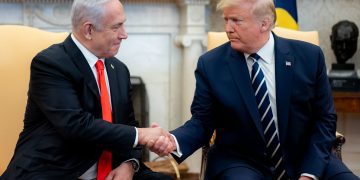




WASHINGTON (Web Desk) – US President Donald Trump is set to hold separate meetings with Israeli Prime Minister Benjamin Netanyahu and Ukrainian President Volodymyr Zelensky on Tuesday as conflicts in the Middle East and Eastern Europe enter critical phases, placing Washington’s diplomatic strategy under renewed global attention.
The two leaders are visiting Washington to attend a memorial service for late Senator Lindsey Graham, a senior Republican lawmaker known for his strong support for both Israel and Ukraine. Their visits also provide an opportunity for high-level discussions with President Trump on security, diplomacy and regional stability.
According to White House officials, Trump’s meetings with Netanyahu and Zelensky will focus on developments in the Iran conflict, the war in Ukraine and broader regional security issues.
The discussions come as the United States continues diplomatic efforts to prevent further escalation in the Middle East following the collapse of an earlier ceasefire involving Iran.
Trump recently announced a temporary pause in US airstrikes, saying diplomacy should be given another opportunity to reduce tensions and encourage negotiations.
At the same time, Ukraine continues to confront Russian military operations, with Kyiv seeking additional support to strengthen its air defenses and maintain battlefield momentum.
Relations between Trump and Ukrainian President Zelensky have reportedly improved in recent months after earlier disagreements during the initial stages of Trump’s second term.
Sources familiar with the agenda said Zelensky plans to seek additional Patriot missile interceptors and expanded cooperation on air defense systems.
The Ukrainian delegation is also expected to discuss drone production and defense cooperation, including previous US commitments regarding Patriot missile technology.
White House officials said Trump intends to emphasize ongoing diplomatic efforts aimed at ending the Russia-Ukraine conflict, while encouraging renewed peace negotiations.
Following his meeting at the White House, Zelensky is expected to visit Capitol Hill for discussions with members of the US Senate regarding continued American support for Ukraine.
Meanwhile, Israeli Prime Minister Benjamin Netanyahu arrives in Washington at a time when US-Israel relations face fresh diplomatic challenges despite longstanding cooperation.
Officials said Trump and Netanyahu will discuss the evolving security situation involving Iran, as well as developments along Israel’s northern border with Lebanon.
The agenda also includes discussions on expanding the Abraham Accords, the normalization agreements between Israel and several Arab nations initiated during Trump’s previous administration.
Washington continues to encourage additional regional countries to join the accords as part of broader efforts to strengthen stability in the Middle East.
Netanyahu is also expected to brief the US administration on Israel’s security priorities and regional concerns following months of heightened tensions.
Before departing for Washington, the Israeli leader said his government remained committed to protecting Israel’s security while seeking opportunities to expand peace initiatives in the region.
Political analysts note that the White House meeting also carries domestic political significance for Netanyahu ahead of Israel’s upcoming elections, as a positive relationship with Washington remains an important issue for Israeli voters.
The meetings come as both international crises continue without a clear resolution.
In Europe, fighting between Ukraine and Russia remains intense despite ongoing diplomatic contacts, while in the Middle East efforts to stabilize the situation following recent military escalation continue through international mediation.
US officials say Washington remains committed to pursuing diplomatic solutions while maintaining close coordination with allies on regional security matters.
Observers believe the separate meetings with Netanyahu and Zelensky will provide important insight into the Trump administration’s foreign policy priorities as it seeks to manage two of the world’s most significant security challenges simultaneously.
The outcomes of the discussions are expected to shape future US engagement in both regions and influence ongoing diplomatic initiatives involving America, its allies and international partners.


