


ANKARA (Web Desk) – US President Donald Trump announced plans to lift sanctions imposed on Türkiye and said his administration would decide on a possible sale of F-35 stealth fighter jets to Ankara, marking a significant shift in US-Turkish defence relations during the NATO summit.
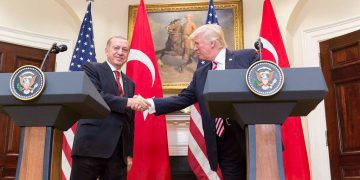
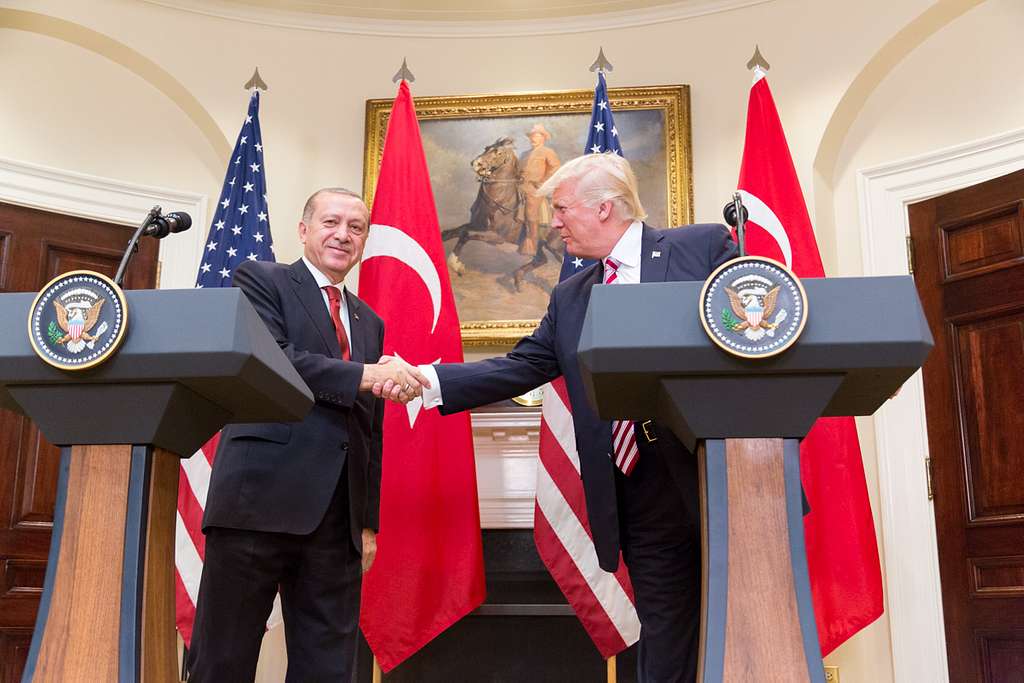
The announcement came during Trump’s meeting with Turkish President Recep Tayyip Erdogan, where both leaders discussed defence cooperation, trade and regional security as NATO members gathered to reaffirm their commitment to collective security amid growing global tensions.
Trump confirmed that Washington intends to remove sanctions imposed under the Countering America’s Adversaries Through Sanctions Act (CAATSA), which were introduced in 2020 after Türkiye acquired the Russian-made S-400 air defence system.
The sanctions had strained relations between the two NATO allies and resulted in Türkiye’s removal from the multinational F-35 fighter jet programme, despite Ankara’s financial contributions and industrial participation in the project.
Speaking alongside Erdogan, Trump said his administration would review Türkiye’s request to rejoin the F-35 programme and purchase advanced stealth aircraft.
“We’re going to be taking the sanctions off,” Trump said, adding that discussions regarding the fighter jet sale would continue while broader trade and defence cooperation remained on the bilateral agenda.
Although the US president expressed support for the proposal, officials noted that congressional approval and legal procedures would still be required before any final agreement could be implemented.
The possible restoration of military cooperation represents a major diplomatic development after years of disagreements between Washington and Ankara over defence procurement, regional conflicts and strategic priorities.
Türkiye has consistently argued that its removal from the F-35 programme was unfair and has repeatedly sought negotiations aimed at restoring defence ties with the United States.
The summit also focused heavily on NATO’s future defence posture as member states announced billions of dollars in new military investments designed to strengthen the alliance’s capabilities.
NATO Secretary General Mark Rutte urged member countries to accelerate defence production, warning that evolving security challenges require faster military modernization and stronger industrial cooperation.
He called for what he described as a “defence industry revolution,” emphasizing that NATO members must rapidly expand production of military equipment to address growing security threats.
Several major defence agreements were unveiled during the summit, including European purchases of advanced surveillance drones from American manufacturers and NATO’s acquisition of military aircraft from Sweden.
US defence giant Lockheed Martin also signed a preliminary agreement with Germany’s Rheinmetall to manufacture Army Tactical Missile System (ATACMS) missiles in Germany, marking the first planned production of the missile outside the United States.
NATO officials further announced plans to invest more than $40 billion over the next five years to strengthen anti-drone capabilities across the alliance.
The summit was also dominated by discussions on the ongoing war in Ukraine, with NATO members reaffirming continued military and financial assistance for Kyiv.
Trump said he had recently spoken separately with Russian President Vladimir Putin and Ukrainian President Volodymyr Zelensky regarding prospects for ending the conflict.
He expressed optimism that negotiations could eventually produce a peace agreement, although he acknowledged the war had continued far longer than expected.
The US president also renewed criticism of several European allies, arguing they should contribute more toward collective defence while reducing dependence on American military resources.
Trump suggested he may consider additional adjustments to the US military presence in Europe as part of a broader review of American overseas deployments.
European leaders, meanwhile, sought to reassure Washington by highlighting significant increases in defence spending announced over the past year.
The renewed focus on military investment follows rising geopolitical tensions involving Russia, China, Iran and other global security challenges that have prompted NATO members to strengthen defence cooperation.
Analysts believe the possible removal of sanctions on Türkiye and renewed discussions over F-35 fighter jets could improve relations between Washington and Ankara while reinforcing NATO unity at a time of increasing international uncertainty.
The outcome of further negotiations is expected to influence future defence cooperation between the two allies and shape broader security dynamics across Europe and the Middle East.