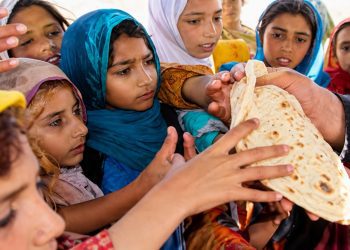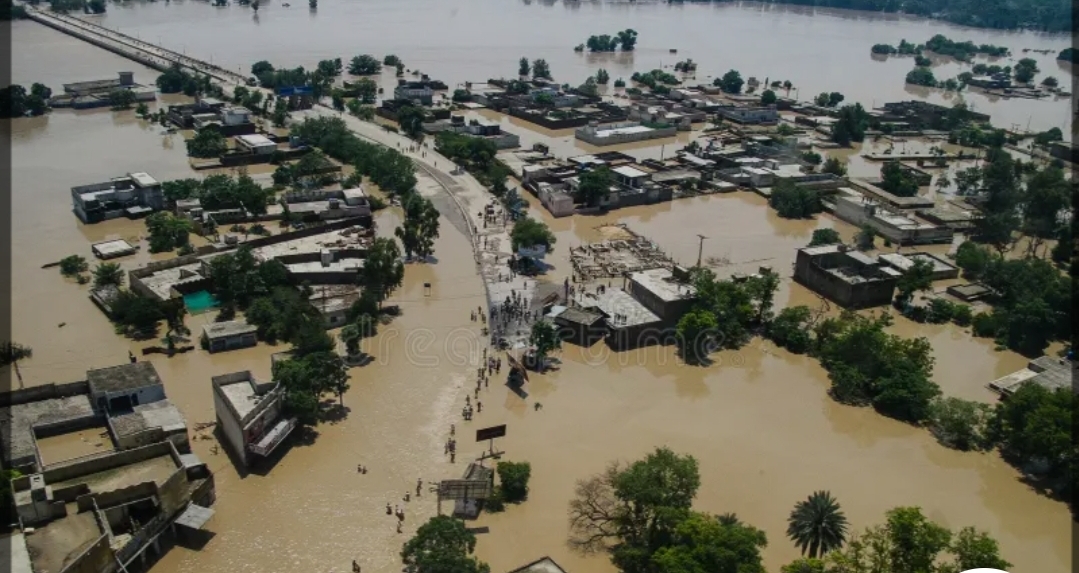



LAHORE (News Desk ) -Unprecedented monsoon floods have wreaked havoc across Punjab, submerging over 1,400 villages and displacing hundreds of thousands of people. Rescue officials and aid agencies are warning of a looming health catastrophe as displaced families face shortages of clean drinking water, food, and medical care.
According to official figures, nearly 800 people have lost their lives nationwide since late June, with Punjab emerging as the hardest-hit province. The Chenab, Ravi, and Sutlej rivers have all overflowed simultaneously for the first time in decades, forcing authorities to breach protective dykes to divert the raging waters.
Thousands Flee as Homes and Crops Wash Away
Entire communities across southern Punjab have been uprooted as floodwaters swallowed villages, farmlands, and roads. In Kasur, Okara, Vehari, and Bahawalpur, residents could be seen wading through waist-deep water with children on their shoulders, desperately trying to reach safer ground.
Authorities say over 300,000 people have been evacuated, but many remain stranded on rooftops and embankments, awaiting boats or helicopters for rescue. For farmers, the devastation is unbearable as standing crops of cotton, rice, and sugarcane have been destroyed, raising fears of further inflation in food prices.
“This flood has taken everything from us—our home, our fields, our livestock,” said Ghulam Rasool, a resident of Kasur. “We don’t know where to go, and no relief has reached us yet.”
Health Emergency Declared
Relief workers warn that the floodwaters are now creating a secondary disaster: disease outbreaks. With stagnant pools forming across vast areas, the risk of cholera, hepatitis, skin infections, and snake bites is rising sharply.
Doctors Without Borders (MSF) and the Punjab Health Department have set up temporary medical camps in affected districts, but supplies are running low. Children and the elderly are especially vulnerable, with cases of diarrhea and fever already being reported in relief shelters.
“The next two weeks will be critical. If clean drinking water is not ensured, we could see a massive outbreak of waterborne diseases,” said Dr. Shahid Mehmood, a health official in Lahore.
Government’s Response Under Scrutiny
Chief Minister Maryam Nawaz has ordered all provincial agencies into emergency mode, announcing the release of funds for relief operations and directing the army to assist in rescue efforts. She visited the flood-hit areas and promised that “no citizen will be left behind.”
However, criticism is mounting over the government’s preparedness. Many villagers claim evacuation warnings came too late, and relief supplies are insufficient. Opposition leaders have also accused the government of failing to build new reservoirs and of ignoring early warnings about dam overflows.
Experts say the floods highlight Pakistan’s urgent need for better water management infrastructure. “Every year, we face this cycle of destruction because storage capacity is shrinking, and no new dams are being built,” said Mian Abuzar Shad, President of the Lahore Chamber of Commerce and Industry.
Climate Change and Regional Tensions
Meteorologists link the intensity of the floods to climate change, pointing out that heavier-than-usual Himalayan rainfall coincided with India releasing excess water from upstream dams. The suspension of the Indus Waters Treaty by India earlier this year has further complicated cooperation between the two countries, leaving Pakistan with limited time to prepare for water surges.
“Climate change is amplifying monsoon unpredictability,” said Dr. Ayesha Khan, a climate researcher at Punjab University. “Unless we adopt long-term strategies, floods will only get worse.”
The Road Ahead
As skies remain heavy with more rain forecasts, Pakistan’s most populous province braces for further devastation. For now, displaced families are relying on community volunteers, aid organizations, and limited government support to survive.
In a country already struggling with economic challenges, the floods have delivered another devastating blow—washing away homes, crops, and livelihoods, and leaving millions uncertain about their future.
“We can rebuild our homes,” said farmer Abdul Majeed from Vehari, “but who will bring back the crops and the animals we lost? The government must stand with us, or we will starve.”