


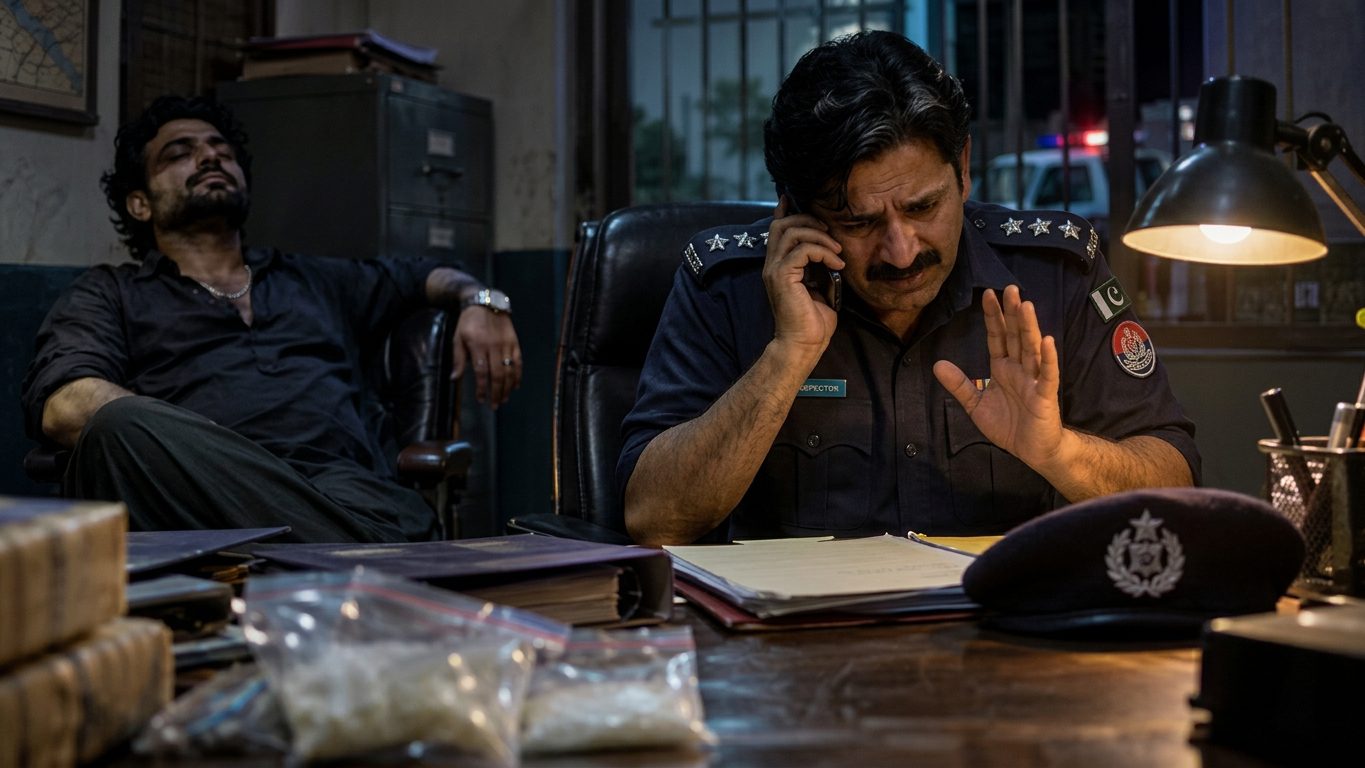
KARACHI (Web Desk) – A senior police official in Pakistan’s southern port city of Karachi has suspended a station house officer after an audio recording allegedly showed him apologising to a suspected drug dealer and attempting to settle a dispute rather than taking legal action.
Faisal Gul, who headed the Pak Colony police station, was suspended by South Deputy Inspector General Syed Asad Raza after the recording circulated on social media, according to a departmental order.
The police department has also decided to seek technical verification of the recording from the National Cyber Crime Investigation Agency (NCCIA) to establish its authenticity.
The alleged conversation reportedly involved Gul, a police constable and a man identified as Kashif, also known as Dada, whom police described as a known drug peddler.
According to the departmental order, the recording appeared to show the station chief attempting to resolve the matter through reconciliation. The alleged exchange has raised questions about whether police personnel followed proper procedures when dealing with suspected narcotics offenders.
Authorities have not publicly established whether the recording is genuine or provided a full account of the circumstances surrounding the conversation.
Audio verification ordered
The decision to refer the recording for technical examination is intended to determine whether it has been edited, altered or otherwise manipulated.
Such verification could help investigators establish whether the voices belong to the individuals identified in the departmental account and whether the recording accurately represents the conversation.
The NCCIA is expected to examine the audio as part of the verification process. No findings from that examination have yet been announced.
The suspension represents an immediate departmental response to the allegations, but it does not by itself establish misconduct or determine whether any criminal offence took place.
The outcome of the technical assessment could influence further disciplinary action and help authorities decide whether a more extensive inquiry is required.
Police departments generally rely on formal procedures when handling suspected drug-related offences, including recording complaints, conducting investigations and taking action in accordance with the law.
An attempt to resolve an alleged narcotics matter informally, if established, could raise concerns about accountability and the enforcement of anti-drug laws.
Concerns over police accountability
The incident has drawn attention to the responsibility of police station chiefs, who oversee investigations, supervise personnel and ensure that complaints are handled according to legal requirements.
Station house officers are among the most visible representatives of law enforcement at the local level. Their decisions can directly affect public confidence in the police, particularly in areas where residents report concerns about street crime and the drug trade.
The allegations also place scrutiny on the conduct of subordinate officers involved in the reported conversation. The departmental account identifies a constable as another participant, although no separate disciplinary action against that officer was specified in the information made public.
The case highlights the importance of transparent procedures when police officers interact with individuals suspected of criminal activity.
Drug trafficking and the distribution of illegal substances remain significant law enforcement challenges in major Pakistani cities. Police operations against suspected dealers often involve intelligence gathering, raids, arrests and the collection of evidence for prosecution.
If officers are found to have handled such cases outside established procedures, disciplinary authorities may face pressure to ensure that responsibility is clearly determined.
However, investigators will need to establish the authenticity and context of the recording before drawing conclusions about the conduct of those involved.
Further action depends on findings
The police department’s decision to seek technical verification indicates that the recording will be treated as material requiring examination rather than accepted as conclusive evidence on its own.
The assessment may help clarify whether the conversation took place as alleged and whether the recording provides a complete and accurate account.
Further departmental proceedings could follow once the verification process is completed. Authorities have not announced a timetable for the examination or disclosed whether additional officials will be questioned.
The suspension of Gul is an initial administrative measure while questions surrounding the audio remain unresolved.
The case is likely to test the department’s response to allegations involving its own personnel, particularly its ability to investigate claims of inappropriate conduct and maintain public confidence.
For now, the central issue remains whether the recording is authentic and whether the alleged attempt at reconciliation breached police procedures or professional responsibilities.