


By Commerce Reporter
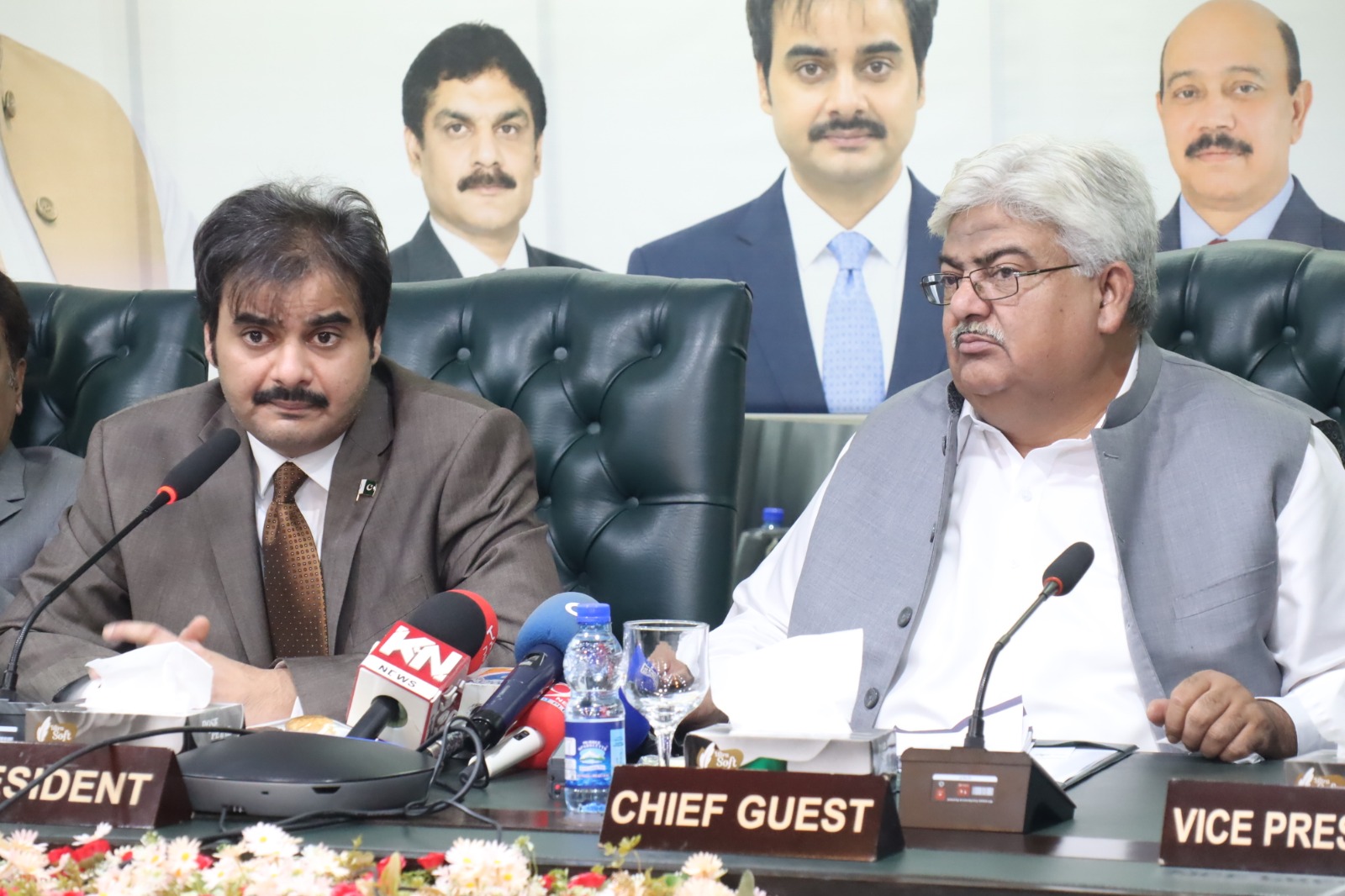
LAHORE: The Federal Board of Revenue (FBR) has announced a series of facilitation measures for the business community following key proposals and persistent efforts by Lahore Chamber of Commerce and Industry (LCCI) President Ali Hussam Asghar, with FBR Chairman Rashid Mahmood Langrial assuring industrialists and traders that their customs valuation, tax refund and other taxation-related issues would be addressed through improved services and online facilities.
Reas also: FBR unveils tax relief scheme for small shopkeepers
The major relief measures include the establishment of a dedicated online hearing facility for customs valuation cases in Lahore, allowing local importers to pursue their cases without travelling to Karachi, and the launch of a new online system by December to process exporters’ pending tax refund claims within defined timelines.
The FBR chairman also announced that 30 percent more refunds had been issued this year compared with the previous year, signalling an effort to improve the timely release of exporters’ funds.
He was speaking at a meeting with the business community at the LCCI, where President Ali Hussam Asghar presented a comprehensive set of proposals aimed at reducing the cost of doing business, facilitating imports and exports, encouraging industrial investment and resolving longstanding taxation-related problems.
LCCI Senior Vice President Sardar Usman Ghani, Vice President Chaudhry Khadim Hussain, members of the Executive Committee, senior business leaders and a large number of traders and industrialists attended the meeting.
Addressing the concerns of importers, Langrial said a dedicated online hearing room for customs valuation cases would become operational in Lahore, enabling importers to participate in proceedings locally rather than travelling to Karachi.
He said the proposal to further empower the Director of Customs Valuation Lahore and provide the office with additional facilities would also be considered to make the valuation process more accessible and efficient.
Responding to complaints about incorrect customs valuation rates and alleged irregularities, the FBR chairman assured the business community that such matters would be thoroughly examined. A senior officer would conduct daily hearings in Lahore to review complaints, while cases would be decided strictly on merit. Responsibility would also be determined wherever irregularities were established, and the LCCI would be kept informed about the action taken.
On exporters’ refund claims, he announced that a new online system would become operational by December, allowing exporters to submit documents electronically and pursue their claims through a streamlined process with defined timelines.
The FBR chairman also discussed the government’s initiatives to promote small and medium-sized enterprises (SMEs), saying the prime minister was taking several measures to support their growth. He said the fixed tax scheme had originally been introduced in response to traders’ demands and that the FBR was open to reviewing suggestions and concerns raised by different business sectors.
Earlier, LCCI President Ali Hussam Asghar called for stronger institutional cooperation and regular consultation between the FBR and the business community, emphasising that the tax authority should act as a facilitator rather than create unnecessary hurdles for legitimate commercial and industrial activities.
He said government policies must give equal importance to employment generation alongside revenue collection. Sustainable economic growth required an enabling business environment that encouraged investment, industrial expansion, modernisation and the establishment of new production facilities.
The LCCI president stressed that the government’s economic strategy should not remain confined to increasing tax revenues but should also focus on expanding industrial activity, creating employment opportunities and strengthening the country’s productive capacity.
He called for a special incentive-based tax scheme for SME exporters, saying small and medium-sized businesses needed targeted support to expand their export operations and compete in international markets. He said SMEs played a significant role in the national economy, industrial development and employment generation, making it essential to design tax and financial facilities according to their business capacity and requirements.
Asghar also proposed a one-time tax exemption for industries investing in balancing, modernisation and replacement (BMR) of machinery and production facilities. He said many industrial units needed to replace outdated equipment, adopt modern technologies and upgrade their production systems to improve efficiency and product quality.
He said such an incentive would encourage industrial modernisation, increase production capacity, strengthen competitiveness and create additional employment opportunities.
Highlighting the financial challenges confronting businesses, he said industries and commercial enterprises needed relief from cash-flow constraints to maintain production, meet operational expenses and undertake expansion plans. Timely availability of working capital was essential for the smooth functioning of businesses.
Referring to Pakistan’s high cost of doing business, Asghar said local exporters faced a cost disadvantage of approximately 8 to 10 percent compared with regional competitors, adversely affecting their competitiveness in international markets.
He called for targeted tax incentives for export-oriented industries and proposed reducing the advance tax rate on exporters from 2 percent to 1 percent to provide financial relief and improve export competitiveness.
The LCCI president also highlighted the financial difficulties faced by importers due to delays in customs procedures and the prolonged blockage of their capital. He said when business funds remained tied up for extended periods, commercial activities suffered and importers’ capacity to undertake further transactions was reduced.
He proposed forming a joint committee comprising representatives of the LCCI and FBR to examine importers’ cash-flow and customs-related problems and recommend practical solutions.
On customs valuation, Asghar specifically urged the FBR to empower the Director of Customs Valuation Lahore so that local importers could have their cases addressed in Lahore instead of travelling to Karachi. He also proposed allowing importers to participate in customs valuation hearings through Zoom at the Lahore Chamber.
He said the proposed facility would particularly benefit small importers, who often faced additional financial and operational difficulties due to travel expenses and repeated appearances in Karachi.
Calling for a review of the fixed tax scheme, he said different business sectors had distinct operating models, costs and financial capacities. A uniform taxation approach might not adequately address the requirements of all businesses, making it necessary to consider sector-specific circumstances.
To strengthen institutional coordination, Asghar announced that LCCI Secretary General Shahid Khalil would serve as the Chamber’s focal person for FBR-related matters. He would represent the LCCI in relevant meetings and ensure effective communication, coordination and follow-up on issues raised by the business community.
He reiterated that the LCCI was ready to work closely with the FBR to identify business-related difficulties, offer workable recommendations and strengthen cooperation between tax authorities and the private sector. A transparent, predictable and facilitative tax and customs system was essential for encouraging investment, supporting exports and accelerating industrial growth, he added.
LCCI Executive Committee members attending the meeting included Sheikh Muhammad Ibrahim, Mardan Ali Zaidi, Aamir Atabari, Naveed Ayub, Muhammad Yaseen, Syed Yousaf, Dr Shahzad Mahmood, Huma Junaid and others.
LCCI senior members Khawaja Shahzaib Akram and Muhammad Amjad Chaudhry also attended, along with former LCCI presidents Mian Misbah-ur-Rehman, Abdul Basit and Abuaar Shad and former senior vice presidents Zeeshan Khalil and Haris Atiq.
Representing the FBR were Member Customs Syed Shakeel Shah, Chief Collector Appraisement Lahore Naveed Elahi, Chief Commissioner Large Taxpayers Office Sohail Ejaz, Chief Commissioner Corporate Tax Office Munir Sadiq, Chief Revenue Operations Arshad Nawaz, Special Assistant to the FBR Chairman Naveed Khalid, Director Staff to the FBR Chairman Nayab Azhar, Ali Touqeer and Secretary Revenue Budget Shafqat Rasool.