According to a report published in Arab News on 7 November 2026, the Prime Minister’s Adviser on Privatisation, Muhammad Ali, stated that the government expects to generate Rs150–200 billion (approximately US$542–723 million) by 30 June 2027 through the privatisation of state-owned enterprises and the transfer of airport management operations. The plan includes three electricity distribution companies, two financial institutions and Islamabad International Airport.
This announcement raises a fundamental question: why is the government looking towards selling national assets to generate revenue when it has yet to demonstrate serious commitment to reducing its own expenditure, eliminating financial mismanagement and improving governance?
Pakistan is facing a serious economic crisis. National assets have been mortgaged, loans continue to accumulate, and now the sale of public assets is being presented as a means of addressing financial difficulties. But how long can a country continue selling its wealth to compensate for administrative and financial failures?
The federal government must first put its own house in order. Expenditure on ministers, advisers, special assistants, official protocol, luxury vehicles, foreign visits, government residences and other privileges requires a comprehensive review. While ordinary citizens struggle with inflation, heavy taxation, electricity bills and unemployment, the ruling class must demonstrate its commitment to austerity through practical action rather than public announcements.
Reducing non-development expenditure, eliminating unnecessary administrative positions and restructuring inefficient government departments should be immediate priorities. Austerity must be reflected in actual budgetary savings, not merely in official statements.
Equally important is the failure of accountability mechanisms. The Auditor General of Pakistan and Parliament’s Public Accounts Committee have important constitutional and parliamentary responsibilities in monitoring public expenditure. Yet serious questions remain: how much public money is recovered after audit irregularities are identified? How many cases reach their logical conclusion? Why do similar financial irregularities continue to occur without effective consequences?
The existence of audit reports, laws and accountability institutions is not enough. What matters is their practical performance. Every public official responsible for financial decisions must be answerable for the use of public money, and losses caused by negligence, misuse of authority or financial irregularities must be dealt with according to law.
If effective, independent and impartial accountability is ensured, could Pakistan not save billions of rupees annually? The government has set a target of Rs150–200 billion from the sale of national assets. With meaningful expenditure controls, financial discipline, administrative reforms and recovery of public money, could an equivalent amount not potentially be saved every year, perhaps even twice over? This possibility deserves serious consideration before valuable national resources are sold.
Another important issue is the performance of the senior bureaucracy, particularly the Pakistan Administrative Service (PAS). There is a widespread perception that some officers consider themselves a privileged and superior administrative class, with a central role in almost every important ministry, division and government department.
If these officers hold such extensive administrative authority and decision-making responsibilities, their performance must be assessed not merely through seniority, positions or success in competitive examinations, but also through measurable results. Have they contributed to reducing public expenditure, improving institutional performance, protecting national resources and strengthening the economy? Administrative authority must go hand in hand with professional responsibility and accountability.
The consequences of weak governance are also visible in the growing frustration of our younger generation. Public confidence in merit and transparent recruitment is being undermined. Some young people and their parents have even begun making a bitter observation: instead of publishing government job advertisements in newspapers, the authorities should publish the alleged prices of government jobs.
This sarcastic remark reflects a disturbing decline in public confidence. Of course, not every recruitment process is necessarily unfair. However, allegations and perceptions of favouritism, influence and financial dealings must be investigated seriously. Young people deserve transparent recruitment, equal opportunities and a genuine guarantee that merit, rather than connections or money, determines their future.
It is important to clarify that privatisation itself is not necessarily wrong. Selling or transferring the management of an inefficient, continuously loss-making institution may serve the national interest if the process is transparent, competitive and economically justified. However, privatisation cannot replace the need for administrative reforms, expenditure control and accountability.
The government must also disclose how the proceeds from privatisation will be utilised. Will the money be invested in productive sectors, export development and economic growth, or will it simply be consumed by debt repayment and routine government expenditure? Selling income-generating national assets without addressing the underlying causes of fiscal weakness could create further difficulties for future generations.
Every proposed privatisation should therefore undergo an independent assessment of its financial benefits, long-term implications, valuation and impact on the national economy. The public deserves transparency about the sale price, contractual conditions and utilisation of the proceeds.
Pakistan’s fundamental problem is not simply a shortage of financial resources. It is also the absence of effective financial discipline, institutional accountability and responsible governance. Those entrusted with managing public resources must demonstrate measurable performance and accept responsibility for their decisions.
My question to the government and all relevant institutions is straightforward: if Pakistan already has constitutional audit institutions, parliamentary oversight mechanisms, accountability laws and a highly educated administrative structure, why does the country repeatedly resort to selling national assets instead of first correcting its financial and administrative weaknesses?
Was Pakistan created so that its national wealth could be sold piece by piece while unnecessary government expenditure, administrative failures and weaknesses in accountability remain unaddressed?
Pakistan is not the personal property of any political party, ruling family or government. It belongs to its people. Its national assets are a trust not only for the present generation but also for those yet to come.
Selling national assets may provide temporary financial relief, but protecting national wealth, controlling government expenditure, ensuring transparent recruitment and holding powerful individuals accountable are the real tests of good governance.
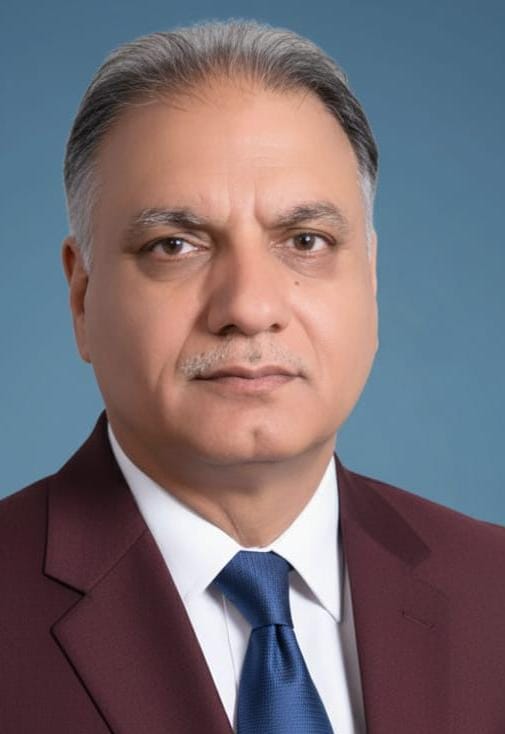
The author is Advisor Academics University of Veterinary and Animal Sciences, Swat and former Financial Advisor Finance Division, Government of Pakistan