



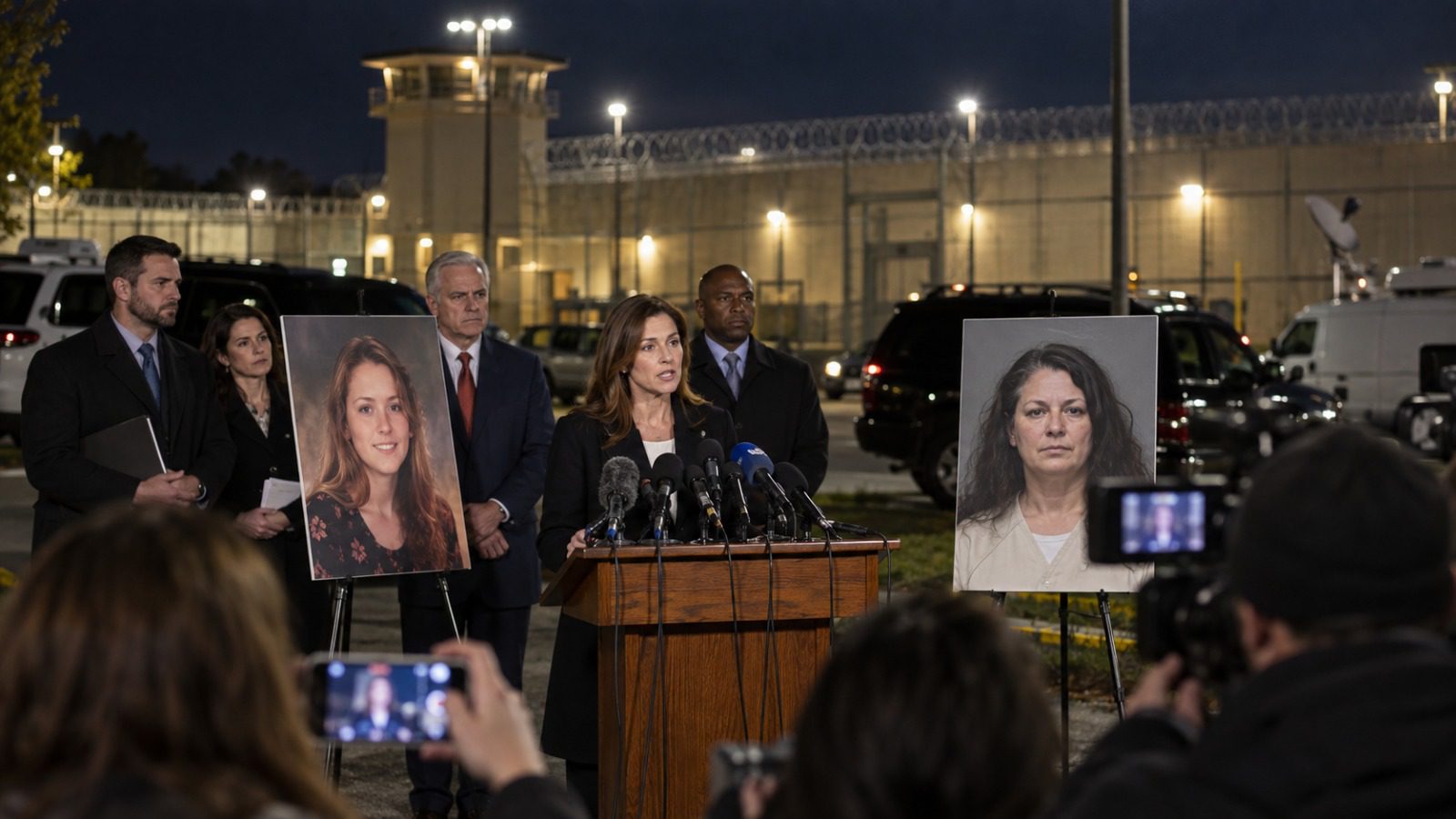
NASHVILLE, Tenn (Web Desk) – Tennessee officials stopped an execution Wednesday after convicted murderer Christa Gail Pike remained alive following the administration of two doses of the lethal-injection drug pentobarbital, according to her lawyers and state officials.
Read also: Araghchi to meet Qatari mediators in New York over latest US-Iran proposals
Pike, 50, had been scheduled to be executed for the 1995 killing of 19-year-old Colleen Slemmer. Her execution would have been the first of a woman in Tennessee in more than 200 years.
The failed execution prompted Tennessee Gov. Bill Lee to order an independent review of what happened. He also said the state’s remaining scheduled execution for this year would not take place.
Lee said carrying out a death sentence was a serious responsibility and ordered a “comprehensive, third-party review” to establish what went wrong during the execution.
Pike’s attorneys said she remained alive after receiving two doses of pentobarbital. They said she was later taken by ambulance from the prison to a hospital for treatment. Her lawyers said they had not immediately been informed about her medical condition.
The execution had already faced a legal setback earlier Wednesday. A federal appeals court issued a temporary stay shortly before the scheduled execution, but the U.S. Supreme Court later allowed Tennessee to proceed.
Pike was then taken to the execution chamber at Riverbend Maximum Security Institution in Nashville.
According to media witnesses, Pike was strapped to a gurney when the curtains to the execution chamber were opened. She delivered what were expected to be her final words and said she was at peace.
However, witnesses later reported that Pike remained conscious and asked prison officials about a sensation in her arm.
The state’s execution procedure provides for a second set of syringes if an inmate is still alive after the first set of drugs. According to Pike’s lawyers, a second dose of pentobarbital was administered later in the evening.
Witnesses said Pike could still be heard breathing and snoring after the second dose. The microphone was eventually turned off and media witnesses were escorted from the area.
The Tennessee Department of Correction said it followed the state’s approved execution procedure.
The incident was the second time this year that Tennessee has failed to complete an execution. In May, officials stopped the execution of Tony Carruthers after they were unable to establish an intravenous line for more than an hour.
Pike was convicted for the killing of Slemmer, who was her classmate at a job-training programme in Knoxville. Prosecutors said Pike and her boyfriend took Slemmer to a wooded area, where she was attacked.
Pike was 18 when the killing took place. Her lawyers have argued that her age, history of abuse and mental health problems should have been given greater consideration in her case.
Pike has acknowledged responsibility for Slemmer’s death. Her supporters have argued that she was a troubled teenager at the time of the crime and that her background should have been considered in deciding her punishment.
Her boyfriend, who was 17 at the time, was also convicted and received a life sentence with the possibility of parole. Pike was sentenced to death.
The case has also renewed discussion in the United States over the use of the death penalty for crimes committed by young offenders.
Executions of women remain relatively uncommon in the United States. According to the Death Penalty Information Center, 18 women have been executed since the U.S. Supreme Court restored the death penalty in 1976.
Tennessee changed its lethal-injection method in 2024, moving from a three-drug procedure to the use of pentobarbital alone.
The governor’s decision means the state will now review the failed execution before proceeding with its remaining scheduled death sentence this year.