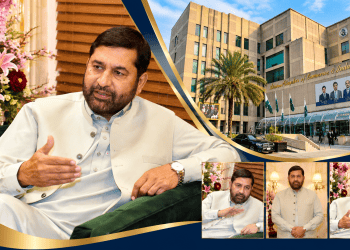



BAGHDAD (Web Desk) – Iraqi Prime Minister Ali al-Zaidi will travel to Washington on Monday for high-level talks with United States officials aimed at strengthening bilateral relations through new agreements in the energy sector, expanded economic cooperation and closer strategic coordination on regional security.
The visit comes at a time of heightened tensions across the Middle East, with Iraq seeking to maintain balanced relations with both the United States and neighbouring Iran while protecting its economic and national security interests.
According to Iraqi government officials, the two sides are expected to sign several memorandums of understanding focusing on oil and gas development, investment and infrastructure projects.
Government spokesperson Haider al-Aboudi said the agreements are intended to attract major American energy companies to Iraq and accelerate efforts to expand the country’s oil production capacity.
He said increased foreign investment would strengthen Iraq’s energy sector, modernize production facilities and create new employment opportunities while supporting long-term economic growth.
Officials believe greater cooperation with US energy firms will help Iraq develop advanced extraction technologies, improve operational efficiency and maximize production from existing oil fields.
The planned agreements also include measures aimed at diversifying Iraq’s energy export routes.
According to Iraqi authorities, the government wants to reduce its dependence on the Strait of Hormuz by developing alternative export channels that would allow oil shipments to continue during periods of regional instability.
Recent tensions in the Gulf have disrupted energy markets and affected oil-exporting countries across the region.
Iraq, whose economy depends heavily on crude oil exports, has experienced declining revenues as security concerns affected shipping through one of the world’s busiest energy corridors.
Officials say expanding export options has become an economic priority to safeguard national income against future geopolitical disruptions.
In addition to energy cooperation, discussions in Washington are expected to cover broader economic and investment opportunities.
The Iraqi delegation hopes to encourage greater American investment in infrastructure, industry, technology and other sectors beyond oil and gas as part of Baghdad’s efforts to diversify its economy.
Trade relations between Iraq and the United States are also expected to feature prominently during the meetings.
Government officials believe stronger commercial ties could support private-sector growth while improving access to advanced technology and international markets.
Security cooperation will form another important part of the visit.
Al-Aboudi said strengthening Iraq’s armed forces and expanding defence cooperation with the United States would be discussed during meetings with American officials.
The United States has maintained a military presence in Iraq for years, supporting counterterrorism operations, military training and security cooperation.
However, relations between Baghdad and Washington have periodically faced challenges over the continued deployment of US forces, Iraq’s political relations with Iran and American concerns regarding the influence of armed groups operating within the country.
Despite these differences, both governments have continued diplomatic engagement while seeking common ground on regional stability and security cooperation.
Prime Minister al-Zaidi assumed office earlier this year following his nomination for the country’s top political position.
After his appointment, US President Donald Trump congratulated the Iraqi leader and expressed hope for stronger cooperation between Washington and Baghdad.
Political analysts say the upcoming visit reflects Iraq’s efforts to maintain constructive relations with both regional and international partners while pursuing economic recovery.
Observers believe expanded cooperation with the United States could provide Iraq with increased investment, technical expertise and support for infrastructure development without abandoning its broader regional diplomacy.
The visit also highlights Iraq’s continuing strategy of balancing relations with competing regional powers while protecting its own national interests.
Officials from both countries are expected to review existing areas of cooperation, identify new investment opportunities and discuss ways to strengthen bilateral partnerships across multiple sectors.
The Iraqi government expressed confidence that the visit would produce agreements benefiting both nations while supporting regional stability, economic development and long-term cooperation in energy, trade, investment and security.