


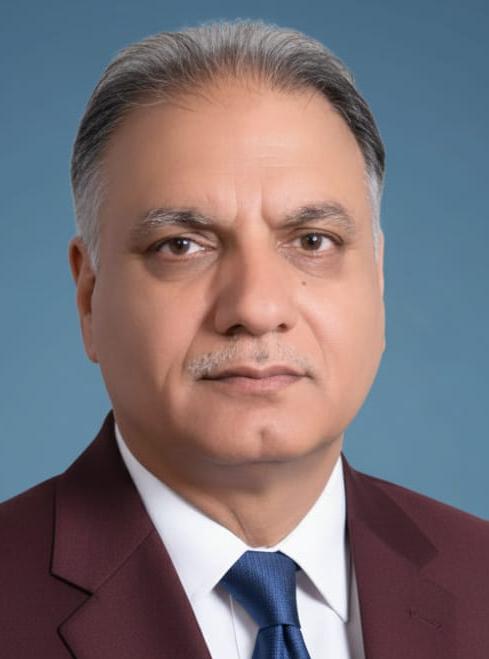
Dr. Alamdar Hussain Malik
The world once again finds itself on the edge of a dangerous and potentially devastating conflict as tensions between Iran and the United States have returned to a critical stage. This is not merely another regional crisis; it is a warning to the entire international community that the world is once again standing at the brink of a wider war. Every new conflict destroys lives, weakens economies, fuels extremism, and leaves generations burdened with fear and insecurity. History has repeatedly shown that while wars may begin with political decisions, they invariably end with immense human suffering.
Over the past five to six months, Pakistan has played a constructive and responsible diplomatic role in preventing a wider regional conflict. The Prime Minister, the Field Marshal, the Deputy Prime Minister and Foreign Minister, the Interior Minister, and other senior officials remained actively engaged with regional and global leaders, consistently advocating restraint, dialogue, and a peaceful resolution of disputes. Pakistan’s message has been clear: differences must be resolved through diplomacy, not military confrontation.
Yet, despite these sincere diplomatic efforts, the region has once again returned to square one. This compels us to ask a difficult but essential question: Why did months of negotiations fail to prevent another crisis? The answer lies in the issue that remained largely unaddressed throughout the diplomatic process—the deep trust deficit between Iran and the United States. Meetings were held, messages were exchanged, and mediation efforts continued, but the underlying mistrust that has accumulated over decades was never meaningfully reduced. Diplomacy without trust merely manages crises; it does not resolve them. Ceasefires may pause hostilities, but they cannot establish lasting peace unless confidence between adversaries is gradually rebuilt.
This is perhaps the most important lesson for Pakistan as well. While its diplomatic efforts were sincere and commendable, the renewed crisis should encourage a careful reassessment of future mediation strategies. Pakistan must evaluate why months of engagement did not produce a durable outcome and identify how future initiatives can contribute not only to dialogue but also to rebuilding trust between opposing sides. Lasting peace requires more than facilitating meetings; it requires creating conditions in which trust can gradually replace suspicion.
Pakistan must also carefully assess the strategic implications of the evolving regional situation. If the United States were ultimately to achieve its strategic objectives in Iran, the geopolitical balance of the region could change significantly. Such a development would not remain confined to Iran alone; its consequences could extend across the Middle East and South Asia, with important implications for Pakistan’s national security, economy, energy interests, and regional diplomacy. As Iran is Pakistan’s immediate neighbour, any prolonged instability or major shift in the regional balance could create new security and economic challenges that Pakistan cannot afford to ignore.
The consequences of another prolonged conflict will extend far beyond the Middle East. Global energy markets will become unstable, oil prices will rise, inflation will intensify, supply chains will again be disrupted, investment will decline, and millions more could be pushed into poverty. Developing countries like Pakistan, already facing economic challenges, will once again bear the burden of a conflict they neither created nor desired.
The United Nations and the major powers now stand before one of the greatest diplomatic tests of our time. Their responsibility is not merely to negotiate another temporary ceasefire but to create a credible framework that addresses the roots of conflict. Peace cannot survive where mistrust is allowed to flourish. Justice cannot be selective if the international system expects to retain global confidence.
This is also a defining moment for the Muslim Ummah. The member states of the Organization of Islamic Cooperation (OIC) must rise above political differences and narrow strategic interests. They should demonstrate unity, moral courage, and responsible leadership by speaking with one voice in support of peace, respect for sovereignty, adherence to international law, and the protection of innocent civilians. Unity today is not merely a political necessity—it is a moral responsibility.
Humanity has already witnessed the tragedies of Iraq, Afghanistan, Syria, Gaza, Ukraine, and many other conflicts. Entire generations have grown up amid destruction, displacement, and despair. We cannot continue repeating the same mistakes while expecting different results.
Pakistan has fulfilled its moral responsibility by advocating peace. However, the recent developments also demand introspection.
Pakistan should carefully review the lessons of the past several months and further strengthen its future diplomatic initiatives. Mediation cannot succeed unless it addresses the underlying trust deficit between the parties. At the same time, Pakistan must remain vigilant to the evolving geopolitical landscape. Any major shift in the regional balance of power could have significant implications for Pakistan’s national security, economic interests, and strategic environment.
History will not remember how many meetings were held or how many statements were issued. It will remember whether the leaders of our time possessed the wisdom and courage to replace distrust with confidence, confrontation with dialogue, and hostility with peaceful coexistence.
The world stands at another historic turning point. It can either continue repeating the failures of the past or choose a future built upon trust, justice, dialogue, and mutual respect. The cost of another diplomatic failure will not be measured only in destroyed cities or weakened economies. It will be measured in lost generations, shattered hopes, and a world that had every opportunity to preserve peace—but failed to do so.
The time for symbolic diplomacy has passed.
The time for courageous leadership has arrived. The international community, the Muslim Ummah, and all responsible nations must act collectively to rebuild trust before another devastating conflict engulfs the region. Peace is never achieved through military might alone; it is secured through justice, mutual respect, and unwavering political will. The world must learn this lesson before it is too late.