


MASHHAD, Iran (Web Desk) – Iran on Thursday buried its late Supreme Leader Ayatollah Ali Khamenei in his hometown of Mashhad after six days of nationwide funeral ceremonies, with hundreds of thousands of mourners attending the final rites amid renewed tensions with Israel and the United States.
🎥 تصاویری از ورود پیکر رهبر شهید به خیابان امام رضا(ع) https://t.co/1RmfmvAPNj pic.twitter.com/TlKhwwAw69
— خبرگزاری فارس (@FarsNews_Agency) July 9, 2026
Funeral prayers for the assassinated leader were offered before his coffin was taken through the crowded streets of Mashhad to the Shrine of Imam Reza, the holiest site in Iran for Shia Muslims. The procession marked the conclusion of days of mourning that had also included ceremonies in Tehran, the religious city of Qom and parts of Iraq.
Khamenei was killed on February 28 during Israeli airstrikes that Iran says were carried out with US involvement on the opening day of the regional conflict. His death marked one of the most significant developments in Iran’s modern political history.
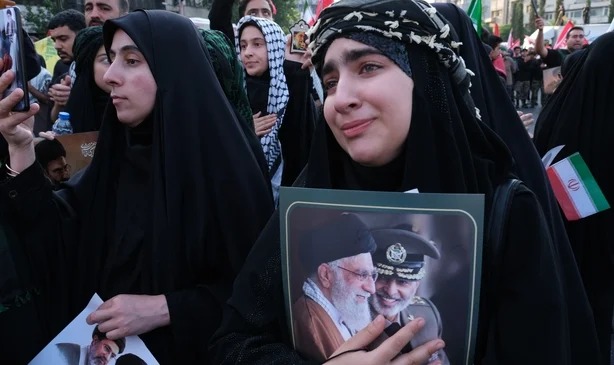
State media showed vast crowds lining the streets of Mashhad as mourners dressed predominantly in black gathered despite temperatures reaching around 35 degrees Celsius. Many carried red flags, a symbol associated with calls for revenge in Shia tradition, while others waved Iranian flags and held portraits of the late supreme leader.
Authorities deployed water sprinklers along parts of the procession route to help people cope with the intense heat. The coffin carrying Khamenei’s body was transported slowly through the city before reaching the shrine, where he was laid to rest.
According to Iranian state media, funeral prayers were led by Ayatollah Hossein Noori Hamedani, one of Iran’s most senior Shia clerics.
Mashhad Governor Hassan Hosseini said authorities expected millions of mourners to participate in the funeral ceremonies, making it one of the largest public gatherings held in Iran in recent years.
The burial took place at the Shrine of Imam Reza, one of the most sacred sites in Shia Islam and the resting place of the eighth Shia Imam. Several prominent Iranian rulers and political figures have also been buried there over the centuries.
Iranian officials said Khamenei had personally expressed his wish to be buried in Mashhad, where he was born and maintained deep religious and personal ties.
The funeral unfolded against the backdrop of renewed regional instability. Although Iran and the United States reached an agreement last month aimed at ending hostilities, tensions have continued, with fresh military confrontations reported in recent days.
State media also reported that transportation into Mashhad was disrupted during the ceremonies. Rail services between Tehran and Mashhad were suspended because of security concerns, while road transport was arranged for stranded passengers travelling to the funeral.
Observers closely monitored the ceremonies for any public appearance by Mojtaba Khamenei, the late leader’s son and designated successor. However, he did not appear publicly during the funeral. Iranian media have previously reported that he was injured in the same airstrikes that killed his father.
According to official reports, Khamenei was buried alongside several members of his family who were also killed in the February 28 strikes, including his daughter, son-in-law, infant granddaughter and his daughter-in-law.
The funeral concludes an important chapter in Iran’s political history as the country enters a new leadership era while continuing to face significant regional security challenges and international tensions.