


JERUSALEM (Web Desk) – Israeli Prime Minister Benjamin Netanyahu has urged the United States not to approve the sale of F-35 fighter jets or advanced military components to Türkiye, arguing that such a move would significantly alter the strategic balance of power in the Middle East and undermine Israel’s long-standing military advantage.
Netanyahu made the remarks during a televised interview ahead of renewed discussions between Washington and Ankara over defence cooperation. His comments came as speculation grows that Türkiye may seek to restore access to the F-35 programme and secure advanced aircraft engines for its indigenous fighter jet project.
The Israeli leader warned that transferring fifth-generation fighter technology to Türkiye would have broader regional consequences. He argued that Israel’s aerial superiority has played a key role in maintaining deterrence and regional security, adding that any shift in that balance could create new strategic challenges.
According to Netanyahu, the United States should carefully evaluate the long-term security implications before approving any defence agreements involving advanced combat aircraft or critical military technology.
The issue has gained renewed attention as diplomatic engagement between Washington and Ankara has intensified in recent months. Türkiye has expressed interest in rejoining the F-35 programme after being removed several years ago following its purchase of the Russian-made S-400 air defence system.
The acquisition of the S-400 led to tensions between Türkiye and the United States, with Washington arguing that operating Russian defence systems alongside the F-35 could compromise sensitive military technology. As a result, Türkiye was suspended from the multinational fighter jet programme in 2019.
Despite that setback, Turkish officials have continued to pursue improved defence ties with the United States while expanding domestic military production. Ankara has invested heavily in developing advanced defence technologies, including drones, missiles and next-generation combat aircraft.
One of Türkiye’s most ambitious defence initiatives is the KAAN stealth fighter programme, which aims to produce the country’s first domestically manufactured fifth-generation combat aircraft. Defence analysts say access to advanced aircraft engines and related technologies would accelerate the project’s development and strengthen Türkiye’s long-term defence capabilities.
Recent reports have suggested that discussions between Washington and Ankara include potential cooperation involving aircraft engines and broader defence partnerships, although no official agreement has been announced.
Netanyahu argued that approving such requests could weaken Israel’s qualitative military edge, a principle that has traditionally guided US defence policy in the Middle East. Successive American administrations have sought to ensure that Israel maintains superior military capabilities compared with potential regional adversaries.
The Israeli prime minister also criticized Turkish President Recep Tayyip Erdogan over previous statements regarding Israel, saying Washington should carefully consider Ankara’s regional policies before expanding military cooperation.
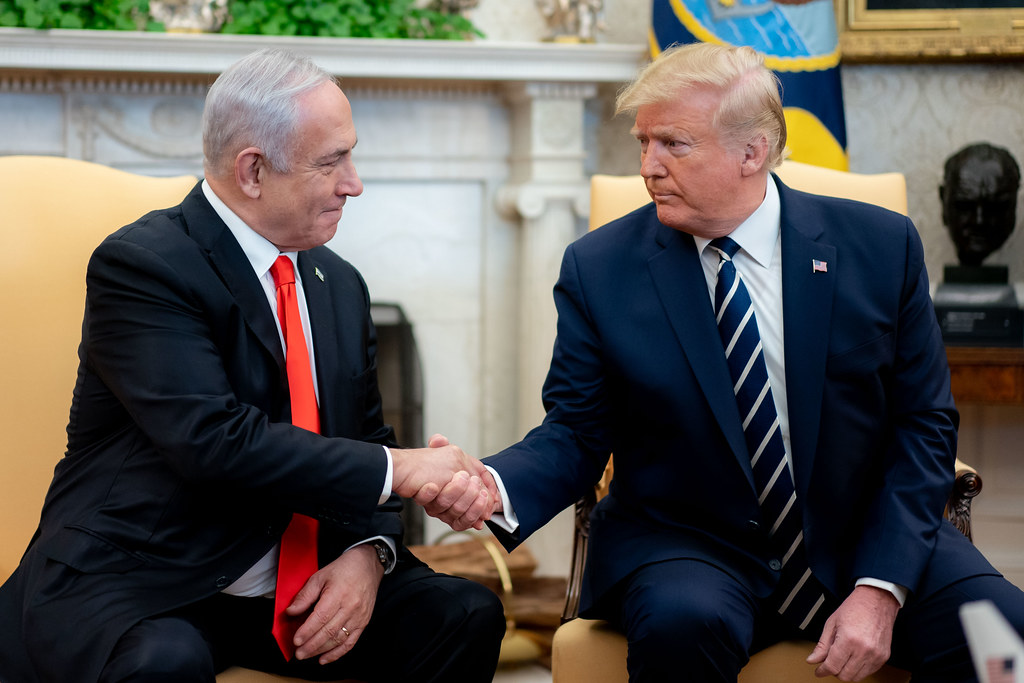
While expressing his concerns over defence sales, Netanyahu emphasized that relations between Israel and the United States remain strong. He rejected suggestions of growing differences with US President Donald Trump and described the bilateral partnership as stable despite occasional disagreements over regional issues.
The debate over advanced weapons transfers comes at a time of heightened geopolitical tensions across the Middle East. Security experts note that military technology has become an increasingly important aspect of diplomatic relations as countries invest heavily in modernizing their armed forces.
Analysts say any future decision regarding Türkiye’s participation in the F-35 programme will involve complex political, strategic and technical considerations. The United States must balance its security partnership with Türkiye, a NATO ally, against its long-standing commitment to preserving Israel’s military superiority.
Regional observers believe the outcome of ongoing discussions could influence future defence cooperation within NATO while also shaping the broader security environment across the Middle East.
For now, no official decision has been announced regarding Türkiye’s possible return to the F-35 programme or the approval of advanced engine exports. However, Netanyahu’s public intervention underscores the sensitivity of the issue and highlights the competing strategic interests surrounding one of the world’s most advanced fighter aircraft programmes.