By Commerce Reporter
LAHORE —Pakistan’s textile industry is rapidly deteriorating as, for over 10 months now, the government has failed to address the fatal anomaly in the Export Facilitation Scheme (EFS). The result is a deeply distorted tax regime that has rendered domestic manufacturing uncompetitive, gutted local supply chains, and handed Pakistan’s textile value chain over to foreign suppliers.

READ ALSO: APTMA calls for immediate removal of road blockages for transportation of trade cargos
The Export Facilitation Scheme allows exporters to import raw materials and inputs at 0% sales tax but imposes 18% tax on the same inputs if they are made in Pakistan. It’s an irrational, self-destructive policy that punishes domestic production and rewards imports.
While the sales tax is refundable, there are high time, administrative and liquidity costs associated with refunds. Sales tax is paid when an input is procured, and the claim for refunds can only be filed once the product has been manufactured and exported—a 6 to 10 month cycle at least. Add to that administrative costs associated with filing, follow-ups, and regular harassment by FBR.
Then, there is the huge liquidity cost as capital becomes stuck in the sales tax regime during the 6-10 month production cycle. Once claims are filed, even though Sales Tax Rules mandate refund issuance within 72 hours, only partial refunds of 60-70% are issued once a month. The remaining amount is deferred for manual processing where there is already a backlog of over Rs. 110 billion, and no progress on clearing it over the last 4-5 years.
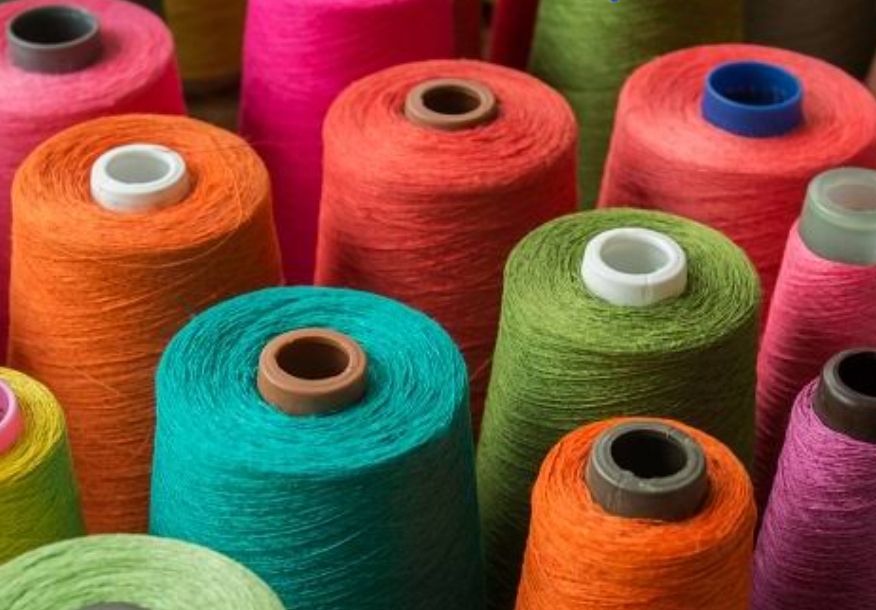
As a result, exporters have switched to imported inputs. Monthly yarn imports are over twice the historic peak (figure 1), expected to hit 300 million kg in FY25—nearly triple the 108 million kg in FY24. In total, imports of just three key raw materials— cotton, yarn, and greige fabric—are expected to be $1.5 billion higher than last year (figure 2). Meanwhile, exports are only projected to increase by $1.14 billion. More dollars are flowing out of Pakistan than coming in.
The headline export figure is a facade; underneath, the industry is hollowing out. Over 800 ginning factories and 120 spinning mills have shut down, and millions of livelihoods lost. The crisis has reached the weaving sector, with looms shutting Cotton output has already fallen from 15 million bales in the mid-2010s to around 5– 10 million today. While commendable steps have been taken—such as lifting the cotton seed import ban and introducing modern farming techniques under the Green Pakistan Initiative—the single biggest obstacle to cotton revival remains the current sales tax regime.
Pakistani cotton is taxed at 18%, while imported cotton enjoys a sales tax-free path through EFS. Even cottonseed and cottonseed cake—basic agricultural byproducts— face an 18% sales tax, a practice unheard of globally. Given elastic demand, farmers must absorb the high tax burdens, pushing their incomes below cost of production.
As the spinning sector—the primary consumer of cotton—has largely been deindustrialized by the EFS anomaly, demand for cotton has severely plummeted. With uncertain demand and no support price, there is high uncertainty regarding profitability of cotton, and farmers are shifting towards alternate, waterintensive crops with severe implications for Pakistan’s already scarce water resources. Destruction of the cotton sector will put millions more livelihoods at risk, especially women in cotton picking, etc. who have very few alternative sources of employment.
The government has stood by—unmoved and indifferent—as the textile and cotton value chains bleed to their final demise. For nearly a year, it has failed to restore the EFS to its June 2024 form with zero-rating on local inputs. Despite repeated appeals, no action has been taken.
We repeat, clearly and unequivocally: The government must immediately remove yarn and fabric from the EFS import scheme. This is the only way to halt the destruction of Pakistan’s textile industry.
Pakistan’s export economy cannot be built on imported yarn and fabric. No country has industrialized by destroying its own supply chains, replacing them with imports.
Uraan Pakistan will not happen on the grave of local industry.
About the Author