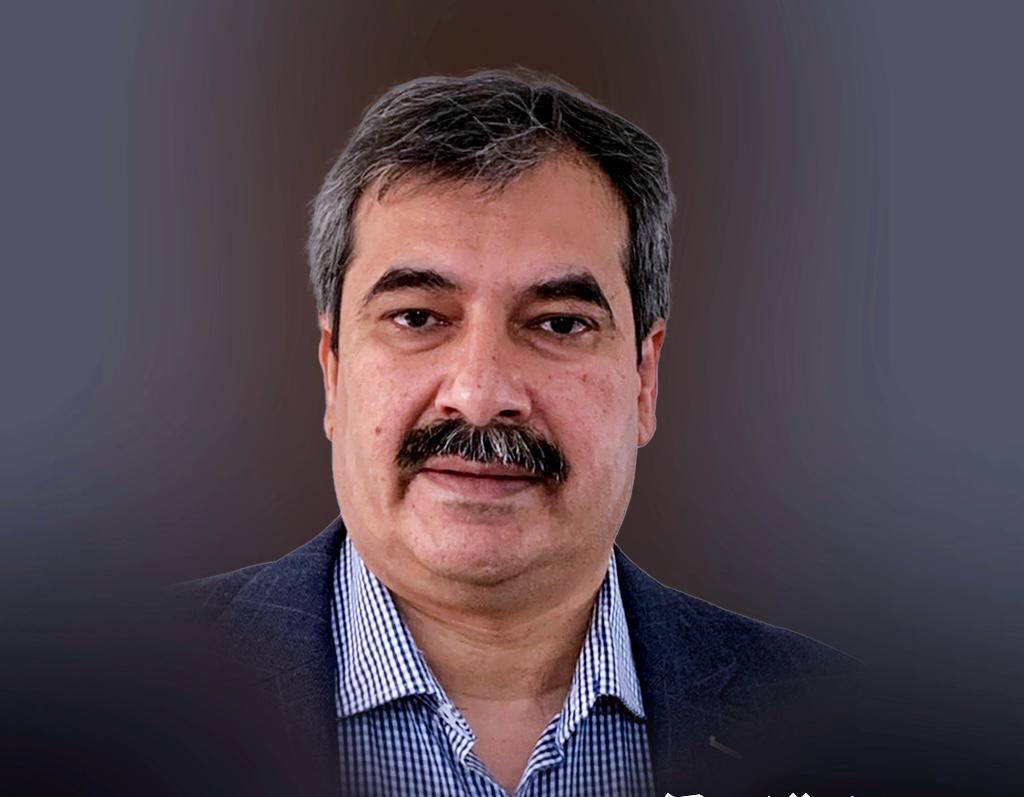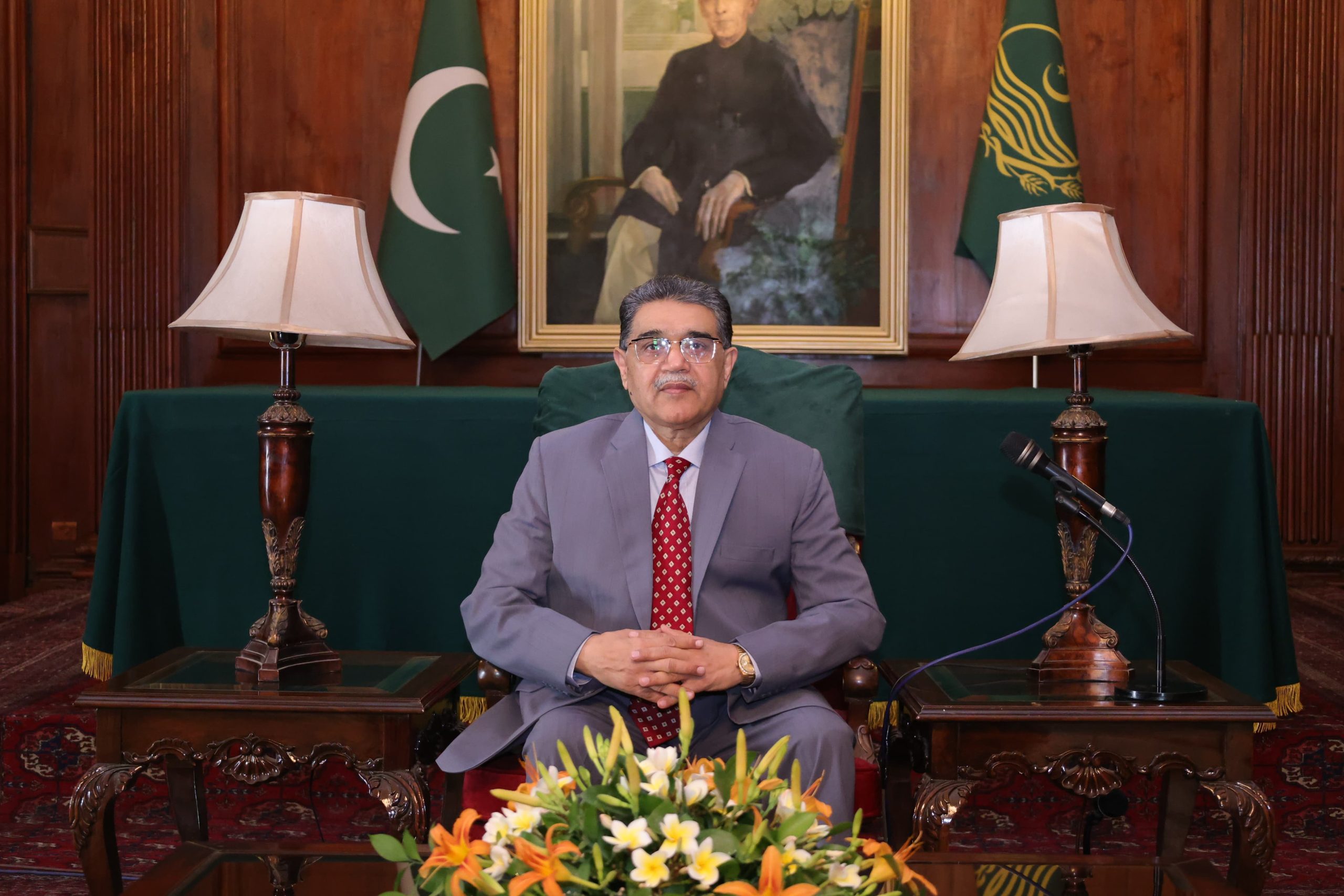



By Mian Abuzar Shad
President, Lahore Chamber of Commerce and Industry
Pakistan stands as a testament to ideology, sacrifice, and a monumental struggle. History bears witness to our nation’s resilience in the face of every storm, emerging stronger from each crisis, and delivering fitting responses to every act of aggression.
Our armed forces and the nation have consistently repelled adversaries, with the world remembering how Pakistan’s military responded to India’s hostilities. It’s now established that our defense is impregnable. However, the next frontier is the economic battle, aiming to transform Pakistan into a truly sovereign, dignified, and developed nation.
I urge all Islamic countries to recognize Pakistan as their elder brother. The reason behind Pakistan’s borrowing was the nuclear bomb, which isn’t solely ours but belongs to the entire Islamic world. It’s disheartening that Saudi Arabia rejects visas for our pilgrims, and the UAE denies visas to our traders, despite Pakistan’s military assistance during the occupation of the Holy Mosque by insurgents. Should Dubai or the UAE face dire circumstances in the future, Pakistan would be the first to offer help.
Therefore, these nations should support Pakistan in this economic struggle.
Saudi Arabia announced a $600 billion investment in the U.S. during Trump’s visit. Qatar and the UAE plan to invest $300 billion and $150 billion, respectively, in America, while we remain the sole nuclear power in the Islamic world. With nearly $1 trillion being invested by Arab countries in the U.S., at least 10 per cent should be directed towards Pakistan.
A stronger Pakistan means a stronger Islamic world, instilling fear in adversaries. Countries like Saudi Arabia, the UAE, and Qatar should acknowledge Pakistan as their elder brother, assist in debt repayment, and bolster our economy.
These nations should also enter into defense agreements with Pakistan. Muslim countries must remember that Pakistan’s nuclear capability deters adversaries. Without it, they might have already been subdued. Our government should immediately increase the defense budget by 25%.
Currently, we face challenges like a high dollar rate, mounting debts, and economic pressures.
International financial institutions, FATF conditions, inflation, unemployment, and corruption are arenas where we must now wage war. To succeed, Pakistan requires thorough preparation and a cohesive, national-level strategy.
Our economy faces several challenges:
• External debts have surpassed $130 billion.
• Poverty levels exceed 41%.
• Depreciation of the rupee has made imports costlier.
• A growing trade deficit due to higher imports than exports.
• Unemployment and industrial shutdowns have disheartened the youth.
• Despite being an agricultural nation, we’re importing wheat, pulses, and cotton due to declining agricultural output.
While India suffered defeats in recent conflicts with our armed forces, it’s undeniable that over the past decades, they’ve focused intensely on economic growth. By implementing policies in technology, the service sector, infrastructure, and attracting foreign direct investment, India has become the world’s fifth-largest economy. We must now challenge and surpass India economically.
I propose the immediate declaration of an economic emergency to pull the country out of crisis. All political parties, the business community, economists, and state institutions should unite under a shared economic agenda.
Pakistan’s exports hover around $30 billion. We need to provide our industries with subsidies, technology, affordable loans, and market access to compete globally.
Revitalizing our agricultural sector is crucial.
Through reforms, water reservoirs, modern research, and farmer support, we can achieve food self-sufficiency and turn agriculture into an export-oriented sector.
Specific policies should be introduced for agriculture. Currently, farmers suffer losses whether there’s a surplus or shortage of wheat due to imports. Concrete measures are needed.
An immediate announcement of an import policy is essential; otherwise, the cottage industry won’t thrive.
Policies should be promptly introduced for the poultry industry and meat sector.
Expanding the tax net and eradicating corruption is imperative. Tax evaders should not be granted amnesty. To broaden the tax base, rates should be reduced, especially aligning sales tax to 8.5% in line with regional countries.
The tax system should be simplified and digitized to facilitate traders and increase government revenue. I reiterate my demand to eradicate “speed money” with an iron hand, as it’s corroding the nation’s foundations.
Expensive electricity and gas have become major adversaries of our industry. We must invest in alternative energy sources like solar and wind power. Our advocacy led the government to start controlling IPPs, which annually consume Rs. 2,111 billion in capacity charges. It’s essential to completely rid ourselves of this burden.
The nation should be educated on savings, using local products, and avoiding extravagance. The spirit of “Our Products, Our Pride” should be promoted.
Overseas Pakistanis are our valuable asset. They should be encouraged to invest in Pakistan, provided with facilities, and assured of a transparent system.
We need to craft a new national narrative: “Having triumphed over India in war, we must now conquer poverty, inflation, and economic subjugation.”
The media should propagate this narrative, raise public awareness, and frame economic issues as matters of national pride. Youth should be transformed into “economic soldiers,” directed towards employment, skills, and innovation.
China transitioned from poverty to becoming the world’s second-largest economy within a few decades. Turkey strengthened its economy through internal stability and national fervor. Malaysia pursued development via education, infrastructure, and honest leadership. Pakistan must learn from these nations.
I would like to especially commend Chief of Army Staff General Asim Munir. Not only has he elevated the nation’s stature in defense, but he also possesses a keen insight into economic matters. The appreciation of the rupee from 343 to 280 is credited to his efforts. Just as the army has safeguarded our borders, this spirit must now be applied to the economy. If military institutions can present exemplary models in logistics, construction, and agriculture, they can also assist in economic policymaking.(Wikipedia)
The enemy has tested warfare and faced defeat.
Now, they aim to weaken us through debts, inflation, poverty, and trade tactics. We must confront this challenge just as we did in 1965 and in recent conflicts, where we thwarted the enemy’s advances.
Nations experience pivotal moments. Pakistan is at such a juncture. We must decide: accept economic subjugation or embark on a new economic battle to achieve victory. I am confident that a nation which has repeatedly defeated India can also triumph in the economic arena—provided our leadership is sincere, the nation united, and our direction clear.
Long Live Pakistan… Long Live the Pakistan Army