


By Commerce Reporter
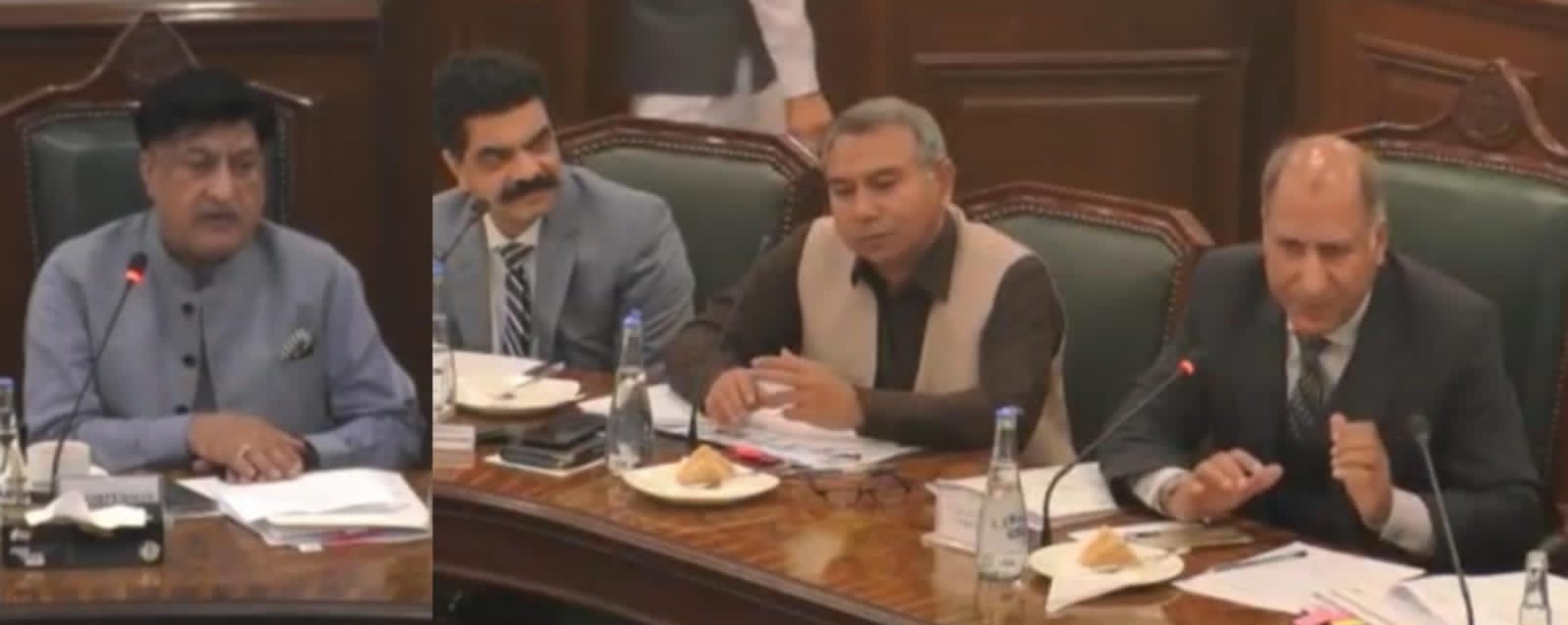
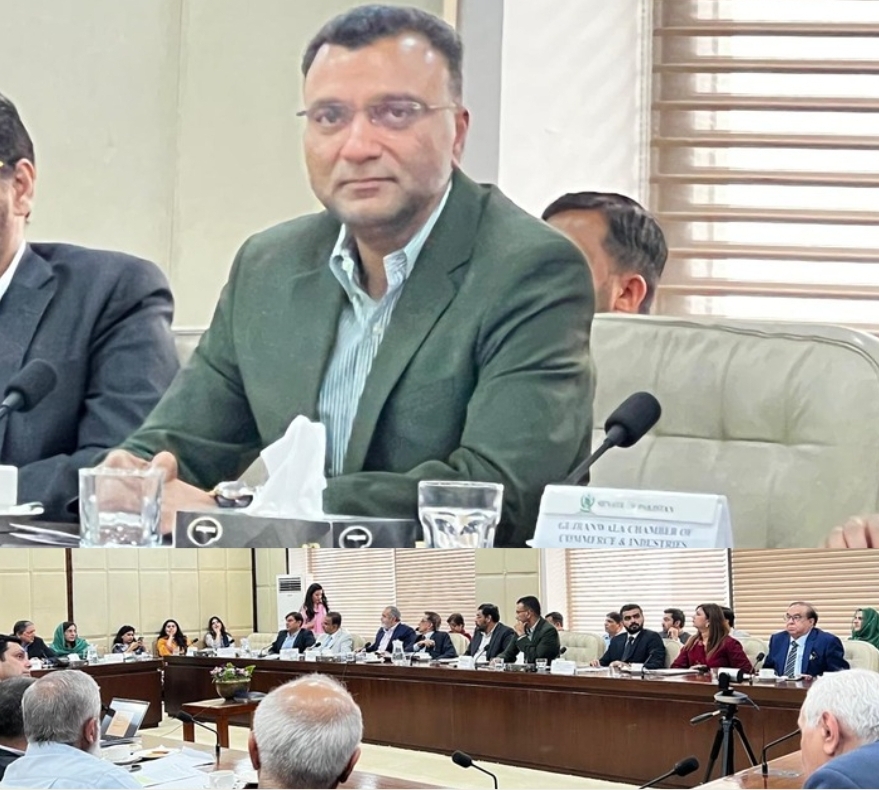
LAHORE – Senior Vice President of the Lahore Chamber of Commerce and Industry Engineer Khalid Usman has presented the key Budget Proposals to the Senate Standing Committee on Finance and Revenue which was chaired by Senator Saleem Mandviwalla and was also attended the public and private sector officials, secretaries, chairpersons and directors from across the country.
Read also: LCCI SVP meets Iranian Consul General to discuss expansion of bilateral trade
Engineer Khalid Usman in his address said that the upcoming Federal Budget 2025–26 holds critical importance for Pakistan’s economic revival and the LCCI had prepared an in-depth budget document after thorough consultations with its members.
He underscored the need for reducing the cost of doing business and enhancing in Pakistan. He urged the government to simplify business-related procedures and reduce excessive regulations.
The LCCI Senior Vice Presient also stressed the importance of framing policies that support industrial growth, trade expansion and macroeconomic stability. He said that the LCCI’s proposals also aim at creating a more supportive environment for taxpayers by recommending reforms in audit and refund mechanisms. A key demand presented was to broaden the tax net instead of putting additional burdens on existing taxpayers.
He said that restructuring the tariff system is essential to promote industrialization. He advocated adopting a cascading tariff structure whereby lower duties are applied to raw materials, moderate duties on semi-finished goods and higher rates on finished products. Such a model would encourage local value addition and discourage excessive reliance on imports.
Engineer Khalid Usman said that the LCCI firmly opposed the Ministry of Commerce’s proposed blanket 0 to 20% tariff regime, calling it detrimental to domestic industrial competitiveness.
Another important suggestion presented was the exemption of import duties on water treatment plants. He said that it is crucial for industries to treat wastewater to comply with international environmental standards, but high import duties make the installation of such plants prohibitively expensive. Removing these duties would enhance environmental compliance and strengthen Pakistan’s position in global markets.
On the issue of taxation, LCCI SVP urged the alignment of FBR’s SME definition with SMEDA’s, recommending that enterprises with an annual turnover of up to Rs. 800 million be classified as SMEs instead of the current Rs. 250 million limit. This change would bring more businesses into documentation while ensuring fair taxation under a simplified regime, which includes a tax of 15% on net profit or 0.5% on revenue, with an exemption from audits for three years.
He proposed that the cascading principle should also be applied to sales tax, with 0% on raw materials, 5-8% on intermediate goods and 18% on finished products. Furthermore, he criticized FBR’s decision to shift exporters from the Final Tax Regime (FTR) to the Minimum Tax Regime (MTR), stating that this move creates additional complications and financial burden for exporters, who now have to calculate taxable income under standard procedures and potentially pay additional taxes beyond the 1% already paid on export proceeds.
To bring traders effectively into the tax net, Engineer Usman suggested the introduction of a simplified fixed tax regime, starting with a minimum fixed tax irrespective of business volume, followed by the development of detailed tax slabs through stakeholder consultations. He also raised concerns over the imposition of super tax based on presumed profits calculated from turnover, labeling it as unjust, especially in loss-making scenarios.
Referring to SRO 55(I)/2025, he criticized the newly introduced reporting requirements – Annex-J for production data from manufacturers and Annex-H1 for stock statements from commercial importers and wholesalers – which he claimed have led to harassment of the business community through unjustified notices and raids. He stressed that such measures discourage investment and hurt export potential, calling for their immediate withdrawal.
He proposed increasing the turnover threshold for withholding agents from Rs. 100 million to Rs. 250 million, considering inflation and currency devaluation. Addressing the issue of foreign assets declared under past amnesty schemes, he condemned the freezing of bank accounts and issuance of notices despite pending Supreme Court decisions, calling these actions unjust and demanding their immediate halt.
Engineer Usman stressed the importance of timely tax refunds for exporters to maintain liquidity, boost investment and ensure smooth economic activity. He emphasized that FBR must strictly adhere to the 72-hour processing window for sales tax refunds under the FASTER system, highlighting that delays often extend to a month, severely affecting exporters. He proposed that if refunds are not processed within 15 days, the FBR should pay interest on the delayed amounts and that income tax refunds should also be processed through automated systems like sales tax refunds.
He also called for continuity in economic policies, recommending they be framed under a long-term vision spanning at least 10 years to ensure sustainable growth and macroeconomic stability. Lastly, he advocated for the abolition of the 1.8% Sindh Infrastructure Development Cess (SIDC) on exporters, noting that it cannot be claimed back and undermines Pakistan’s export competitiveness.
Engineer Khalid Usman concluded his remarks by reaffirming the Lahore Chamber’s commitment to working with all stakeholders to promote industrial growth, improve business conditions and contribute to Pakistan’s economic prosperity.