


By: Mian Abuzar Shad
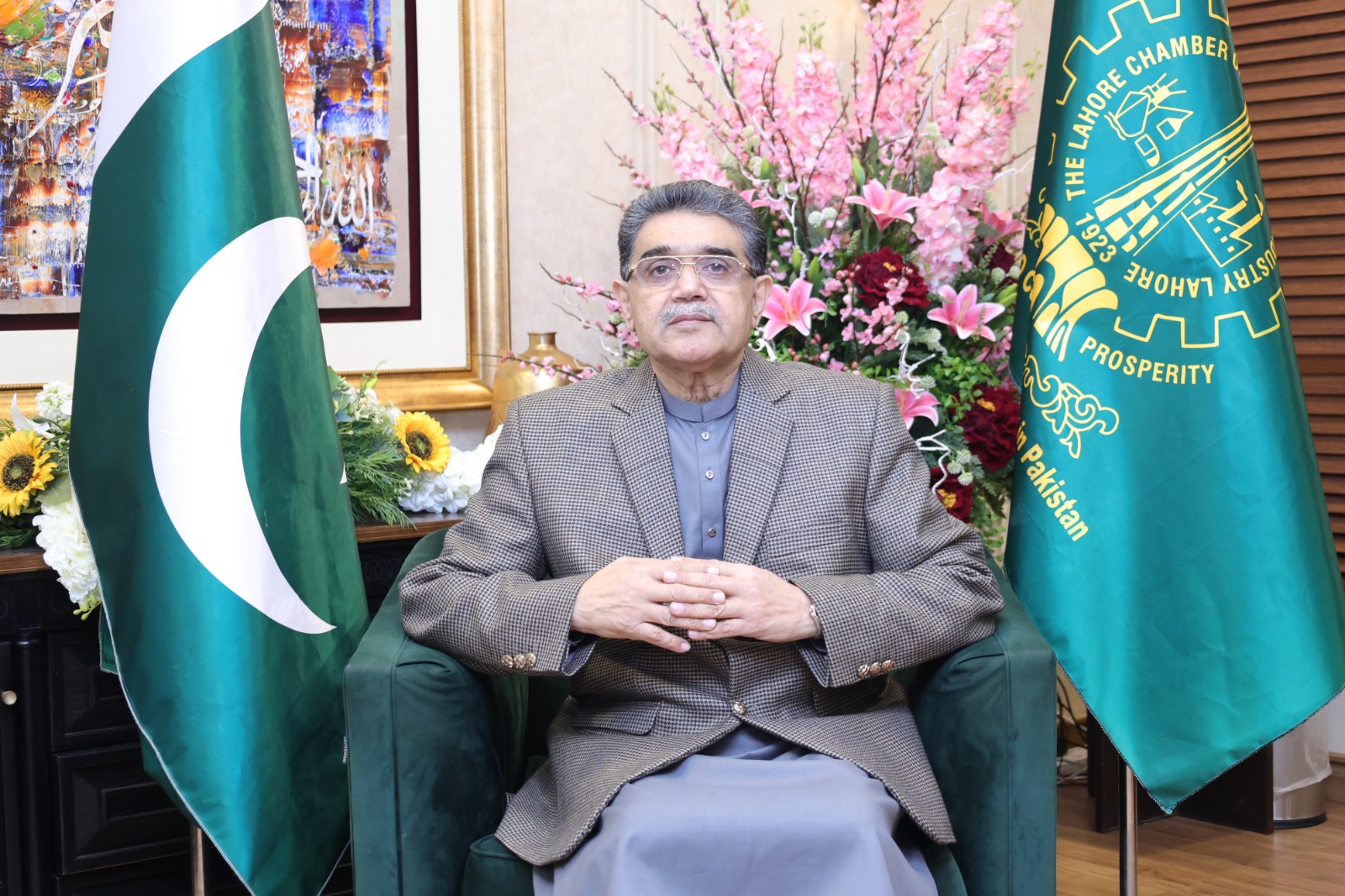
President, LCCI
Alhamdulillah, as long as my father was alive, he managed all household and business affairs. I take pride in that.
“You took a thousand rupees in the morning, and now you’re asking again?” the elderly man asked in surprise. His friend sheepishly replied, “Father, now Chaudhry Sahib has arrived. I have to serve him coffee too. The thousand rupees from the morning were spent on my morning guests.”
The elderly man reached into his pocket, counted ten hundred-rupee notes, handed them over, and then prayed for him at length. We stepped outside. The coffee shop was just a short walk from home, so we walked there. On the way, I asked my friend, “Do you still take money from your father?” He smiled, nodded affirmatively, and said, “Of course, I take money from my father multiple times a day. Sometimes fifty rupees, sometimes a hundred, and if a distinguished guest like you arrives, even five hundred or a thousand rupees.”
I was astonished and asked, “You are the first fifty-year-old I’ve seen still taking money from his father. Allah has blessed you abundantly, your children are grown, yet you still ask your father for money. I don’t understand your logic.”
My friend smiled, stopped, placed his right hand below his left, and said, “Tell me, we have two hands. The lower one is the receiving hand, and the upper one is the giving hand. Which one is superior?”
Without hesitation, I replied, “The upper one, the giving hand.” He smiled again and asked, “Now imagine that you have been the giving hand all your life. You have always provided for your children and those around you. But suddenly, you become the receiving hand, and you have to depend on others even for small needs. How would you feel?”
After a brief pause, I said, “You’re absolutely right. A person would feel inferior and dependent.”
He smiled and continued, “Exactly. My father was the giving hand all his life. In our youth, we relied on him for everything—shoes, clothes, hosting guests. He was our sole source of income. But as we became financially independent, his sources of income diminished.
Read also: LCCI achieves historic milestones under Mian Abuzar Shad’s leadership
My father had never asked anyone for anything in his life, and I noticed he wouldn’t even ask me. His pockets remained empty for months. His shoes and clothes wore out, and even if he needed medicine, he stayed silent. Initially, I was frustrated by this.
I thought parents had a right to their children’s wealth, but I didn’t realize that the giving hand never turns into the receiving hand. If it does, it becomes a matter of immense sorrow. My father started feeling like a burden and gradually confined himself to his room.
I assumed this was due to old age—he was 75, often unwell, and withdrawing from an active life. But then something strange happened. My 17-year-old son suddenly stopped taking money from me.
Upon investigation, I found out that he was earning a decent income through online work alongside his studies. He no longer needed an allowance and even started giving money to his mother and sisters.
Believe it or not, I felt bad. I felt unnecessary and dependent. That’s when I understood how painful it is for a giving hand to turn into a receiving hand. I realized the pain my father was enduring. I went straight to him and asked, like in my childhood, “Father, do you have fifty rupees?”
My father was sitting there, looking dejected. The moment he heard these words, energy surged through him. He sat up straight, instinctively reached into his pocket, and placed fifty rupees in my hand. After giving me the money, his entire demeanor changed—he became cheerful again.
Since that day, I ask my father for money once or twice daily. I seek his permission before going out. Initially, he refuses, complains about hardships, advises caution, and then finally allows me to go. This has strengthened our relationship, and he is happier now.” He fell silent.
I asked, “But how do you ensure your father has money? He has no source of income.” He laughed and said, “I have transferred half of my salary to his account. The money goes directly into his account, and he has the checkbook. He withdraws the money, keeps it in his pocket and cupboard, and then gives it to me when I ask.
I’ve also assigned him the responsibility of buying vegetables and fruit. The household staff takes money from him and buys groceries. He also manages the purchase of milk and meat. The butcher calls him when fresh meat arrives, and my father feels delighted.
I even buy clothes of his choice, and when friends like you visit, I ask him for money to serve them coffee. This has improved his health and our relationship.” He paused, and I told him, “Notice how you only realized this when your own son became independent and you felt like the receiving hand.” He nodded in agreement.
I said, “That’s our tragedy. We only understand life’s realities when time turns and puts us in the same position.” I recalled watching a clip of comedian and actor Iftikhar Thakur recently. In it, he narrated an incident about his brother.
His brother used to come home late at night. Their father would anxiously pace in the courtyard, waiting for him. When his brother arrived, their father would simply ask, ‘Where were you?’ and then go to sleep.
One night, his brother returned even later and, seeing their father worried, got upset and said, ‘Father, why do you stay up waiting for me? I am an adult now. Stop treating me like a child.’ Their father replied, ‘Son, I only pray to Allah that He grants you a child soon, so you understand my anxiety.’
And so it happened—his brother got married and had a child. As the child grew up, he too started staying out late. One night, his nephew was late, and his brother was sitting outside waiting for him. Their father came, comforted him, and said, ‘Son, why are you worried? Your son is grown up now. He’ll come back.’ At that moment, his brother realized his mistake, broke down, and clung to their father’s legs in tears.
After hearing this, my friend had tears in his eyes.
By then, we had reached the coffee shop. We ordered coffee, and I shared my own story with him.
Twenty years ago, my house’s water pump broke down during the peak of summer. The scorching heat was unbearable, and I was supervising the mechanic fixing it. My father kept insisting, ‘It’s too hot. Come to the shade. You’ll get heatstroke.’ But I ignored him.
He went inside, brought out my son, and made him stand in the sun beside me. I was shocked and protested, ‘Father, he’s just a child! How can you be so cruel?’
By then, my father had seated himself in the veranda. He smiled and said, ‘Son, you are my child too. If you can’t bear to see your son in the sun, how can I bear to see mine?’
At first, I was annoyed, but upon deeper reflection, I realized he was absolutely right. If I couldn’t bear my child’s discomfort, how could my father endure mine?”