


Physicians Advocate for Unified National Medical Board and Accountability in Healthcare Governance
By Health Reporter
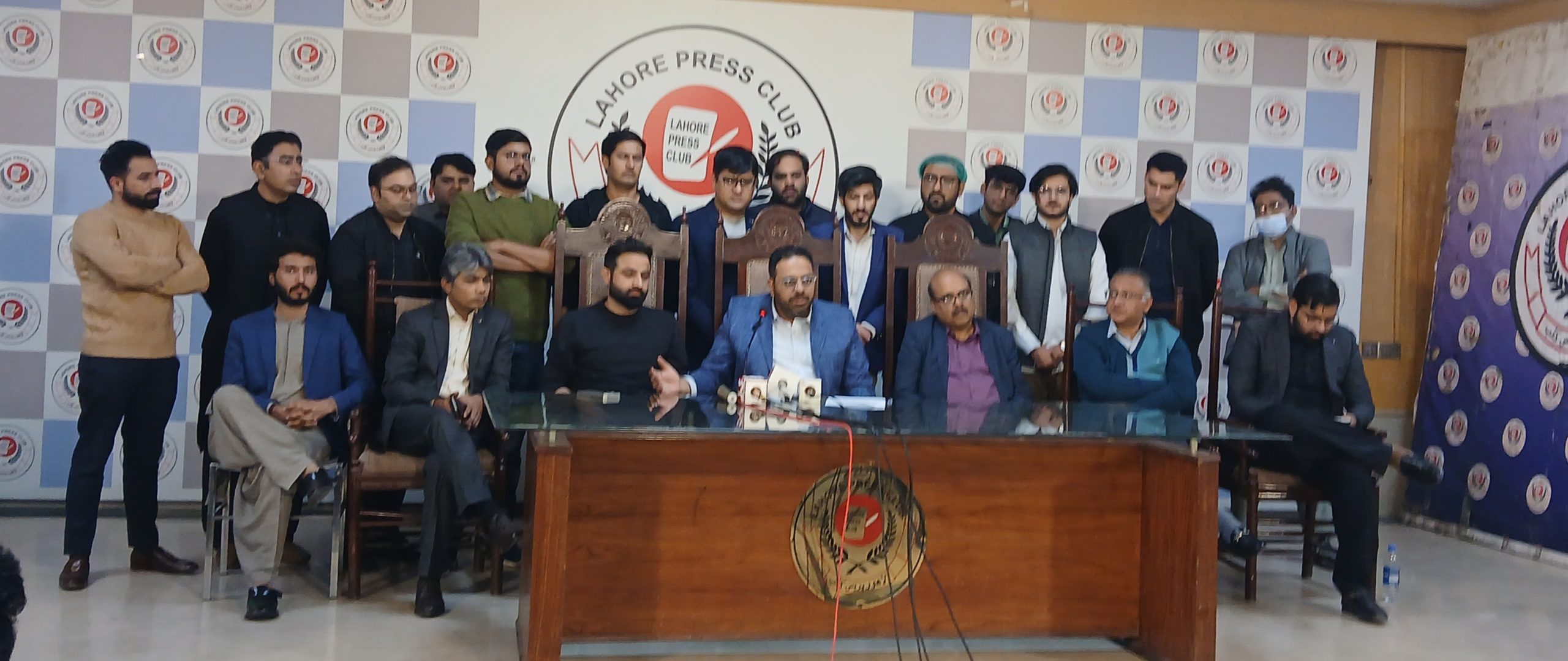
LAHORE – The Association of University Physicians and Surgeons of Pakistan (AUPSP), under the leadership of President Dr. Syed Naeem Ullah and General Secretary Dr. Asad Noor Mirza, held a press conference on Thursday to raise concerns over critical issues in Pakistan’s medical education system and healthcare governance. Senior members, including Dr. Gohar Latif Kalis (President AJ&K), Dr. Shan Alam (President GB), Dr. Feroze Mahar (President Sindh), Dr. Waseem Hamayun (President Punjab), Dr. Shahid Mahmood (President KP), and Dr. Abid Abro (President Balochistan), were also present.
The AUPSP criticized the new Joint Centralized Admission Test (JCAT) rules and their retrospective implementation, which has caused significant unrest among postgraduate medical students. The association demanded that candidates with valid JCAT results from previous years be allowed to apply for the ongoing Postgraduate Residency Program (PRP) under the Central Induction Policy (CIP).
Speaking at the conference, Dr. Syed Naeem Ullah said, “The JCAT results need to follow international standards of percentile-based evaluation rather than percentage scoring. The results compilation must be outsourced to a credible organization like Prometric, or handed over to the best-performing medical university in Punjab.”
The association strongly advocated for the establishment of a National Inter-University Medical Board under federal legislation. Dr. Asad Noor Mirza emphasized, “A centralized body must be formed to implement a unified curriculum and conduct collective exams for medical education, similar to models used in the USA and Canada.”
Read Also: Children suffering from thalassemia visit Punjab Assembly
They also requested a neutral inquiry into the performance of Punjab’s medical universities to ensure transparency and credibility in the examination system.
The association raised concerns about governance and conflict of interest within medical institutions. Dr. Gohar Latif Kalis called for immediate action against Vice Chancellors who violated their oaths and held conflicts of interest, urging the Punjab Government to conclude all pending inquiries into such officials.
Dr.l Feroze Mahar added, “It is crucial to appoint impartial leaders who can guide our medical institutions without bias. Favoritism and poor governance have eroded the credibility of our healthcare system.”
The AUPSP leadership, including Dr. Shan Alam and Dr. Waseem Hamayun, called for the revival of medical faculties at the University of Punjab and Islamia University Bahawalpur to address educational gaps.
They also emphasized the need to initiate CIP for two-year diploma programs and introduce hybrid medical science programs in PRP.
The association criticized delays in the accreditation of hospitals affiliated with the Pakistan Medical and Dental Council (PMDC). Dr. Shahid Mahmood pointed out, “MS, MD, and MDS programs continue to face discrimination in PMDC decision-making. It is imperative to ensure these programs are recognized at par with international standards.”They urged the Punjab Government to direct Medical Superintendents across the province to prioritize accreditation processes for affiliated hospitals and medical institutions.
Call for Transparency in JCAT Results
Dr. Abid Abro demanded greater transparency in the publication of JCAT results, saying, “The King Edward Medical University must stop concealing exam gazettes and publish results with full details to maintain the trust of medical professionals.”
The AUPSP appealed to the Punjab Government to take the lead in reforming medical education and lobby the Federal Government for the creation of a centralized medical education authority under an Act of Parliament. They stressed the need for accountability in healthcare governance to align Pakistan’s system with international standards.
The association’s leadership concluded by reaffirming their commitment to advocating for fairness and transparency in medical education and healthcare governance. The conference served as a wake-up call for authorities to address the pressing concerns of medical professionals across Pakistan.