


By Asim Shahzad
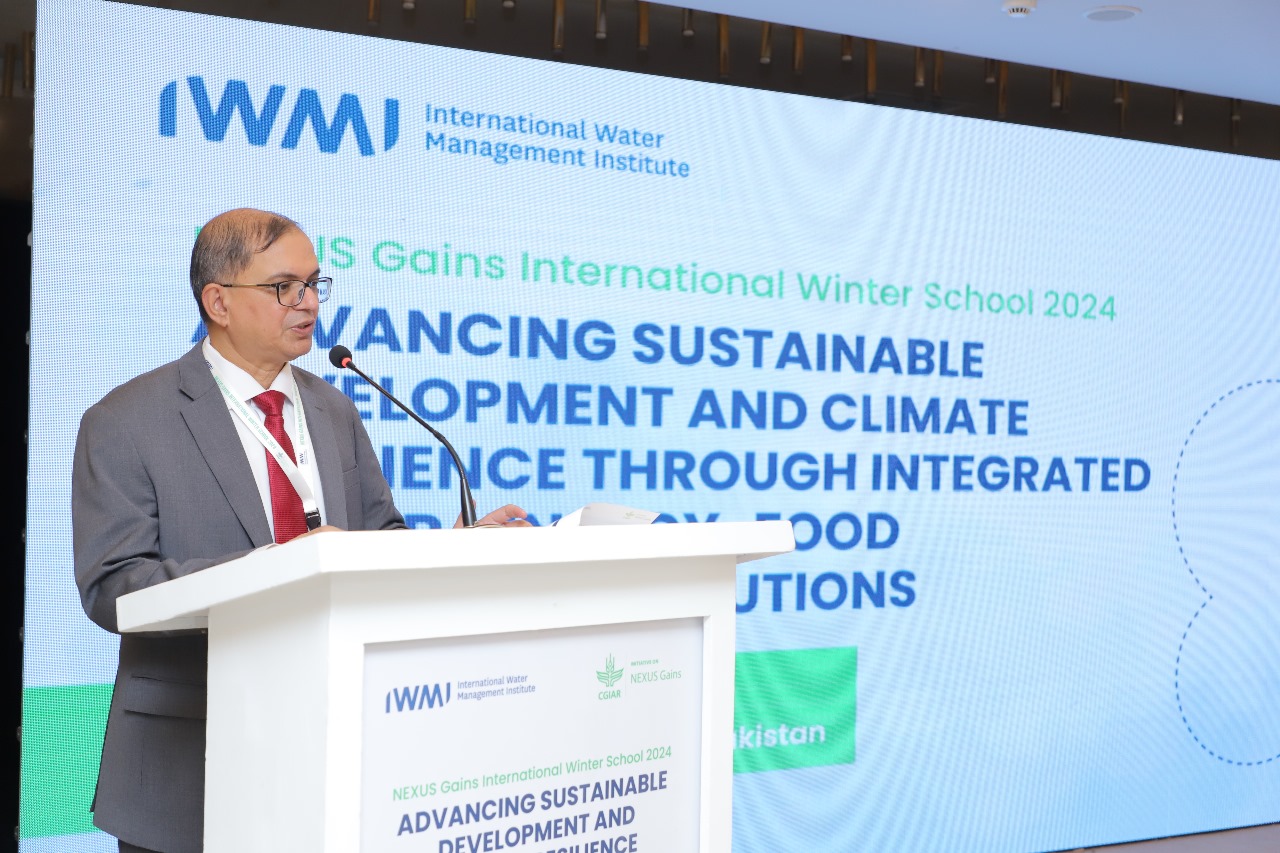
LAHORE: The International Water Management Institute (IWMI) recently concluded its five-day Water-Food-Energy-Ecosystems (WEFE) Nexus International Winter School in the federal capital. This event was organized under the CGIAR Initiative on Water-Energy-Food-Ecosystems (WEFE) NEXUS Gains.
The program brought together 45 policymakers, researchers, academics, and practitioners from across Asia and Africa to explore innovative tools and knowledge for addressing the interconnected challenges of water, energy, and food systems in the face of climate change. Delegates from Egypt, Jordan, Nepal, Uzbekistan, and Pakistan, including representatives from all four provinces, Azad Jammu and Kashmir (AJK) and Gilgit-Baltistan (GB), participated in the Winter School.
The sessions featured engaging lectures, collaborative group activities, and interactive discussions led by global and national experts. Key topics covered included the fundamentals of the WEFE Nexus, flood management, groundwater governance, water accounting, irrigation modernization, solar energy potential, improved agricultural management, and strategies for incorporating gender and equity into Nexus planning.
Collaboration and hands-on learning were emphasized throughout the program. Participants were divided into five teams, each representing one of the participating countries. Over the week, these teams developed tailored WEFE Nexus solutions to address their specific regional challenges, guided by expert advice and peer feedback. Their efforts culminated in a competitive pitch session before an expert panel of judges, showcasing innovative strategies aimed at addressing the complex water-energy-food Nexus.During the inaugural session, Dr Mohsin Hafeez, Director of Water, Food, and Ecosystems, highlighted the significance of the Winter School in building regional resilience. He stated, “The WEFE Winter School provides an invaluable scientific and policy platform for cross-regional sharing of experiences and best practices in enhancing water and food security in a changing climate. It also prepares our future leaders with essential tools to create climate-resilient communities.” To enhance the learning experience, IWMI organized field visits to Tainpura Dam in District Jhelum and the Barani Agriculture Research Institute (BARI) in Chakwal. These visits offered insights into sustainable water and agricultural practices in arid and semi-arid regions. Participants also observed the country’s first Eddy Covariance (EC) flux towers, which were installed under the Nexus Gains Initiative by IWMI, to learn about cutting-edge methods for monitoring water, carbon, and energy flows.Reflecting on the program’s impact, a participant from Jordan remarked, “The Nexus Winter School has been transformative. The knowledge and connections I’ve gained here will directly inform my work in developing sustainable resource management systems in my region.”The Winter School also included a panel discussion with Vice Chancellors nationwide to explore how Nexus approaches can be integrated into academic curricula, ensuring that future generations of students and professionals are well-equipped to tackle interconnected environmental challenges.