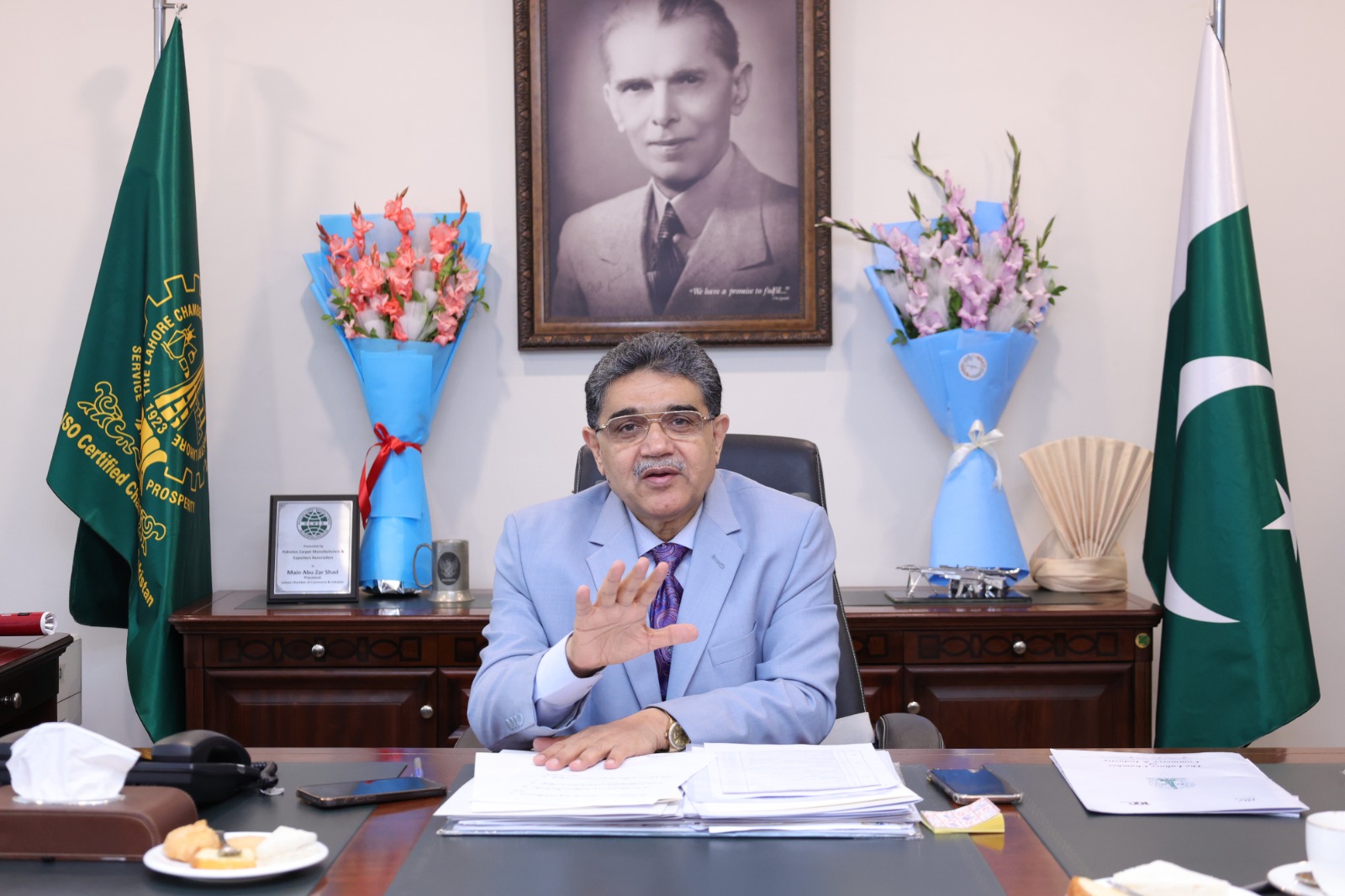



By Mian Abuzar Shad
President, Lahore Chamber of Commerce and Industry
Business community is cornerstone of Pakistan’s economy, driving industrial, commercial and trade activities across the country. Yet, this vital sector is facing various challenges which have become significant barriers to the nation’s economic growth and progress.
There is a well-known joke about a job advertisement that offered no salary, only meals. When an applicant asked about the job, the employer explained that the task involved visiting a shrine, eating own meal and bring back food for him. This joke, though humorous, but highlights the selfless sacrifices of Pakistan’s business community.
Much like the fictional employee, the business community is willing to shoulder responsibilities for the nation. They are ready to work tirelessly, pay taxes and even contribute to reduce the country’s reliance on foreign debts. All they seek in return is adequate support, respect and a conducive environment to flourish. Unfortunately, the question remains—when will this aspiration turn into reality?
In India, industrialist Mukesh Ambani spent INR 15 billion on his son’s pre-wedding festivities, earning congratulatory messages from Bollywood celebrities and even the Prime Minister. Conversely, in Pakistan, two industrialists dared to spend PKR 1.5 or 2 billion on wedding of their kids and were immediately slapped with notices by the Federal Board of Revenue (FBR).
This stark contrast illustrates how entrepreneurial confidence is nurtured in some nations but stifled in Pakistan. These attitudes not only discourage investment but also push potential investors to look for opportunities elsewhere.
The current tax regime is overly complicated, uneven and disproportionately burdens the business community. Entrepreneurs are frequently harassed with unjustified tax notices, raids and heavy fines, eroding their confidence in the system. Access to basic necessities like electricity, gas and reliable infrastructure remains a challenge, make it difficult for businesses to operate efficiently. Constant shifts in government policies discourage long-term investment, leaving businesses hesitant to commit resources.
Unlike neighboring countries, our policy makers have failed to treat its business community with the respect and facilitation they deserve. In India, China and Bangladesh, governments actively support businesses, which has resulted in tremendous economic growth.
Pakistan is grappling with a severe revenue shortfall, reflecting the economic strain on the country. In the first quarter of FY2025, the Federal Board of Revenue (FBR) reported a shortfall of approximately PKR 200 billion, with total collections falling to PKR 1.9 trillion against a target of PKR 2.1 trillion. This shortfall exacerbates fiscal challenges, as the government struggles to meet its debt servicing obligations and development expenditures.
With the tax-to-GDP ratio stagnating at a dismal 9.2%, one of the lowest in the region, Pakistan’s reliance on external borrowing continues to rise. The absence of comprehensive tax reforms, coupled with the bureaucratic inefficiencies, has left the business community burdened by an unjust system.
Pakistan urgently needs a well-designed amnesty scheme to encourage individuals to bring their undeclared wealth into formal industrial and business activities. Such a measure would spark the establishment of new industries, create employment opportunities and generate additional government revenue, reducing reliance on foreign loans.
Instead of selling national assets at significantly undervalued prices, the government should adopt a transparent approach and align with global market rates. This would ensure maximum returns and restore public confidence in the process.
Small and medium enterprises (SMEs), the backbone of Pakistan’s manufacturing sector, require governmental support to thrive. Access to low-interest loans and tax exemptions for setting up new industries are critical steps to facilitate their growth.
Pakistan’s exports need targeted support to gain access to international markets. Organizing global events that showcase the country’s products and attract foreign investors will create opportunities and drive economic activity. Consistency in government policies is essential to foster investor confidence and enable long-term planning for businesses.
The Lahore Chamber of Commerce and Industry is taking proactive steps to energize the economic and social landscape of Lahore. From January 31 to February 2, 2025, LCCI will organize the Lahore Shopping Festival 2025 at Expo Center Lahore.
This mega-event is aimed at breaking the current economic stagnation and filling Lahore with joy and positivity. By inviting international tourists to this event, LCCI intends to showcase Pakistan’s vibrant culture and dynamic business community to the world.
The Lahore Shopping Festival 2025 promises to be a transformative event, injecting new energy into the city’s commercial, social and cultural environment while boosting economic activities. It will serve as a platform to highlight Pakistan’s potential to local and international stakeholders alike.
Time is running out and competition in the global market is fierce. The government must shift its approach from treating the business community as scapegoats to celebrating them as partners in progress. The challenges facing Pakistan’s economy demand immediate and decisive action.
If the government collaborates with the business community, providing them with the respect and facilitation they deserve, Pakistan’s economy can achieve unparalleled heights. LCCI remains committed to fostering trade and economic activities, working tirelessly to create a brighter economic future for Pakistan.