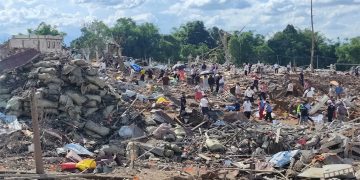



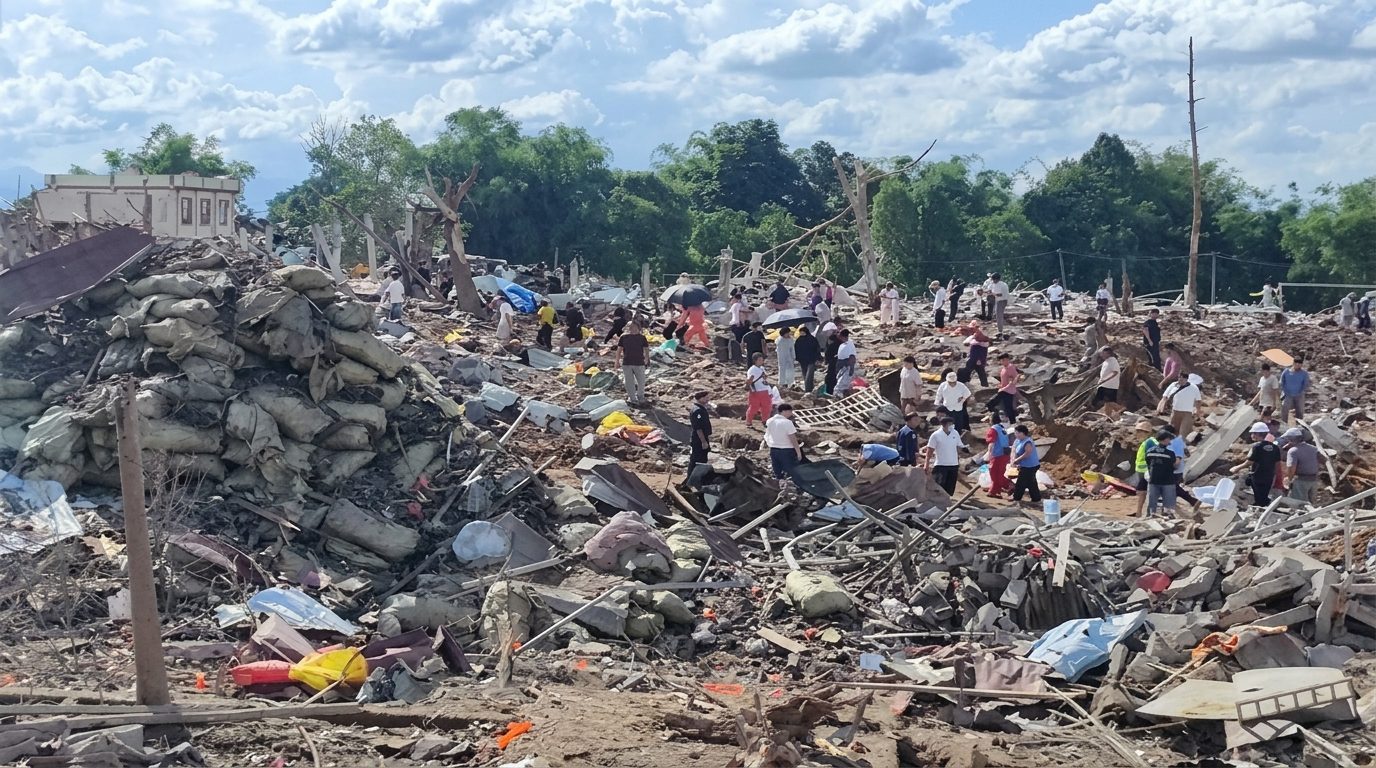
One of the deadliest incidents occurred on November 28 in Shan State, where an airstrike reportedly hit a village hosting preparations for a wedding. The location was close to a school and temporary shelters for displaced residents. Opposition officials said at least 21 civilians, including children, were killed, while around 30 others sustained injuries.
Further casualties were reported in Rakhine State, where airstrikes hit residential areas in Mrauk-U township. A local rescue official reported at least 24 deaths and more than two dozen injuries following two separate attacks. Rescue workers warned that the number of victims could increase as recovery efforts continued.
Another deadly incident took place on November 26 in Magway Region. According to Myanmar’s opposition National Unity Government (NUG), military aircraft, artillery and drones struck a compound containing a school and Buddhist monastery during a religious gathering.
The opposition administration reported that approximately 29 people, including teachers, children and resistance fighters, were killed. At least 21 others were injured.
Opposition Condemns Attacks on Civilian Areas
Opposition representatives accused the military of carrying out attacks in locations where civilians had gathered, including schools, residential communities and displacement shelters.
The National Unity Government said it was working to pursue accountability for those responsible and called attention to the increasing risks faced by ordinary people.
Local rescue personnel described devastating scenes at the affected locations, while photographs and videos circulating in local media showed damaged buildings and the aftermath of the bombardments.
Myanmar’s military administration had not issued an immediate response to the latest reports. The military has previously maintained that its operations target armed opponents rather than civilians.
Myanmar’s Prolonged Conflict
The latest violence comes amid continued instability following the military takeover in February 2021, which removed the elected government led by Aung San Suu Kyi.
The coup triggered nationwide demonstrations, followed by a violent crackdown that pushed sections of the opposition towards armed resistance. Several ethnic armed organizations and pro-democracy groups have since challenged military control across different parts of the country.
The military has increasingly relied on air operations to strike territories held by opposition forces, while resistance groups have limited capabilities to defend against aerial attacks.
The reported civilian deaths have intensified concerns among humanitarian organizations and international observers about the protection of non-combatants and access to emergency assistance.
The developments also come amid renewed international scrutiny of Myanmar following proceedings at the International Court of Justice concerning allegations of genocide against the Rohingya Muslim minority.
With fighting continuing across multiple regions, civilians remain exposed to airstrikes, displacement and worsening humanitarian conditions. The latest attacks have renewed calls for greater international attention and measures to protect communities caught in the conflict.