KARACHI, Pakistan (Web Desk) — Business sentiment in Pakistan has turned sharply negative as the Middle East conflict pushes up energy costs, with foreign investors now more pessimistic than the wider business community, according to a survey by the Overseas Investors Chamber of Commerce and Industry.
Read also: Pakistan, UK business leaders explore avenues to strengthen trade and investment ties
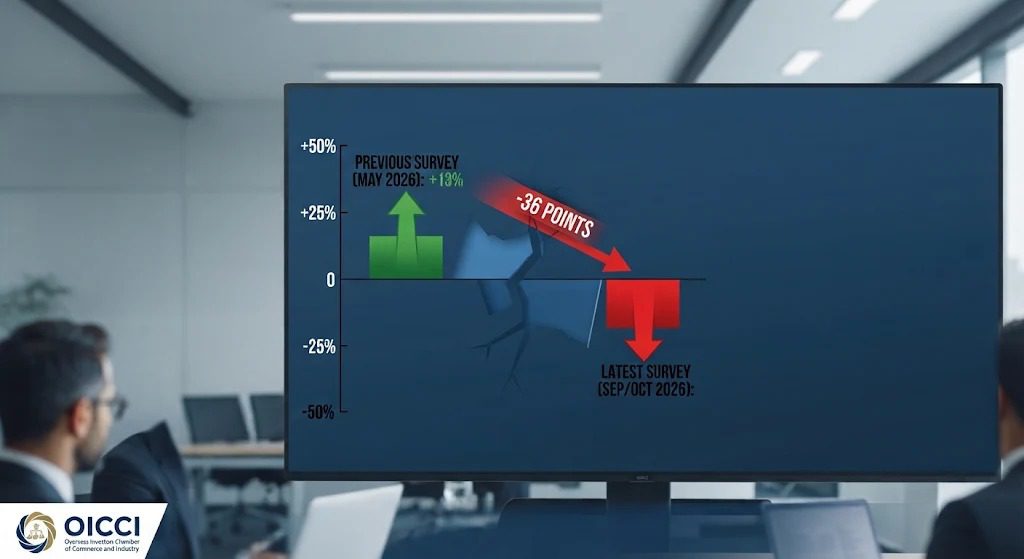
The survey, released Tuesday and covering September and October, found overall business confidence fell 36 points to minus 23%. Among OICCI members, which are mostly established foreign companies, the index dropped 55 points, from positive 28% to minus 27%.
The result reverses a long-standing pattern in which overseas investors have been more upbeat than domestic businesses. In the chamber’s previous round this summer, member companies had stayed relatively resilient while confidence among all businesses was already weakening.
The OICCI said the decline reflects concern about the cost of doing business. It pointed to high energy and fuel prices, inflation, the global security situation, domestic security and policy uncertainty. Arab News reported that businesses named inflation and high taxes as their biggest threats to growth.
Plans for new spending have also weakened. The capital investment indicator fell 16 points to minus 14%, and employment expectations dropped 23 points to minus 6%. The expansion indicator fell 27 points but stayed slightly positive, at 3%.
Firms are also gloomier about the months ahead. Only 23% of businesses surveyed expect conditions to improve over the next six months, compared with 47% in the May survey. The share expecting conditions to worsen rose to 44% from 34%. The survey comes as higher prices squeeze companies. Pakistan raised its policy rate to 12% in October as the Middle East conflict worsened the inflation outlook.
OICCI Secretary General M. Abdul Aleem said the steep fall among foreign investors points to problems in the domestic business environment that need a timely government response.
The chamber runs its confidence survey twice a year. The latest round shows how quickly sentiment has moved since the previous one, which came before the latest escalation in regional tensions.