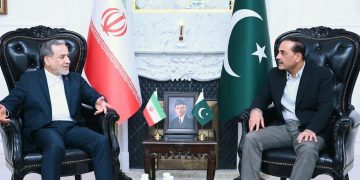



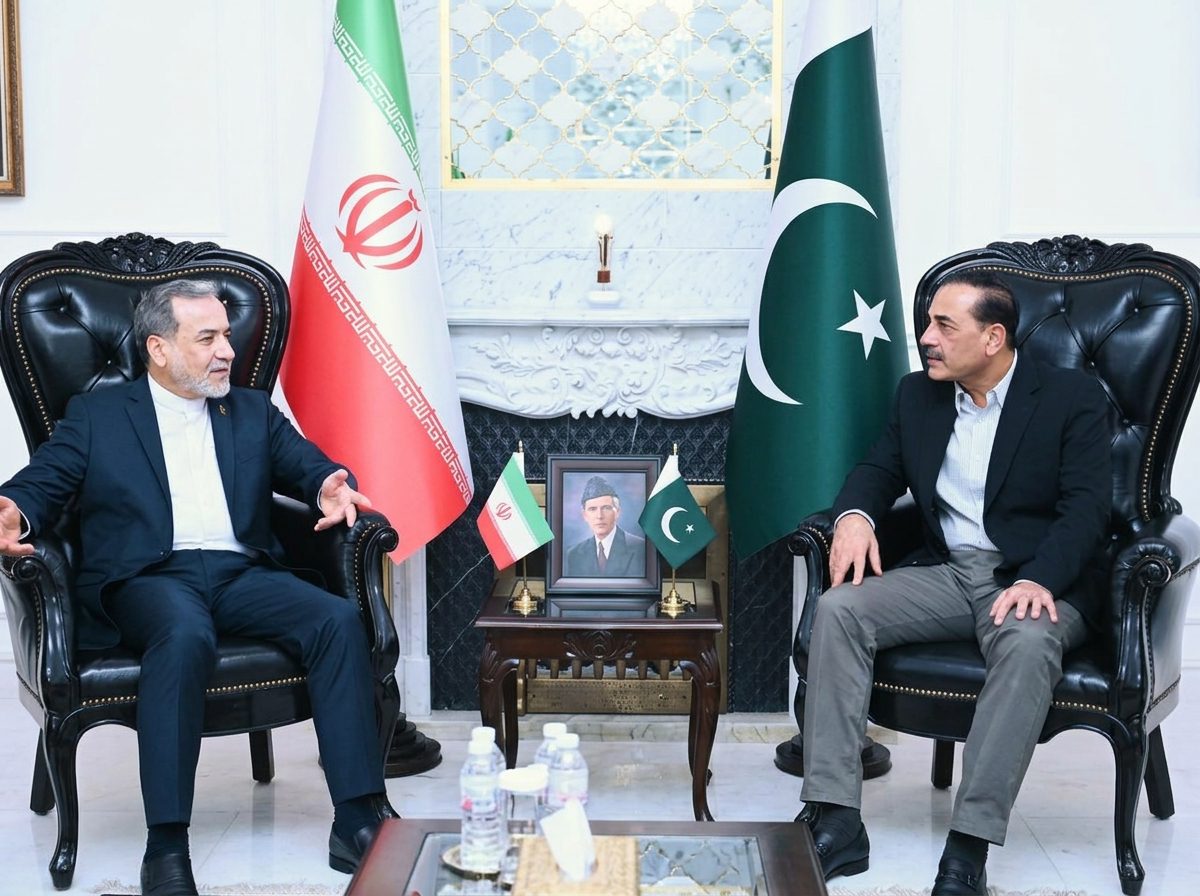
RAWALPINDI (Web Desk) – Pakistan and Iran have reaffirmed their commitment to strengthening bilateral relations and promoting regional stability during a high-level meeting between Iranian Foreign Minister Abbas Araghchi and Chief of Defence Forces Field Marshal Syed Asim Munir, according to the military’s media wing.
An Iranian delegation led by Araghchi called on Field Marshal Munir in Rawalpindi on Tuesday, with discussions focusing on matters of mutual interest, regional security developments and the evolving geopolitical situation.
The meeting provided an opportunity for both sides to exchange views on shared security concerns and explore ways to strengthen cooperation in addressing challenges affecting the region.
According to the Inter-Services Public Relations (ISPR), Field Marshal Munir emphasised the importance of sustained diplomatic engagement, mutual trust and close coordination between Pakistan and Iran.
He said continued cooperation between the two neighbouring countries was essential for promoting regional peace, stability and security.
Araghchi appreciated Pakistan’s constructive role in supporting regional peace and stability and expressed Tehran’s desire to further strengthen its longstanding relationship with Islamabad.
The meeting took place during the Iranian foreign minister’s visit to Pakistan to participate in a gathering of the Economic Cooperation Organisation (ECO), a regional grouping comprising countries from Central Asia, South Asia and the Middle East.
His visit comes amid a complex regional environment in which diplomatic engagement, economic cooperation and security coordination have assumed greater importance for neighbouring countries.
Addressing the ECO meeting a day earlier, Araghchi called on member states to strengthen regional cooperation, identifying trade, transportation and energy as key priorities for collective development.
He praised Pakistan’s hospitality and appreciated Deputy Prime Minister and Foreign Minister Ishaq Dar’s leadership within the regional organisation.
The Iranian minister also called for transforming the ECO into a more effective platform capable of developing common strategies and encouraging practical cooperation among its members.
He highlighted the importance of improving regional connectivity, expanding commercial exchanges and strengthening transport networks to unlock the economic potential of participating countries.
Araghchi welcomed the establishment of a technical negotiating committee tasked with reforming the ECO Trade Agreement, urging member states to participate actively in negotiations aimed at producing a more effective regional trade framework.
He said stronger trade arrangements could help increase economic integration, facilitate business activity and create opportunities for sustainable growth across the region.
The Iranian foreign minister also addressed the security situation in the Middle East, reaffirming Tehran’s stated commitment to the United Nations Charter and international law.
He said Iran had pursued diplomatic engagement and peaceful approaches to resolving disputes over the preceding two years.
However, Araghchi accused the United States of pursuing policies involving military aggression, threats, targeted killings, economic pressure and a blockade against Iran.
He described these actions as violations of international law and the principles of the United Nations Charter.
His remarks also included criticism of Israel’s actions against Iran, with the minister expressing appreciation for countries that had condemned what Tehran described as aggression against its territorial integrity and demonstrated solidarity with the Iranian people.
Araghchi stressed that regional countries should ensure their territories, airspace and military installations were not used to launch attacks against neighbouring states.
He maintained that Iran’s defensive actions were directed against the targets and military bases of those responsible for the aggression.
Calling for a collective regional approach, he urged neighbouring countries to pursue a security framework based on non-aggression, dialogue and mutual respect.
The Iranian minister argued that regional security should be addressed through cooperation among countries in the region rather than through confrontation and external interference.
He also invited foreign ministers of ECO member states to participate in the organisation’s 18th summit, scheduled to be held in Tehran.
Pakistan and Iran share geographical proximity, longstanding cultural connections and common interests in regional stability, border security and economic development.
Both countries have repeatedly emphasised the importance of maintaining diplomatic communication and strengthening cooperation on issues affecting their shared neighbourhood.
The latest high-level engagement reflects continuing efforts by Islamabad and Tehran to maintain close political and security contacts while navigating wider geopolitical tensions.
The discussions also highlighted the potential for regional organisations such as the ECO to play a greater role in promoting economic integration, diplomatic dialogue and collective responses to common challenges.
With trade, energy connectivity and security cooperation remaining important priorities, continued engagement between Pakistan and Iran could contribute to broader efforts aimed at strengthening stability and cooperation across the region.