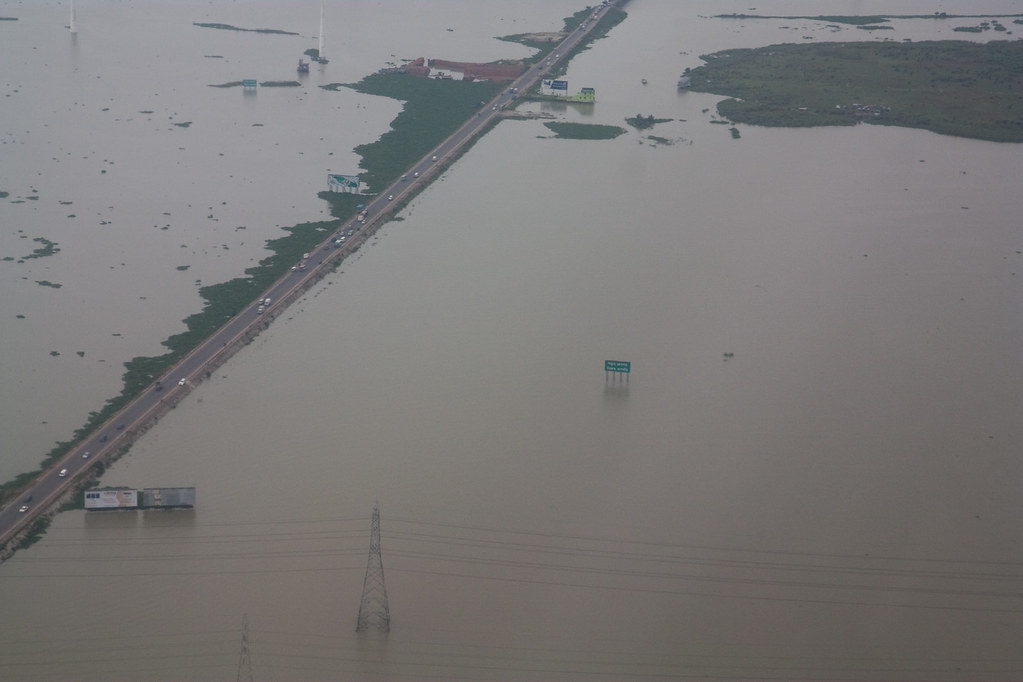
DHAKA (Web Desk) – Bangladesh is facing one of its worst flood emergencies of the year after days of relentless monsoon rainfall triggered widespread flooding across several districts, killing at least 52 people and affecting more than one million residents.
Authorities said the disaster has submerged homes, damaged roads and bridges, disrupted communications and forced hundreds of thousands of people to seek emergency assistance as rescue and relief operations continue.
According to disaster management officials, the flood situation remains critical in seven districts where rising rivers and continuous rainfall have inundated villages, towns and agricultural land.
Emergency authorities reported that more than one million people have been directly affected by the floods, with thousands displaced from their homes after floodwaters entered residential areas.
Officials said at least 267,918 families remain stranded in flood-hit regions, many of them unable to leave their homes because roads have been washed away or remain under several feet of water.
Cox’s Bazar has emerged as the worst-affected district, recording the highest number of deaths since the flooding began.
Authorities said rescue teams are continuing search and evacuation efforts as weather conditions remain unstable in several areas.
The widespread flooding has severely damaged public infrastructure, including highways, rural roads, bridges and drainage systems, making access to remote communities increasingly difficult.
In many locations, transport links have been cut off completely, forcing emergency responders to rely on boats to reach stranded families.
The Bangladesh Army, Navy and other emergency response agencies have been deployed to support local authorities in relief and rescue operations.
Military personnel are using boats and specialised equipment to evacuate vulnerable residents, including children, elderly people and patients requiring urgent medical attention.
Relief agencies are also distributing food supplies, clean drinking water, medicines and other essential items to communities isolated by floodwaters.
Medical teams have established temporary health camps in several affected districts to provide treatment for flood-related illnesses and prevent the spread of waterborne diseases.
Health officials warned that prolonged flooding could increase the risk of diarrhoea, skin infections and other illnesses caused by contaminated water.
Authorities have urged residents living near rivers and low-lying areas to remain alert and follow evacuation instructions if water levels continue to rise.
Local administrations are monitoring river conditions around the clock while coordinating with weather authorities to assess further flood risks.
Several schools and public buildings have been converted into temporary shelters to accommodate displaced families until conditions improve.
Relief officials said thousands of people are currently staying in emergency shelters where food, drinking water and basic healthcare facilities are being provided.
Agricultural experts have also expressed concern over extensive damage to standing crops and farmland, warning that losses could affect food production and the livelihoods of farming communities.
Large areas of cultivated land remain submerged, while livestock losses have also been reported from several districts.
Economic analysts believe the floods could have a significant impact on local economies, particularly in rural regions where agriculture remains the primary source of income.
The disaster has once again highlighted Bangladesh’s vulnerability to extreme weather events linked to the annual monsoon season.
Every year, heavy rainfall and overflowing rivers cause widespread flooding across parts of the country, displacing thousands of families and damaging infrastructure.
Climate experts have warned that changing weather patterns are increasing the frequency and intensity of extreme rainfall events across South Asia, placing additional pressure on disaster management systems.
Authorities said relief and rehabilitation efforts will continue until floodwaters recede and affected communities can safely return to their homes.
Government agencies have appealed for continued public cooperation as rescue teams work to reach isolated communities and provide emergency assistance to those still trapped by the floods.
Officials said restoring damaged infrastructure and supporting displaced families will remain the government’s immediate priorities as Bangladesh continues to battle one of the season’s most destructive flood emergencies.