[:en]By Asim Shahzad
LAHORE: Over 7,000 students from nearly 380 public schools in Punjab participated in the National Achievement Test (NAT) 2023, providing a revealing snapshot of student learning across the province.
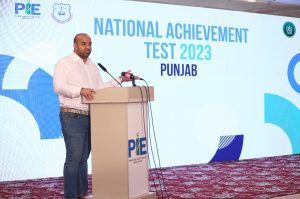
Released by Pakistan Institute of Education, the findings offer a springboard for further improvement and highlight areas where targeted interventions can yield significant impact.
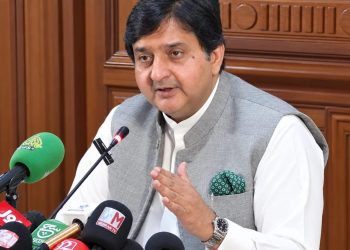
Rana Sikandar Hyat, Minister for School Education, Punjab speaking at the event said, “Punjab is committed to prioritizing education. While the National Achievement Test results are encouraging, we recognize the need to do more. Pakistan has declared an education emergency to address challenges, including the significant issue of out-of-school children.
In this effort, I call upon the Pakistan Institute of Education for their expertise in tackling the issue of out-of-school children, which impacts a significant number of Punjab’s youth. A first-ever census of public and private schools, as well as madrassahs, utilizing NADRA data, will assist in identifying their barriers and implementing targeted solutions, including accelerated learning programs.
Data analysis will guide further improvements, pushing us closer to our goal of at least 80% student proficiency in future assessments.
Education is an investment in our future, and I am committed to working collaboratively with Pakistan Institute of Education and all education departments to empower Punjab’s children, particularly with the strong support we’ve seen from the public, especially women.”
While Punjab’s overall performance compared favorably to other provinces, the results paint a nuanced picture of student strengths and weaknesses. Urdu emerged as the strongest subject, particularly for Grade 4 students who achieved an impressive average score of 81%. English language skills also showed encouraging progress compared to 2019, with Grade 4 students averaging 71%.
Dr. Shahid Soroya, Director General of Pakistan Institute of Education added, “Launching the National Achievement Test (NAT) results in Punjab is a big step forward in working together to improve education across Pakistan. By partnering with the School Education Department, we can combine our expertise to create a better assessment system. This includes using PIE’s new item banking software and expanding testing beyond grades 4 and 8 to include foundational skills. Sharing ownership of the data at the provincial level allows us to tailor solutions and decision-making to Punjab’s specific needs. Today’s report is a great starting point for ongoing collaboration.
“I look forward to a productive discussion that will pave the way for even stronger results in future assessments. Our ultimate goal is to make sure the data is reliable and has a real impact, not just present results. This will drive meaningful improvements in Punjab’s educational landscape.”
The data also pinpoints areas demanding focused attention. Maths scores across both grades fell below those achieved in Urdu and English. Grade 4 students encountered the most difficulty in Statistics and Probability, a trend mirrored by Grade 8 students in the same content domain. Science proficiency also showed room for improvement,with the highest average score being 66% for Grade 8 students in rural schools.
A trend emerged when examining performance by gender. Girls consistently outperformed boys in all subjects and grades, including Maths, where nationally the average scores for both genders were similar. This finding suggests that Punjab may be making headway in narrowing the gender gap in educational achievement.
Another noteworthy observation is the disparity in Maths scores between rural and urban schools in Grade 8. Here, students in rural areas displayed a slight advantage over their urban counterparts. Further analysis is needed to understand the reasons behind this trend.
The NAT 2023 results provide a valuable roadmap for the Punjab School Education Department. By identifying areas of strength and areas in need of improvement, the department can develop targeted interventions to enhance learning outcomes across the province. This could involve capacity building programs for teachers in specific content domains, a focus on cultivating critical thinking and analytical skills in students, and the development of innovative teaching methodologies.[:]