


By OurCorrespondent
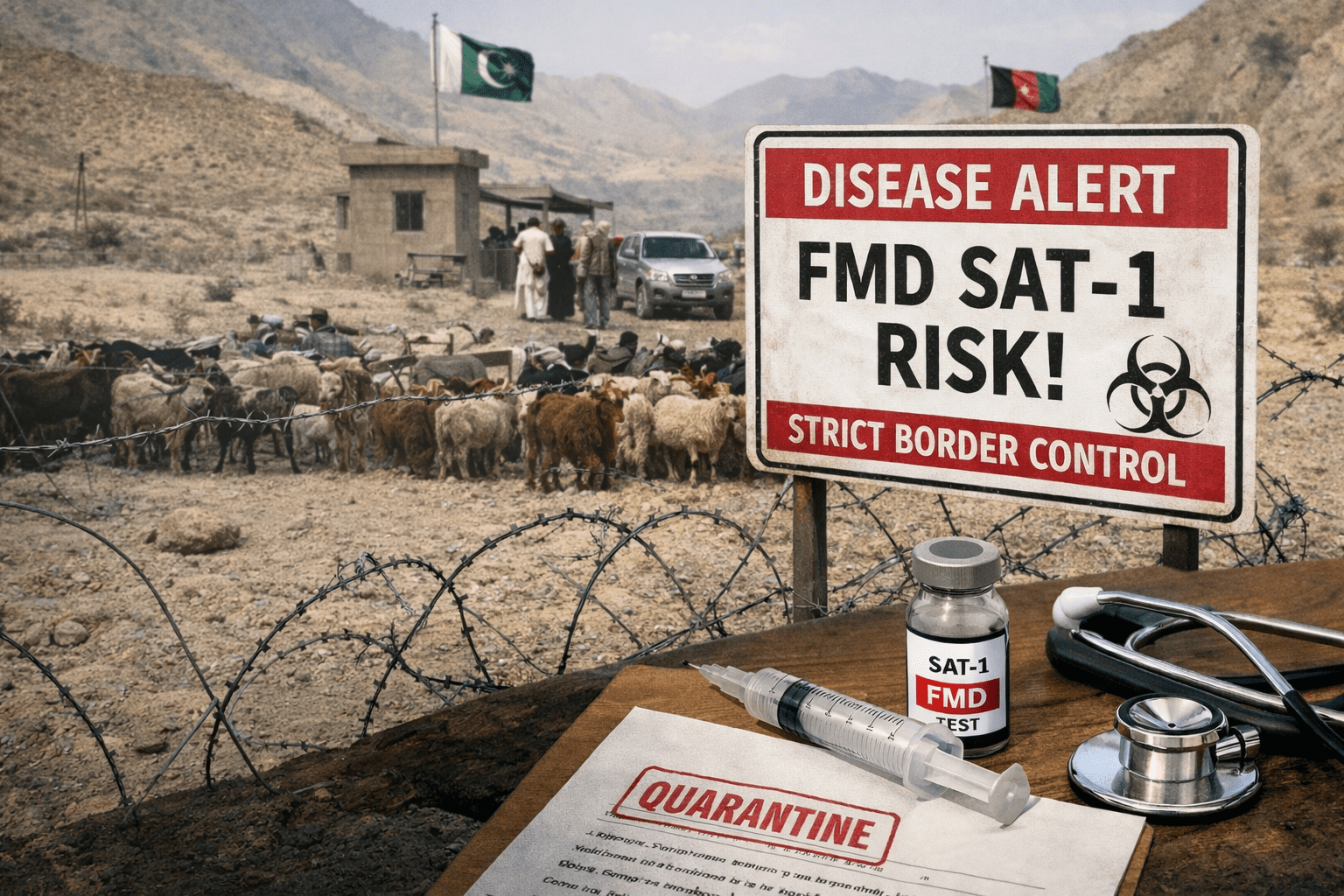
ISLAMABAD: Pakistan has been placed on high alert following a warning by the Food and Agriculture Organization of the United Nations (FAO) regarding the likely introduction of Foot-and-Mouth Disease (FMD) virus serotype SAT-1 into the country through its western borders.
Read also: Pakistan’s veterinary education and WOAH standards
According to an official communication, the FAO published a Rapid Risk Assessment on December 4, 2025, highlighting the growing risk of spread of FMDV serotype SAT-1 across North Africa, Central, South and Western Asia, and parts of South-Eastern Europe. The assessment identifies Pakistan among several countries at increased risk due to geographical proximity to infected regions and cross-border animal movements.
FMD is a highly contagious viral disease affecting cloven-hoofed animals including cattle, buffaloes, sheep, goats, and pigs. While it poses no direct threat to human health, the disease can cause devastating economic losses through reduced livestock productivity, disruption of livelihoods, food insecurity, and trade restrictions. Pakistan is already endemic for FMD serotypes A, O, and Asia-I, but remains free from SAT-1, SAT-2, and SAT-3 serotypes.
The FAO report notes that immunity against FMD is serotype-specific, meaning existing vaccines used in Pakistan do not protect against SAT-1. Since its first detection in Iraq in March 2025, the SAT-1 virus has spread to Kuwait, Türkiye, Egypt, Azerbaijan, and reportedly Iran. The circulating strains are of East African origin, and routine vaccines in the region are largely ineffective against them.
The assessment concludes that further spread of SAT-1 is “very likely” within the next three months, up to early February 2026, with moderate to severe socio-economic impacts expected, particularly in countries where livestock plays a critical role in livelihoods and food security.
Pakistan has been classified as a “likely” country for the spread of SAT-1 due to its large population of susceptible livestock, absence of SAT-1 vaccination, endemic circulation of multiple FMD serotypes, and informal cross-border movement of animals, especially small ruminants. Surveillance gaps and underreporting further increase the country’s vulnerability.
In response, authorities have been directed to adopt strict preventive and preparedness measures. Provincial Livestock and Dairy Development Departments, particularly in Balochistan and Khyber Pakhtunkhwa, have been asked to enhance active surveillance in high-risk border districts and regularly collect samples for laboratory testing.
The Ministry of Interior has been urged to instruct border security forces to strictly curb illegal movement of people, animals, and animal-origin products across the western borders, in coordination with Customs and Animal Quarantine Officers at key entry points including Quetta, Gwadar, and Peshawar.
Provincial administrations have also been advised to halt issuance of movement permits for animals and animal products without prior consultation with the Federal Veterinary Authority. Contingency plans, emergency compensation funds, animal check posts, and awareness campaigns for veterinarians, para-veterinary staff, and stakeholders are also being emphasized to ensure early detection and rapid response.
Authorities have been instructed to treat the situation as a high priority, warning that any incursion of FMD SAT-1 could have severe consequences for Pakistan’s livestock sector, food security, and trade.