







By Asim Shahzad
LAHORE – On World Children’s Day 2025, a group of adolescents and young activists called on the Government of Pakistan to place child rights at the highest level of national and provincial priorities, emphasizing that children require concrete and affirmative measures rather than symbolic commitments.
Read also: PPP forms divisional committees across Punjab to gear up for local body elections
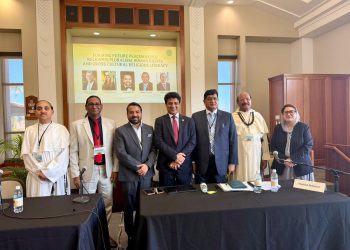
The call was made during a commemoration supported by Search for Justice, the Children Advocacy Network (CAN Pakistan), the Child Rights Movement (Punjab), Climate Action Now–Pakistan, and the Global Network of Religions for Children (GNRC), all organizations working to advance child rights, gender equality, and climate justice in the country.
Saif Ali, 15, a member of the Child Protection Forum of Search for Justice, reminded policymakers that protection from violence, abuse, and exploitation is a legal obligation under the UN Convention on the Rights of the Child and a core commitment under the Sustainable Development Goals. He urged the Prime Minister and all provincial chief ministers to move beyond ad hoc initiatives and adopt a clear, multisectoral action plan to strengthen child protection systems in health, education, policing, and social welfare. “Commitments mean nothing without real budgets and real results — actions must speak louder than promises,” he said.
Bisma Sajid, a child human rights defender, highlighted the growing threat of technology-facilitated gender-based violence, including online harassment, blackmail, non-consensual image sharing, and digital exploitation targeting adolescent girls. She called for integrating digital literacy, online safety, and rights-and-responsibilities education into curricula across schools and universities, ensuring that young people can both protect themselves and act responsibly online.
Laiba Khan, 16, stressed the urgency of addressing adolescents’ psychological and emotional wellbeing. She noted that stress, stigma, and anxiety are common among youth, particularly adolescent girls, who face additional pressures due to societal expectations and lack of safe spaces. Laiba recommended a phased appointment of trained psychosocial support officers in schools, beginning with high and higher secondary institutions.
Iftikhar Mubarik, Executive Director of Search for Justice, urged stronger federal-provincial coordination to ensure coherent and effective child rights action. He pointed out that fragmented mandates, overlapping responsibilities, and inconsistent implementation continue to weaken child protection systems, even three decades after Pakistan ratified the UN Convention on the Rights of the Child. He called for a unified framework with shared priorities, clear accountability mechanisms, and harmonized policies to ensure all provinces move in the same direction.
The young participants collectively emphasized that children are active contributors whose experiences must inform policymaking. They urged the government to ensure meaningful participation of children in decisions affecting their rights, ranging from education and protection to climate action and digital safety.