








By Asim Shahzad
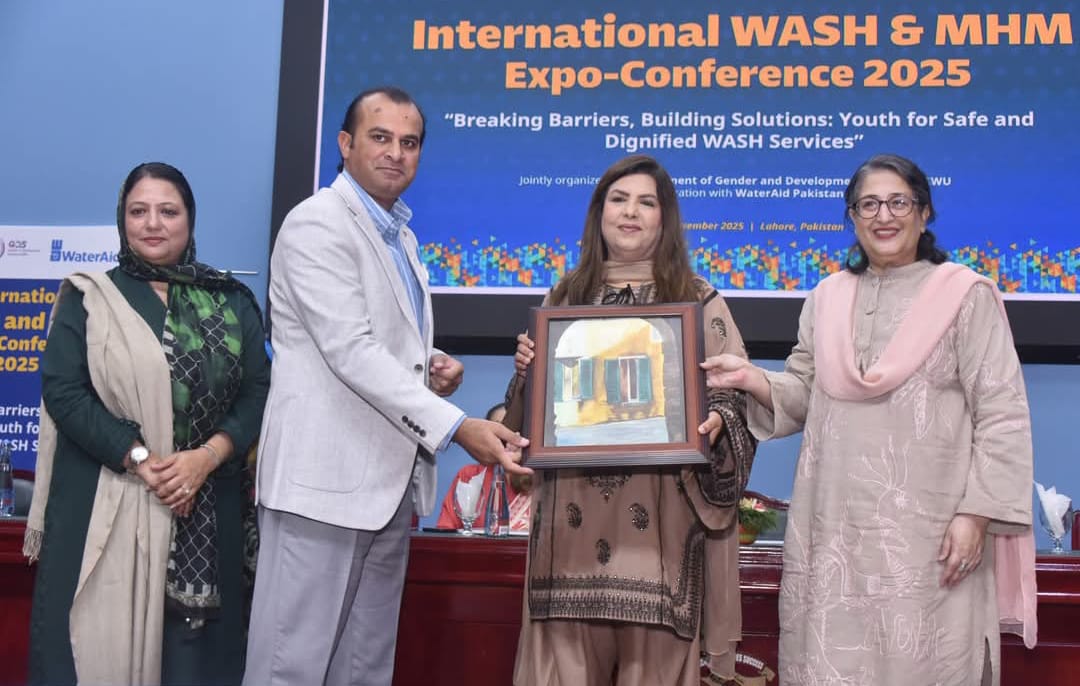
Lahore: The three-day International WASH & MHM Expo-Conference 2025 commenced at Lahore College for Women University (LCWU), jointly organized by WaterAid Pakistan and the Department of Gender and Development Studies. The conference, themed “Breaking Barriers, Building Solutions: Youth for Safe and Dignified WASH Services,” aims to unite students, researchers, policymakers, and practitioners to promote gender-responsive and inclusive approaches to Water, Sanitation, and Hygiene (WASH) and Menstrual Health Management (MHM) in Pakistan.
In her opening remarks, Prof. Dr. Uzma Qureshi, Vice Chancellor LCWU, expressed gratitude to all participants and partners for contributing to this national dialogue. She emphasized the vital role of youth-led engagement and research in shaping equitable and inclusive WASH policies.
Chief Guest Ms. Rushda Lodhi, Parliamentary Secretary for Specialized Healthcare & Medical Education, lauded the initiative for bridging the gap between academia and policy to address women’s health and hygiene needs. She stressed that ensuring menstrual health and WASH access is not only a public health priority but also a matter of dignity and equality.
Guest of Honour Ms. Sadia Taimoor, Parliamentary Secretary for the Women Development Department, applauded the collaboration between WaterAid and LCWU, describing it as “a landmark effort to empower young women as leaders of change in WASH advocacy.”
Dr. Uzma Ashiq Khan, Incharge of the Gender and Development Studies Department, LCWU, and Muhammad Sufyan, Head of Punjab & KP at WaterAid Pakistan, underlined the importance of partnerships with educational institutions and civil society to promote dignity, safety, and awareness surrounding hygiene and menstrual health.
Prof. Dr. Maria Fannin from the University of Bristol, UK, in her session titled “Reflections on First Periods from the Feminist Archive South,” offered a global perspective on menstrual narratives, stigma, and the politics of bodily autonomy.
Raheema Panhwar, Gender Advisor at WaterAid, shared success stories on integrating MHM indicators into provincial systems and presented findings from the Punjab MHM Policy Gap Analysis, urging policymakers to institutionalize menstrual health education in schools.
Prof. Dr. Rubina Sohail, Consultant Gynecologist and Founder Chair of the Mahfooz Maa Initiative, highlighted the need for sustained awareness and medical advocacy around menstrual hygiene and reproductive health.
Sam Ali Dada, former President of the Lahore Women Chamber of Commerce, emphasized cross-sectoral partnerships among business, academia, and civil society to dismantle social taboos surrounding menstruation.
In his concluding remarks, Muhammad Junaid, Country Director of WaterAid Pakistan, reaffirmed that the organization believes youth voices are central to driving change in WASH and menstrual health. “By empowering young people, especially young women, we can break barriers, challenge stigma, and create sustainable solutions that ensure safe and dignified WASH services for all,” he said.