


By Commerce Reporter
LAHORE, November 1 — Federal Minister for National Food Security and Research Rana Tanveer Hussain said the government is working to bring the policy rate into single digits and has provided relief in electricity tariffs for the industrial sector. He emphasized that Pakistan’s agricultural productivity remains very low and must be enhanced through investment in research by both the government and private sector. “The government will fund anyone conducting agricultural research. Improved seed quality is the key to development,” he said.
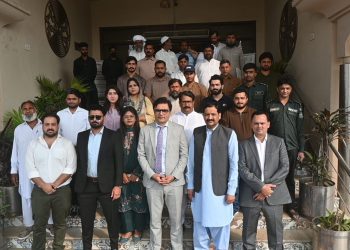
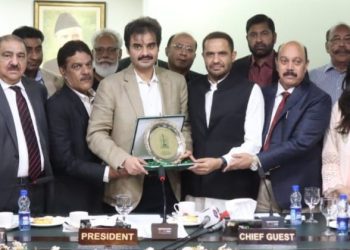
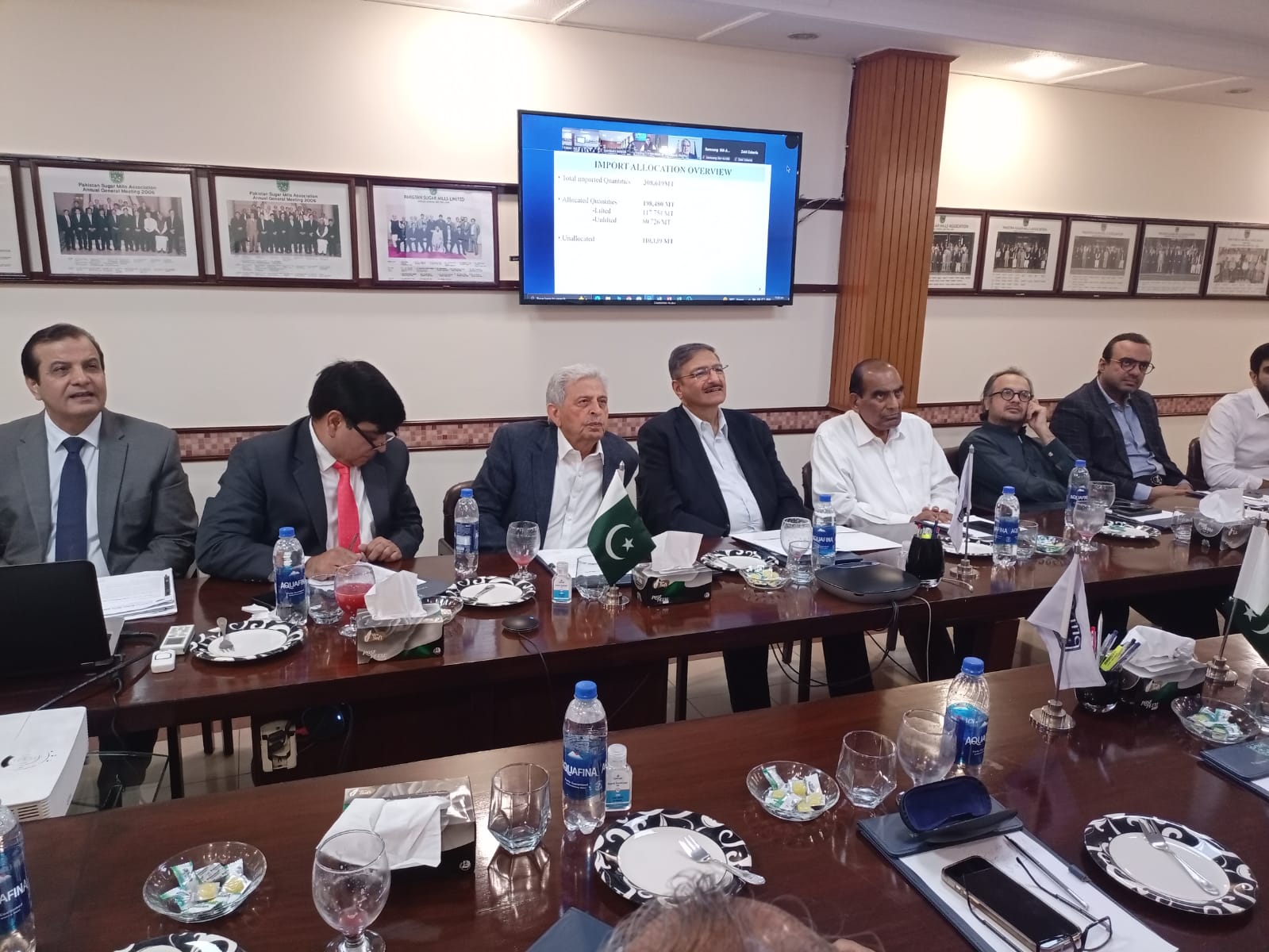
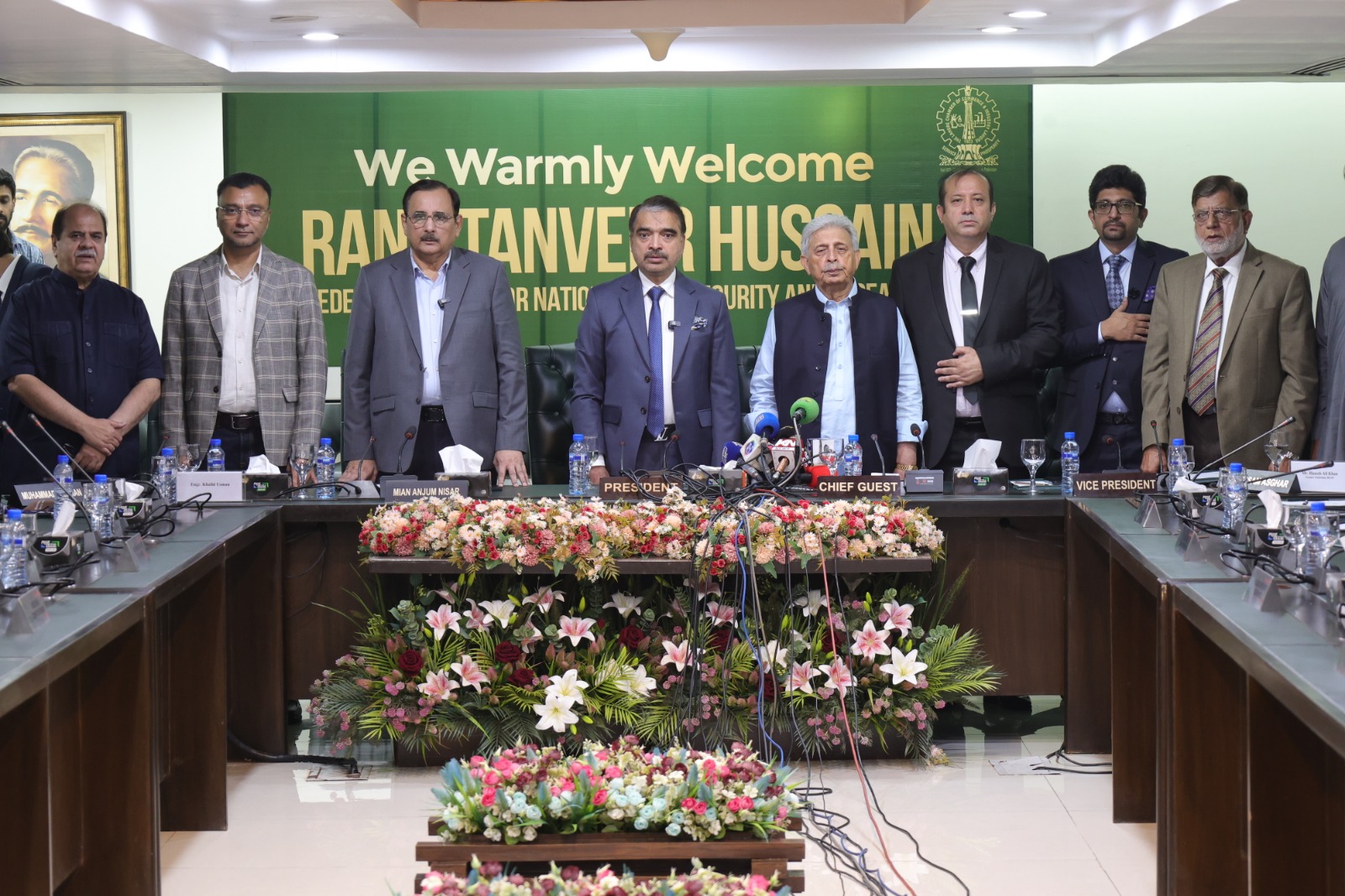
The minister was addressing a meeting at the Lahore Chamber of Commerce and Industry (LCCI), where LCCI President Faheem-ur-Rehman Saigol, Vice President Khurram Lodhi, SAARC Chamber Vice President and former LCCI President Mian Anjum Nisar, former president Muhammad Ali Mian, and executive committee members were also present.
Saigol said that food security is one of the most critical challenges facing Pakistan. He noted that per-acre yield in Pakistan is significantly lower than in regional countries, and production of wheat, rice, and cotton bales has declined compared to last year.
He expressed concern that despite being an agricultural country, Pakistan is importing food items and fertilizers, calling it alarming. “Our seeds cannot compete with international standards and need urgent reform,” he said. He urged the government to promote food processing and the halal food industry to enhance value addition and improve the economy.
The LCCI president warned that the population is rising while food production is declining, with nearly 50% of citizens living below the poverty line. “Rising poverty is leading to increased crime,” he added. He pointed out that cotton production has dropped from one million to seven hundred thousand bales and that about 30% of food is wasted during harvesting due to systemic inefficiency.
Saigol urged the government to compensate farmers for losses, increase the wheat support price, and modernize the agriculture sector.
Minister Rana Tanveer Hussain said his ministry has always worked for the improvement of all sectors. “Food security has become a global issue and is being given great importance worldwide,” he added.
He said Pakistan’s economy is agriculture-based, with the sector contributing 25% to GDP and ranking second after textiles in exports. “Between 2013 and 2018, the government resolved major electricity and gas crises, introduced RLNG, and stabilized economic indicators to prevent default. However, the IMF program forces us to make tough decisions that slow growth,” he stated.
The minister informed that the National Seed Regulatory Authority has been established to curb the sale of fake seeds, while a track-and-trace system is being introduced for certified seeds. Banks have been directed to enhance agricultural financing, and SME financing is also being strengthened.
He said fertilizer shortages and price hikes have been prevented, adding that the global demand for agro-based industries, halal meat, and rice exports presents major opportunities. “Pakistan ranks among the top producers of livestock and milk, but imports 89% of its edible oil — a dependence that must be reduced,” he noted.
Rana Tanveer emphasized that the business community is a key stakeholder and that industrialization and export growth are essential. “Exports must be raised to $100 billion. We need to leave a stronger Pakistan for the next generation,” he said.
He vowed to remove unnecessary tax burdens, stressing that information technology, agriculture, and mining and minerals sectors hold immense potential. “Once we exit the IMF program, growth will accelerate. Reducing the cost of production is crucial for boosting exports. The government is focused and working tirelessly. The SIFC is doing an excellent job, and improving ease of doing business remains a top priority,” he concluded.